



Corporate IT teams are increasingly responsible for a growing mix of devices, cloud applications, employee access and support requests, yet many companies still manage these functions through disconnected systems. French technology company Primo is taking a unified approach, combining device management, SaaS administration, identity and IT support with artificial intelligence. The company has raised $8 million to expand its platform and accelerate the development of AI agents capable of carrying out IT processes from start to finish.
New funding round
The funding round was led by Headline and Global Founders Capital. Primo has also attracted backing from technology entrepreneurs including Arthur Waller, co founder and CEO of Pennylane, and Romain Niccoli, co founder and CEO of Pigment.
Primo plans to use the new capital to strengthen its product, expand its AI capabilities, hire additional employees and accelerate international growth.
The company already serves more than 400 customers across 10 countries. Its customer base includes companies such as ASL Airlines and Attio, while Primo says its revenue has quadrupled year over year and recently passed $4 million in annual recurring revenue.
Bringing IT into one system
Primo is designed to replace a collection of separate IT management tools with a unified platform. It connects employee information with devices, applications, permissions, identity systems and internal policies.
The company says its platform can integrate with more than 300 applications and services, giving IT teams a central place to manage employees and their technology environments. (getprimo.com)
This integrated data layer is also important to Primo’s AI strategy. By giving AI agents access to relevant employee and IT information, as well as the ability to interact with connected systems, the platform can move beyond answering questions and begin executing operational tasks.
AI agents take on repetitive work
Primo is developing AI agents to automate processes that traditionally require IT teams to work across several systems.
One example is employee onboarding. Instead of manually creating accounts, assigning permissions, preparing devices and provisioning software, an AI agent can coordinate the different steps through connected systems.
The same approach can be applied when an employee leaves a company. Primo can help IT teams revoke access, disable accounts, recover equipment and complete other offboarding tasks.
The platform allows companies to decide how much autonomy an agent receives. Certain processes can run automatically, while others can require human approval before an action is completed. Primo also maintains records of actions taken by its agents, providing visibility and control for IT teams.
Turning IT into a business lever
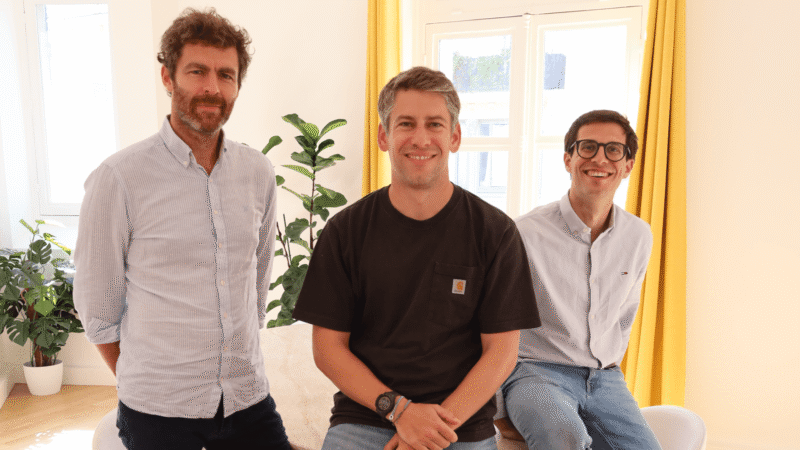
Primo co founder and CEO Martin Pannier said companies have traditionally treated IT as a cost centre, while the company wants to position it as a more strategic business function.
The company believes AI can reduce the amount of repetitive administrative work handled by IT professionals and allow them to spend more time on projects that directly support employees and business operations.
Its approach is therefore not focused solely on creating an AI assistant for IT. Primo is attempting to build an operational platform where AI can understand company policies, access the required systems and execute complete workflows under defined controls.
Expanding internationally
The latest funding comes as Primo expands beyond its established markets. The company currently has customers across Europe and says international customers account for more than half of its customer base.
Its expansion plans include the UK, Germany, Benelux and the Nordic countries, where it intends to build on its existing presence.
Primo also plans to roughly double its headcount in the coming months as it invests in product development, engineering and international operations.
With its latest funding, the company is moving toward a model in which corporate IT is managed through one connected environment, while AI agents handle increasingly complex workflows under human oversight. Its broader ambition is to make IT operations more automated without sacrificing the control, security and traceability required by businesses.