

Artificial intelligence can learn from billions of words and images available online, but autonomous machines face a very different problem. The most important situations for a robot, drone or autonomous vehicle are often the rarest ones, from unusual sensor conditions to distant objects and dangerous scenarios that are difficult or impossible to capture repeatedly in the real world. Hungarian founded startup DiffuseDrive is building synthetic data technology designed to fill those gaps and make physical AI systems more reliable before they encounter such situations in the field.
Solving the data gap
DiffuseDrive develops technology that analyses existing datasets, identifies missing scenarios and generates new training and validation data targeted at those gaps. The company says its platform is designed for physical AI applications across land, air, sea and space, including defence, aerospace, autonomous vehicles, robotics and critical infrastructure.
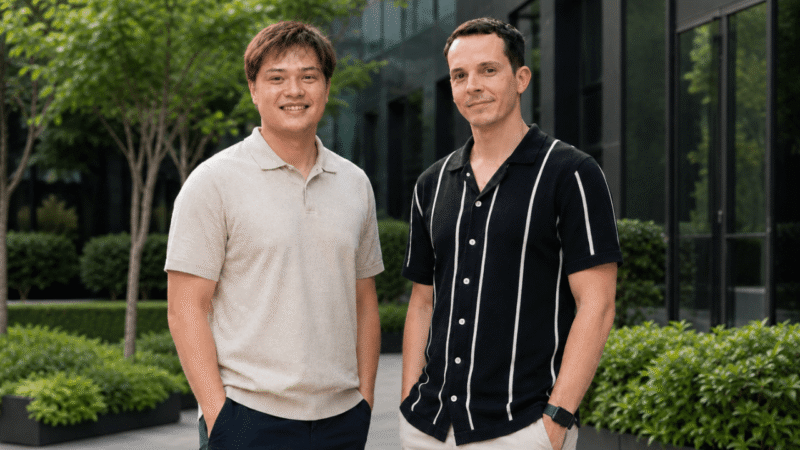
The company was founded by Bálint Pásztor and Roland Pintér, who previously worked at Bosch on autonomous driving. Their experience exposed a recurring problem in autonomous systems: even advanced AI models can be limited by the quality and coverage of the data available to train them.
Creating rare scenarios
DiffuseDrive’s approach begins with a customer’s existing data and AI system. The platform analyses what the dataset already contains and looks for gaps that could affect performance.
Those gaps might involve rare objects, unusual viewpoints, degraded sensors, occlusion, camouflage, low visibility or distant targets. Instead of waiting for these situations to occur naturally, the company generates synthetic examples that can be added to the training or validation pipeline.
The objective is not simply to create more images. It is to create the specific data that an AI system is missing.
DiffuseDrive’s current Atlas platform can generate mission specific edge cases including low pixel targets, unusual viewpoints, sensor specific variations, concealment and other difficult operating conditions.
Built around real sensors
One of the technical challenges in synthetic data is making generated information relevant to the hardware that will ultimately use it.
DiffuseDrive says Atlas adapts generated data to electro optical and infrared sensor characteristics and is designed to reduce the gap between synthetic and real world data. This allows companies to generate data reflecting the characteristics of their actual cameras and sensors rather than relying on generic imagery.
The company also focuses on controllability. Customers can specify where objects should appear, how large they should be and what conditions they should be exposed to. This is important for autonomous systems where a model may need to recognise an object that occupies only a small portion of an image or appears in an unusual position.
Generation is only part of the process
DiffuseDrive says synthetic data generation alone is not enough. Its system also incorporates domain adaptation, automated quality assurance and scalable infrastructure.
Generated outputs are assessed before being used, helping remove images that contain unrealistic elements or do not meet the required conditions. The company describes synthetic data as an engineered pipeline rather than simply an image generation tool.
The platform can be deployed in an air gapped environment, allowing customers to keep their data inside their own infrastructure. DiffuseDrive also offers managed services for organisations that want the company to handle data generation and delivery.
Measuring real world impact
DiffuseDrive has reported performance improvements from combining synthetic and real world data. Its current website says combined training has produced gains above 10 percent in a single iteration, while synthetic only training has reached 97 to 99 percent of real data baselines in customer evaluations.
The company argues that the most important measurement is not simply how much data is generated, but whether that data improves performance under conditions that existing datasets fail to represent.
Expanding into robotics
DiffuseDrive raised $3.5 million in seed funding in 2025 and is now expanding beyond its early autonomous driving focus toward robotics and other physical AI applications.
The company is also developing technology to understand existing robotic experiments, combining video, sensor streams and metadata to create richer annotations describing actions, events and state changes.
As physical AI moves into more demanding environments, DiffuseDrive is betting that specialised, high quality data will become as important as increasingly capable models. Its broader goal is to give developers a way to create the difficult training examples that real world collection cannot reliably provide, helping autonomous systems prepare for situations before they encounter them.