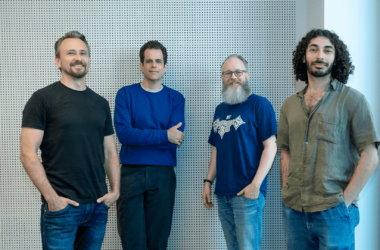




Hackuity is raising fresh capital as enterprise security teams face a growing gap between the vulnerabilities they can discover and the threats they can realistically fix. The France based cybersecurity company has secured $19 million in funding to strengthen its vulnerability management platform, expand its artificial intelligence capabilities and accelerate international growth.
The investment round was led by Forgepoint Capital International, with participation from existing backers Bright Pixel, Bpifrance and Seventure Partners. The latest financing brings Hackuity’s total funding to $38 million and provides additional resources for product development and expansion across Europe and Asia.
Tackling the Vulnerability Overload
Hackuity develops a Vulnerability Operations Center, or VOC, designed to help enterprises manage security weaknesses across increasingly complex IT environments. Instead of requiring security teams to examine separate alerts from numerous tools, the platform brings vulnerability information together in one operating layer.
The company’s technology aggregates findings from more than 130 security tools. It then combines those findings with threat intelligence, asset criticality and business context to help organisations determine which vulnerabilities represent the greatest risk.
This approach addresses a major operational problem for enterprises. Security teams may identify thousands of vulnerabilities across endpoints, applications, cloud environments and infrastructure, but they often lack the time and resources to remediate every issue immediately.
Prioritising Risk
Hackuity’s platform is built around the principle that vulnerability management should focus on business risk rather than simply the number of detected flaws. Its proprietary risk scoring engine evaluates multiple factors, including vulnerability severity, exploitability, available threat intelligence, the importance of affected assets and potential business consequences.
By combining these inputs, the system helps security teams establish a more practical remediation order. A vulnerability affecting a critical business system, for example, may require faster action than a more severe issue affecting an isolated or low importance asset.
The platform is also intended to improve coordination between cybersecurity, information technology and engineering teams. By providing a shared view of vulnerabilities and remediation priorities, Hackuity aims to reduce duplicated work and make it easier to assign, track and verify corrective action.
Responding to a Growing Threat Landscape
The need for this type of technology is increasing as vulnerability discovery becomes faster and more widespread. Hackuity estimates that the number of known Common Vulnerabilities and Exposures, or CVEs, has reached approximately 350,000, representing year on year growth of around 20 percent.
The growing use of artificial intelligence in security testing could further increase the volume of findings. While faster detection can improve visibility, it can also create additional pressure on teams that must investigate, validate and remediate the resulting alerts.
Hackuity is positioning its VOC as a way to help enterprises manage this expanding workload through automation, prioritisation and risk based decision making.
Expanding Through Partners
Hackuity also works with systems integrators, resellers and managed security service providers to support enterprise deployments. These partnerships are intended to help organisations integrate vulnerability operations into existing security and IT processes.
Co founder and CEO Patrick Ragaru said the company was established around the belief that vulnerability volumes would eventually exceed the capacity of human teams to address them manually. He added that Hackuity’s platform was designed to automate prioritisation and support remediation at machine speed.
Funding the Next Stage
The new funding will be used to advance Hackuity’s product roadmap, expand its AI capabilities and support international growth. The company is focusing particularly on Europe and Asia as it seeks to broaden its customer base and strengthen its position in the enterprise cybersecurity market.
With security teams under pressure to respond to more vulnerabilities across more systems, Hackuity’s strategy centres on helping organisations move from alert accumulation to coordinated, risk informed remediation.
Hackuity’s official website describes the platform as a centralised system that aggregates, normalises and deduplicates vulnerability data from multiple security tools. It uses its proprietary True Risk Score to combine vulnerability intelligence, threat intelligence, technical conditions and business context when prioritising remediation.
The company also offers cloud, hybrid and on premises deployment options, allowing organisations to select an operating model based on their security, compliance and data control requirements.
Hackuity’s partner model includes systems integrators, resellers and managed security service providers. Its platform is designed to connect vulnerability management with ticketing systems, security orchestration tools, risk platforms and other enterprise workflows, helping teams coordinate remediation across organisational boundaries.
The company has also highlighted capabilities such as Smart Exposure Explorer, which provides additional context on vulnerabilities, including exploitability, exploit maturity, threat intensity and EPSS indicators. These features are intended to help security professionals distinguish urgent threats from lower priority findings and focus resources on vulnerabilities that pose the greatest risk to their specific environments.