



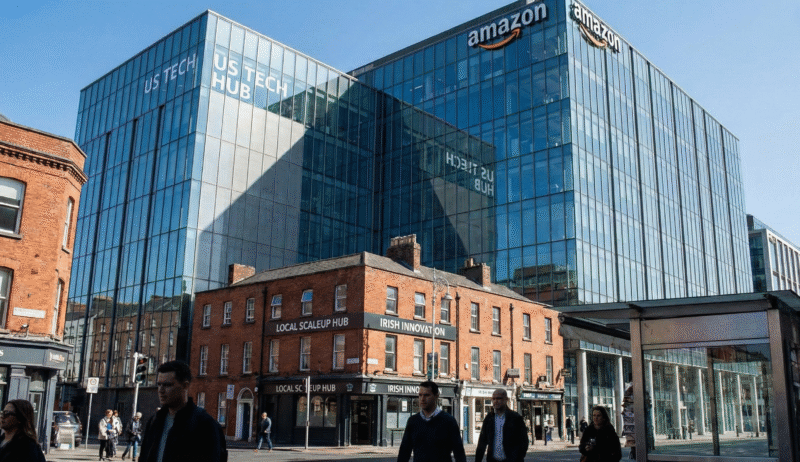
Dublin has masterfully engineered one of the most successful economic transformations in modern European history. By transforming the docklands into a global technology hub, the Irish capital secured its position as the premier European bridgehead for American technology giants. However, beneath the gleaming glass headquarters of global mega corporations lies a deeply complex dual ecosystem. While foreign direct investment continues to shatter national records, native Irish founders are asking a highly uncomfortable question. Is the very mechanism that made Dublin wealthy actively suffocating the next generation of homegrown scaleups?
The Gravity of the FDI Engine
To understand the frustration of local founders, we must first quantify the sheer scale of the American corporate footprint. As we move deep into 2026, the data surrounding foreign direct investment in Ireland is staggering. Over 1,000 multinational companies operate in the country. These external entities dominate the technology and pharmaceutical sectors. Recent economic analyses reveal that US-controlled firms account for well over half of the gross value added in the Irish information and communication technology sector.
This is the famous Amazon effect in action. When trillion-dollar companies establish their European headquarters in a city of roughly one million people, they exert a massive gravitational pull on every available resource. They drive up commercial real estate prices and absorb the vast majority of political attention. For a native Irish software startup attempting to build momentum, this environment feels less like a nurturing incubator and more like an economic battleground.
The Talent Drain and The Salary Squeeze
The most immediate and devastating impact of this dual ecosystem is the war for technical talent. Just as we explored in our recent analysis of the high-cost talent dilemma in London, Irish founders simply cannot compete with the bottomless compensation packages offered by American technology giants.
When a promising native scaleup attempts to hire a senior machine learning engineer or an enterprise sales director, they are instantly outbid. Multinationals routinely offer base salaries that are entirely disconnected from domestic economic reality, padded with heavily restricted stock units and elite healthcare benefits. Furthermore, the severe housing crisis in Dublin is driving the cost of living to astronomical levels. This forces highly skilled local workers to prioritise the immediate financial security of a multinational paycheck over the high-risk equity upside of an early-stage domestic venture. As a result, indigenous startups suffer from chronic talent starvation precisely when they need elite personnel to scale globally.
The Capital Chasm for Native Scaleups
While the talent squeeze is brutal, the funding environment presents an equally existential threat to Irish founders. The early-stage incubator scene in Dublin is undeniably vibrant. Seed stage capital is relatively accessible for bright entrepreneurs building promising software prototypes. However, a massive structural chasm emerges when these companies seek Series A or Series B growth capital.
According to he 2025 and 2026 ecosystem reports, nearly 80 per cent of Irish founders report severe difficulties in attracting late-stage capital. Domestic institutional investors remain highly risk-averse compared to their American counterparts. When local founders look to scale their operations, they realise the massive pools of wealth sitting in the Silicon Docks belong entirely to foreign entities with zero mandate to invest in domestic Irish startups. The wealth generated by foreign direct investment rarely trickles down into the local venture capital ecosystem. This dynamic forces successful Irish startups to relocate their headquarters to London or the United States simply to access the capital required to survive.
The Counter Offensive by Enterprise Ireland
The Irish government is acutely aware of this structural imbalance. To prevent the economy from becoming entirely dependent on foreign tech giants, the state is deploying massive capital interventions. The recently unveiled Sectoral Capital Plan commits an unprecedented 4.7 billion euros to the enterprise and innovation ecosystem over the next 10 years.
Enterprise Ireland heavily manages a significant portion of this war chest. As one of the most active venture capital investors in the world by deal count, Enterprise Ireland is aggressively building a robust native scaleup ecosystem. Their ambitious mandate aims to support 1,000 new startups by 2029 while injecting hundreds of millions into disruptive technologies and scaling up funds. They are actively funding deep-tech and native software companies building the future of European vertical SaaS consolidation.
Corporate Infrastructure and Bridging the Gap
Scaling a native Irish software company ultimately requires expanding beyond the domestic market from day one. When local founders successfully raise growth capital, their immediate focus shifts to international expansion and establishing a presence in the United States or continental Europe.
Executing this global expansion requires a highly agile operational strategy. When relocating key executives or establishing a `secondary hub, native scaleups completely avoid rigid corporate hotels. Instead, they rely heavily on specialised long-term executive leasing agencies and premium, localised corporate housing networks across the continent. This ensures their leadership teams can seamlessly integrate into new target markets without the friction of traditional relocation models. This strategic use of flexible infrastructure mirrors the broader operational agility required to survive in the shadow of multinational giants. It directly contrasts with the massive, highly bureaucratic European AI regulation frameworks.
The Verdict: A Necessary Symbiosis
The Amazon effect is undeniably real. American foreign direct investment creates a challenging environment for early-stage Irish founders fighting for talent and operational space.
However, this dual ecosystem is not entirely parasitic. The multinational presence forces native startups to operate at a globally competitive standard from the moment of inception. The Irish scaleups that successfully navigate the talent squeeze and secure late-stage funding are some of the most resilient and ruthlessly efficient companies in Europe. By leveraging state support through Enterprise Ireland and maintaining a relentless focus on global expansion, native founders are slowly proving that they can thrive alongside the giants rather than just living in their shadow.