


As quantum technologies edge closer to real-world deployment, a persistent gap remains between academic theory and practical experience. Addressing this challenge, Qilimanjaro Quantum Tech has announced the release of EduQit, a modular quantum computing kit designed to give universities and research institutions direct, on-site access to a physical superconducting quantum computing system.
Moving beyond simulators and the cloud
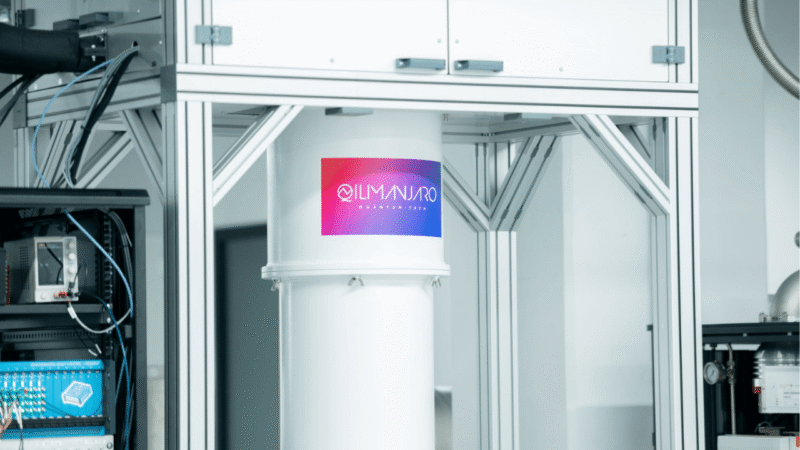
For years, most quantum education programmes have relied heavily on theory, software simulators, or limited cloud-based access to remote machines. While valuable, these approaches often prevent students from learning how quantum computers are actually built, controlled, operated, and maintained. EduQit is designed to close that gap by allowing institutions to host and work directly with a real quantum system in their own laboratories.
By interacting with physical hardware rather than abstract models, students gain exposure to the full quantum computing stack, from cryogenic hardware and control electronics to system operations and application development. This hands-on approach mirrors how quantum systems are developed and maintained in industry and research environments.
A modular kit built for education and research
EduQit is delivered as a deployable and expandable package that includes hardware, software, documentation, and ongoing support from the Qilimanjaro team. Its modular architecture allows universities to tailor the system to their teaching or research goals and to evolve the setup over time without being locked into a fixed configuration.
The kit supports a wide range of academic use cases, including laboratory courses, project-based learning, and bachelor’s, master’s, and doctoral thesis work. Beyond teaching, EduQit can also serve as a platform for early-stage research, enabling experiments on different qubit modalities, system benchmarking, and the development and testing of enabling technologies.
Learning directly from a real quantum system
A key advantage of EduQit is the transparency of its design. Students and professors are able to understand and modify the entire process of building and running a quantum computer, rather than interacting with it as a black box. This system-level exposure is rarely available in traditional academic settings.
Professor Bruno Julià Díaz, coordinator of the interuniversity master’s degree in Quantum Science and Technology and professor in the Department of Quantum Physics and Astrophysics at the University of Barcelona, has already worked closely with Qilimanjaro’s hardware and quantum experts using the system.
According to Julià Díaz, access to modular quantum systems and close interaction with industry engineers allows students, particularly at the master’s thesis level, to develop practical skills and system-level understanding that go far beyond theoretical training. This kind of exposure helps bridge the gap between academic study and the realities of operating and evolving quantum technologies.
Combining on-site control with optional cloud access
While EduQit prioritises direct interaction with on-site hardware, institutions can optionally complement their work with cloud access to Qilimanjaro’s SpeQtrum platform. This enables remote workflows, benchmarking, and comparison studies, while preserving hands-on engagement with the local system.
The underlying infrastructure supports a multi-modal quantum hardware design, allowing researchers to explore digital, analogue, and hybrid quantum computing paradigms. This flexibility gives users the ability to select the compute approach that best fits their application, whether educational or research-driven.
Building long-term quantum capability
Beyond individual courses or experiments, EduQit is positioned as a tool for long-term institutional and ecosystem development. By enabling practical training and early research, the platform supports workforce development and helps universities prepare students for careers in quantum science and engineering.
At a broader level, the initiative aligns with national and international priorities around advanced skills development, technological sovereignty, and sustainable capability building in strategic technologies. By putting real quantum hardware directly into academic labs, EduQit aims to accelerate learning, collaboration, and innovation across the growing quantum ecosystem.