


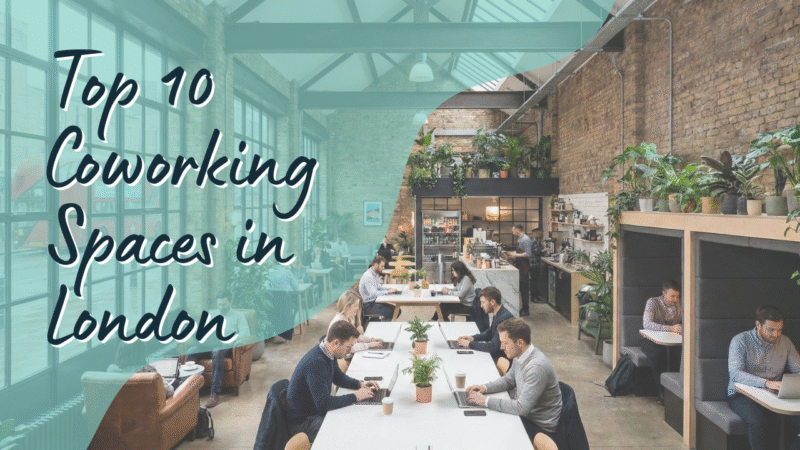
London has moved far beyond the era of generic glass boxes and ping pong tables. The city now hosts the most sophisticated flexible workspace market in the world, where the line between a private members’ club and an office has completely vanished.
For founders and executives in 2026, choosing a workspace is about choosing a tribe. You don’t just rent a desk; you buy into a specific network. Whether you need the heavy security of a cyber-hub or the acoustic perfection of a music studio, London has a dedicated space for it. Here are the 10 coworking spaces defining the working culture of the capital.
Second Home
Rohan Silva and Sam Aldenton founded Second Home to create a workspace that feels like a greenhouse. Their Spitalfields and Holland Park locations are famous for eliminating straight lines and filling every corner with thousands of living plants. This biophilic design is not just aesthetic; it is engineered to reduce stress and boost creativity for the high-growth tech teams and creative agencies that call it home. The space operates on a philosophy of serendipity, actively curating its member list to ensure that a fashion designer might sit next to an AI engineer, sparking the cross-pollination that defines the London scene.
Fora
Katrina Larkin and Enrico Sanna brought their background in hospitality to the office market with Fora. They treat every tenant like a hotel guest, offering concierge services, reading libraries, and wellness studios that rival luxury gyms. Their locations, particularly in Soho and Folgate Street, set the standard for bringing high-end hospitality service to the workplace. Fora appeals to mature businesses and scale-ups that need a polished, impressive environment to host clients, moving away from the hustle-culture vibe of early-stage accelerators to a more refined, professional atmosphere.
Huckletree
Gabriela Hersham founded Huckletree to build thematic hubs rather than generalist offices. Each of their locations focuses on a specific sector, such as GovTech in Westminster or Web3 on Oxford Street. This curation creates a high density of relevant knowledge and networking opportunities for members. Their Alpha accelerator program and regular investor readiness workshops make them the preferred landing pad for venture-backed startups seeking to raise their Series A funding. It is less of a landlord relationship and more of a strategic partnership for growth.
Plexal
Located in the Queen Elizabeth Olympic Park, Plexal is the innovation engine for East London. It was designed to support deep tech, cybersecurity, and mobility startups that need more than just a laptop desk. The campus includes makerspaces and rapid prototyping facilities, fostering a community of engineers and government partners (including NCSC). Plexal operates as a mini-city where the public and private sectors converge to address national security and infrastructure challenges, making it the go-to headquarters for the serious hardware and defence technology community.
The Ministry
The team behind the legendary Ministry of Sound nightclub opened The Ministry to serve the music and creative industries. Housed in a converted Victorian printworks in Southwark, it features professional recording studios, a soundproofed cinema, and a tequila bar that spans the entire length of a floor. It is an unapologetically cool workspace that caters to producers, managers, and media brands who need a venue that understands the late-night culture of the entertainment business. The transition from workspace by day to social club by night is seamless.
X+Why
Rupert Dean and Phil Nevin founded X+Why to provide a home for purpose-driven businesses. As a B Corp-certified operator, they prioritise sustainability in their fit-outs and curate a community of social enterprises and impact-driven startups. Their flagship space, located in the People’s Mission Hall in Whitechapel, is built with reclaimed materials and powered by renewable energy. They attract founders who want their office footprint to align with their ESG goals, proving that ethical business can still operate in a premium, design-led environment.
Uncommon
Chris Davies built Uncommon on the premise that the environment dictates productivity. Their spaces in Highbury and Borough utilise sensory design—featuring curated scents, specific ergonomic furniture, and soundscaping—to help members enter a flow state. Unlike the chaotic energy of other hubs, Uncommon focuses on calm and focus. It is the preferred choice for freelancers and boutique agencies that find the noise of traditional coworking spaces distracting and prioritise mental well-being as a core business asset.
Soho Works
As the workspace arm of the Soho House empire, Soho Works offers the ultimate in creative exclusivity. Locations like 180 Strand and Shoreditch House offer members the same vintage aesthetic and service levels as famous clubs, but optimised for work. It is strictly for the creative class, requiring an application process that filters out those who are not industry-relevant. For media professionals and designers, it offers a global passport to a network of high-net-worth creatives, blending the social cachet of a members’ club with the utility of an office.
ARC Club
Hannah Philp and Josie Baum founded ARC Club to solve the isolation of working from home in the suburbs. Instead of forcing commuters into Zone 1, they build neighbourhood workspaces in areas like Stratford, Earlsfield and Tottenham. These spaces act as a vital bridge between the kitchen table and the corporate HQ, offering enterprise-grade wifi and community without the commute. They represent the future of the distributed workforce, serving remote employees who want professional infrastructure within walking distance of their front door.
Missionworks
Located in the historic Hammersmith scenery, Missionworks is inspired by the holistic psychology of the Swiss psychologist Jean Piaget. The space is divided into zones that reflect different work modes, including the Hanging Garden for reflection, the Factory for production, and the Kitchen for collaboration. It fosters a community centred on personal and professional growth rather than just output. This spiritual yet practical approach attracts a diverse mix of local entrepreneurs and wellness brands who value a supportive, community-first culture over corporate gloss.