



Europe’s startup mythology is full of familiar scenes, showing a charismatic founder pacing through WeWork’s glass corridors, a whiteboard crowded with arrows and metrics, and moonshot deadlines, with late-night Slack pings glowing from windows above Berlin’s Kottbusser Tor or Shoreditch High Street. But behind this aesthetic of momentum sits a quieter, more fragile reality, one that rarely makes its way into pitch decks or press releases. For Europe’s hyper-scale founders, ambition extracts a cost that is often emotional, sometimes physical, and occasionally existential.
The sleepless arithmetic of scaling
Many European founders describe sleep disruption as an almost inevitable cost of ambition. In a founder wellness survey reported by Forbes, 72% of entrepreneurs said their mental health had suffered because of their startup journey, and 37% reported symptoms of anxiety. Chronic insomnia is one of the first casualties and not just a side effect, but a symptom of the relentless mental load.
The constant decision-making, investor pressure, and financial uncertainty make rest elusive. Founders often report that their minds refuse to switch off, even when physically exhausted, their brains stay “wired,” replaying cash-flow scenarios or planning for the next pitch. That cognitive hyperactivity seeps into board discussions, strategic planning, and investor calls, eroding clarity and stamina over time.
The loneliness beneath leadership
Success stories often erase the solitude at their core. Founders sit at the apex of their organisations, but that vantage point is isolating. Across research from European entrepreneurship scholars, startup leaders experience fewer daily recovery experiences, the micro-moments of detachment or rest that the average salaried worker takes for granted.
The absence builds up slowly, like sediment in the mind. A Madrid founder told us that the deepest strain was not the workload but the silence. “There are decisions I simply cannot share with my team. The payroll stress, investor politics, a co-founder dispute…even my partner at home doesn’t see all of it.”
Academic research backs their experience. Compared to salaried workers, entrepreneurs report fewer daily recovery experiences, the small mental breaks that recharge us. These moments of detachment, relaxation, and even mastery are rare for people whose lives revolve around growth metrics. According to studies published, this lack of mental rest contributes to an emotional debt that accumulates over time.
When ambition becomes insurmountable
Though founders are statistically more likely to struggle with anxiety or burnout, only a fraction pursue support, underscoring the need for systemic interventions and accessible mental health resources across Europe.
A founder with a high profile in media and on stage who masked severe depressive episodes. The pressure to appear composed in public and to answer investor queries left them socially isolated. Only after a close friend intervened did they seek therapy. The public image survived, but the company culture benefited most when the founder modelled vulnerability and encouraged therapy as usual.
The irony is that founders, the people tasked with imagining the future, often struggle to imagine a version of themselves that is allowed to be anything less than invulnerable.
The body keeps the score
The physical effects of chronic entrepreneurial stress are well-documented in clinical psychology and occupational-health research. Prolonged cortisol activation disrupts regular sleep cycles, leading many founders into patterns of sleep fragmentation, early-morning awakenings, and the kind of “wired but exhausted” state associated with chronic stress. Studies from European sleep research institutes show that persistent sleep disruption can impair executive function, dampen emotional regulation and increase vulnerability to anxiety disorders. These symptoms often show up quietly: headaches, elevated heart rate, digestive issues and an inability to mentally “switch off,” even during rest.
For founders operating in hyper-growth environments, this physiological strain builds quickly. Stress hormones peak during fundraising periods, product launches and personnel challenges, creating repeated spikes that the body struggles to recover from. Occupational-health data across EU entrepreneurial cohorts shows increased rates of panic episodes, burnout markers and stress-related fatigue compared with salaried professionals. It’s a cycle many describe only in retrospect: the body signalling overload long before the mind admits it.
A founder in a Series C fintech scaleup who moved from 10 to 200 people in 18 months. The calendar is filled with investor meetings, regulatory work and international hiring. Sleep dropped to five hours a night. The founder stopped exercising and began drinking to manage stress. The company hit product milestones, but culture frayed. Investors praised growth while operations flagged. The health scare that prompted a structured sabbatical and coaching illustrates the physical toll of these pressures.
Why hyper-scale founders are especially vulnerable
When a company is scaling fast, the pressures multiply. Hyper-scale founders face extra stresses that differ from those in early-stage or steady businesses.
During downturns, founders are expected to negotiate for a runway while still performing, and the funding friction amplifies stress. Investors can be supportive, but they can also be blunt, which leaves founders feeling exposed and undervalued. Field coverage reveals that many fundraising conversations quickly shift to growth metrics, leaving little room for personal context.
Scaling introduces layered responsibilities, such as global hiring, regulatory compliance, and enterprise sales cycles, as well as more complex product roadmaps. These operational complexities pile on. Each layer increases cognitive load and reduces recovery time. Leaders report that as org complexity grows, their ability to step back or take a break shrinks.
Public scrutiny and identity risk matter. High-profile founders are under the scrutiny of the media, board, and stakeholders. Failure has both public and financial costs. That visibility creates fear of reputational damage, intensifying stress. A piece by James Routledge has repeatedly linked burnout to the risk of founders exiting the company, lowering valuation, or damaging team morale.
Europe’s ecosystem is beginning to ask more complex questions
Across Europe’s startup centres, the conversation around founder wellbeing is shifting from sentiment to systems. Investors are beginning to treat mental health as an operational risk, not a personal failing. In Berlin, APX, one of the region’s most active early-stage accelerators, now integrates structured mental health workshops into its program, focusing on burnout prevention and resilience, as it views stress as a direct threat to early-stage performance. Meanwhile, Belgian VC Impact Shakers builds coaching and facilitated peer circles into every cohort, recognising that structural isolation is one of the strongest predictors of founder attrition.
Alongside investor-led efforts, specialised programs are emerging with a more clinical backbone. Accelerate Health’s EU-supported VANTAGE initiative offers founders structured performance coaching, psychological assessments, biomarker tracking and resilience training, treating mental health with the same rigour usually reserved for product and finance. Their “Build & Thrive” track goes further, using behavioural data and sleep metrics to map stress exposure and design personalised coping systems. This is the first wave of European infrastructure explicitly designed to prevent burnout rather than respond to it.
Taken together, these shifts indicate that an ecosystem is beginning to acknowledge its own contradictions: Europe wants faster scaling cycles, but it is drawing from an increasingly fragile pool of founders. The emerging support from VC-funded coaching to clinical-grade resilience programs signals a growing recognition that mental-health failures don’t just harm individuals; they disrupt cap tables, delay roadmaps and quietly erode an entire region’s competitiveness. Europe hasn’t solved the burnout problem, but for the first time, it is building the scaffolding to confront it.
A quieter revolution
Europe is entering a new era of scale. The region’s most ambitious founders are raising larger rounds earlier, building cross-border teams more quickly, and navigating AI-driven competition that moves at a pace the continent has never experienced. If founders collapse under the pressure, entire teams lose stability, products stall, and investors retreat. Thus, Burnout is not a private event but a nationwide system shock.
Despite the bleak statistics, a cultural shift is underway. Founders are forming private WhatsApp and Signal groups where they discuss anxiety, panic, medication, loneliness, and exhaustion with a candour that would have been unthinkable even three years ago.
In these small, encrypted pockets across Europe, a distinct kind of founder archetype is emerging, one that views mental health not as a weakness but as a non-negotiable asset in the process of scaling.
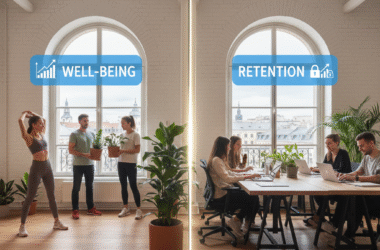
Research links founder wellbeing to firm outcomes. Entrepreneurial well-being correlates with higher firm performance because psychologically healthy founders make better decisions and allocate resources more effectively. A 2023 study found such associations across multiple firm types. When founders report higher well-being, firms are more likely to invest consistently in strategic priorities. That translates into better retention and steadier growth.
Practical interventions that actually work
Companies and founders can take concrete steps to reduce risk. The evidence and practice converge on a short list.
- Create structured recovery rhythms. Blocked deep-work days, no-meeting windows, and protected off-time reduce cognitive load. Policies such as mandatory vacations and at least one full day offline per week have shown benefits in multiple case studies.
- Institutionalise delegation and second-in-command responsibilities. A robust leadership bench prevents founders from becoming single points of failure. Invest early in COO or head of operations hires so the founder can step back when required.
- Remove stigma and normalise therapy. Encourage and subsidise clinical care and coaching. Make counselling part of the founder support offering in accelerators and VC programs. Data shows uptake remains low without active normalisation and subsidy.
- Train investors and boards. Create clear handbooks for escalation in case a founder’s health limits their ability to function. Boards should plan contingencies non-judgmentally and provide support rather than panic. Early transparent communication preserves value.
- Peer networks and confidential support groups can be helpful. Founders report that hearing peers’ struggles reduces shame and increases the likelihood of seeking help. Programs that match founders with mentors who have themselves survived burnout are effective.
Policy and ecosystem suggestions
Public and private institutions can play a significant role on a large scale. Startup support organisations should expand access to low-cost therapy, create return-to-work guidelines, and fund post-crisis reintegration coaching. Accelerators and trade bodies can require mental health training as part of founder curricula. Regulators and public health agencies should include entrepreneurship as a high-risk group in mental health strategies. Evidence shows prevention and early care are far cheaper than replacing a founder or rescuing a firm’s traction.
The cost of ambition
Ambition built Europe’s startup scene. But relentless ambition without repair is brittle. The data is precise that most founders will encounter mental health challenges at some point in their journey. For hyper-scale founders, the stakes are higher because personal collapse can cascade into company failure. The remedy is not shame or silence. It is better rest, real delegation, normalised clinical care, more intelligent investor behaviour and practical policies that treat founder health as a business variable.
Founders do not need to choose between ambition and sanity. They need systems that let both coexist. The companies and investors who help build those systems will be the ones that survive the next cycle.