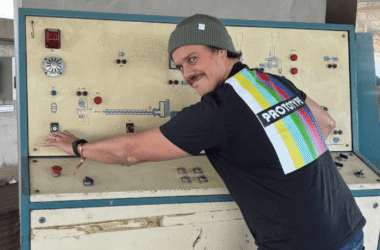




For many large organisations, inventory visibility often disappears the moment products leave the warehouse. From service vans and remote depots to customer sites and field service operations, companies continue to rely on spreadsheets, paper tickets, and disconnected systems to track billions of euros worth of inventory. Belgian technology company Ventory is aiming to solve that long standing operational problem, and investors are backing its expansion with fresh funding.
The company has raised €2.65 million in a new funding round led by KBC Securities, with participation from existing investors Finindus, Matterwave, and delaware. The investment will help Ventory accelerate product development, expand its presence across Western Europe, and strengthen its enterprise sales capabilities.
Bringing Real Time Visibility to Field Inventory
Founded by Vishal Punamiya, Ventory develops an inventory management platform designed specifically for organisations operating complex field inventory systems. While traditional enterprise resource planning systems provide visibility inside warehouses, many businesses still struggle to track inventory once it moves into field operations.
Ventory’s software is built to bridge that gap by connecting enterprise ERP systems with inventory used across service vans, field depots, consignment stock locations, and customer sites. The platform integrates directly with widely used enterprise systems including SAP, Oracle, Microsoft Dynamics 365 Business Central, and Sage.
By synchronising inventory data in real time, the platform allows organisations to monitor stock movement, availability, and usage outside traditional warehouse environments, helping reduce operational blind spots and improve decision making.
Replacing Fragmented Manual Processes
According to Vishal Punamiya, many organisations still rely on outdated workflows to manage field inventory despite handling highly valuable assets and products across distributed operations.
He explained that spreadsheets, paper based systems, and disconnected tools continue to dominate inventory tracking in field service environments, creating inefficiencies, inaccuracies, and limited visibility for operational teams. Ventory aims to replace those fragmented processes with a unified digital platform that gives enterprises centralised control over inventory movement and availability.
The company says its software is already supporting some of the most operationally complex organisations across multiple industries. Ventory recently achieved ISO/IEC 27001 certification, highlighting its focus on enterprise grade security and compliance standards as it scales operations.
Growing Adoption Across Industries
Today, Ventory’s platform is being used by organisations operating in seven countries across sectors that require precise inventory coordination and high operational reliability. Its customer base includes healthcare providers, medical distributors, energy producers, asset management companies, a national railway operator, and a medical robotics manufacturer.
These industries often depend on field inventory being available exactly where and when it is needed, making real time tracking and operational efficiency critical to business performance. By improving inventory accuracy and reducing manual coordination work, Ventory believes it can help enterprises reduce costs while improving service delivery.
Expansion Plans and AI Development
The newly secured funding will be used to accelerate development of Ventory’s AI product roadmap and further strengthen its ERP integration capabilities. The company also plans to expand geographically across Western Europe while growing its enterprise go to market team.
The investment aligns with a broader initiative launched by KBC Group last year to support the Belgian startup ecosystem through a €100 million funding programme tied to Start it @KBC and KBC Securities.
As industries increasingly seek better visibility into complex supply chains and distributed operations, Ventory is positioning itself as part of a growing wave of enterprise software companies modernising operational infrastructure beyond the warehouse floor.