


Quantum software startup Haiqu has raised 11 million dollars in seed funding, marking one of the largest early stage investments in the quantum software category. The round was led by Primary Venture Partners, with participation from Qudit Investments, Alumni Ventures, Collaborative Fund, Silicon Roundabout Ventures and returning backers Toyota Ventures and Mac Venture Capital. With operations across the United Kingdom, Ukraine and the United States, Haiqu is preparing to launch a new operating system for quantum applications that aims to make current generation quantum hardware significantly more efficient and more resilient to noise.
Building the Software Layer Quantum Computing Has Been Missing
Quantum hardware continues to advance, but real world applications remain limited by the high cost of experimentation and the instability of early generation qubits. Haiqu is developing a software layer that sits between applications and hardware, optimising the performance of quantum machines and enabling larger, more complex workloads to run reliably.
The company’s upcoming operating system is designed to reduce the impact of noise, improve resource management and lower the cost of running experiments on quantum cloud platforms. By improving hardware utilisation and expanding the size of runnable circuits, Haiqu aims to unlock meaningful quantum capabilities long before fault tolerant quantum computers arrive.
Founders with Deep Quantum Expertise
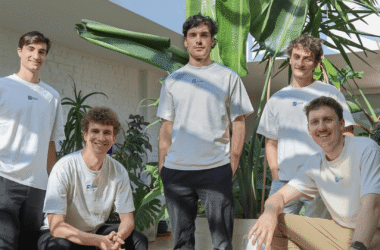
Haiqu was founded in 2022 by Richard Givhan, a Stanford trained engineer, and Mykola Maksymenko, a former quantum researcher at the Max Planck Society and the Weizmann Institute. The founders believe that software, not hardware alone, will determine how quickly quantum computing becomes commercially relevant.
Givhan explains that progress today is limited because quantum cloud access remains expensive and hardware capabilities are still far from industrial scale. Too little experimentation is happening, and teams struggle to iterate quickly. Haiqu’s goal is to create a system that can run significantly larger applications at a fraction of current costs.
Givhan notes that quantum middleware is often overlooked, but it is the only way to close the gap between noisy hardware and real world performance requirements.
Investor Backing Signals Rising Confidence in Quantum Software
Primary Venture Partners led the investment based on the belief that software will be central to achieving commercial quantum advantage. Partner Brian Schechter says quantum computing will only scale once it demonstrates a clear performance edge over classical systems in at least one domain.
He argues that achieving this first milestone requires systems that run more noise resiliently and at greater scale. Haiqu’s operating system is designed to minimise hardware shortcomings while improving execution reliability, making it easier for enterprises and researchers to explore quantum workloads.
This perspective reflects a broader shift in the quantum industry where increased attention is being placed on algorithmic optimisation, error mitigation and software infrastructure that makes current hardware genuinely useful.
Addressing the Cost and Complexity Challenge
Quantum cloud platforms allow developers to run experiments on real quantum processors, but access is expensive and often limited. As a result, many quantum teams rely heavily on simulation which does not fully replicate the behaviour of physical qubits. Haiqu aims to reduce reliance on simulations by lowering operational costs and allowing more experimentation directly on hardware.
The company’s platform is intended to help users run deeper circuits, test more robust applications and achieve more predictable outcomes, all of which are essential for advancing quantum chemistry, optimisation and machine learning workloads.
A Global Team Tackling a Global Challenge
Operating across the United Kingdom, Ukraine and the United States, Haiqu brings together researchers and engineers with expertise in quantum algorithms, systems engineering and machine learning. The company plans to expand its team across all three locations as part of the funding round.
Haiqu’s seed round follows earlier investment that brought the company’s total prior funding to just under six million dollars. The new capital will accelerate product development, strengthen its R and D capabilities and support the upcoming commercial launch of its operating system.
Positioning Quantum for Real World Impact
As the quantum industry pushes toward practical applications, Haiqu’s software focused approach stands out as a necessary stage in the evolution of quantum computing. By optimising hardware performance and lowering the cost of experimentation, the company hopes to make quantum progress more accessible to research groups, startups and enterprise teams alike.
With fresh capital and a strong roster of global investors, Haiqu is positioning itself as a catalyst for the next phase of quantum innovation, where software plays a decisive role in unlocking the full potential of quantum hardware.