


As the world searches for reliable and sustainable energy solutions, a new generation of startups is looking beyond Earth’s surface for answers. European startup TerraSpark is stepping into this frontier with an ambitious vision to harness solar power directly from space. The company has now secured over €5 million in pre seed funding to accelerate its mission of building continuous, weather-independent energy systems.
Strong Backing for a Bold Energy Vision
The funding round attracted prominent investors including Daphni, better ventures, the Hans(wo)men Group, along with several strategic business angels. This early backing reflects growing confidence in next-generation energy technologies that aim to address long-term infrastructure challenges.
The capital will support TerraSpark’s technology development as well as upcoming pilot projects designed to validate its approach in real-world conditions.
Rethinking Energy from Space
TerraSpark is focused on developing space based solar power systems capable of delivering continuous energy regardless of weather or time of day. Unlike traditional solar panels on Earth, which depend on daylight and are affected by atmospheric conditions, space based systems can capture sunlight uninterrupted and transmit it back to Earth.
This concept has existed for decades but has remained largely theoretical due to technological and economic barriers. However, recent progress in satellite manufacturing, orbital robotics, and significantly reduced launch costs has made the idea increasingly feasible.
The company believes this approach can help address mounting challenges in Europe’s energy landscape, including rising electricity demand, grid congestion, and the growing energy consumption of data centres.
A Phased and Practical Approach
Rather than jumping directly into large scale orbital systems, TerraSpark is taking a step-by-step strategy. The company is initially focusing on commercialising radio frequency-based wireless energy transmission for industrial applications on Earth.
This early phase allows TerraSpark to validate critical aspects such as safety, efficiency, and regulatory compliance in controlled environments. It also provides an opportunity to generate real-world data and build trust with stakeholders before scaling to more complex space-based operations.
Founder and CEO Jasper Deprez emphasised that while space solar power has often been seen as futuristic, the company’s gradual approach is designed to bring it within practical reach. By starting with viable terrestrial applications, TerraSpark aims to establish a solid foundation for future expansion.
Experienced Leadership Driving Innovation
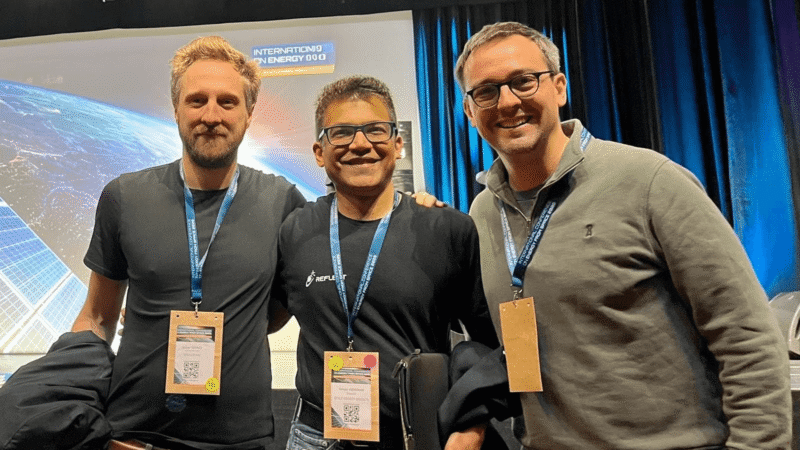
TerraSpark is led by a team with deep expertise across space technology, engineering, and business scaling. Alongside Jasper Deprez, the leadership team includes Sanjay Vijendran as Chief Technology Officer and Matthias Laug as Chief Operating Officer.
This combination of technical and operational experience positions the company to navigate the complexities of both space infrastructure and energy systems. Building reliable and scalable solutions in this domain requires not only innovation but also careful execution across multiple disciplines.
Roadmap to Space-Based Energy Transmission
Looking ahead, TerraSpark has outlined a clear development roadmap. In the near term, the company plans to launch pilot applications and demonstration projects focused on wireless power transmission in live environments. These trials will play a crucial role in proving the viability of its technology.
An orbital technology demonstrator is scheduled for 2027, marking a significant milestone in the company’s journey. This will be followed by initial space-to-Earth energy transmission efforts in 2028, bringing the vision of space-based solar power closer to reality.
Building the Future Energy Infrastructure
With increasing pressure on traditional energy systems, TerraSpark’s approach offers a compelling alternative that could complement existing renewable sources. By enabling continuous energy generation, the company aims to enhance resilience and reduce dependence on variable conditions.
The newly secured funding will help accelerate research, testing, and deployment efforts, positioning TerraSpark as a key player in the emerging space energy sector. As technological barriers continue to fall, the idea of harvesting solar power from space may soon transition from concept to critical infrastructure.