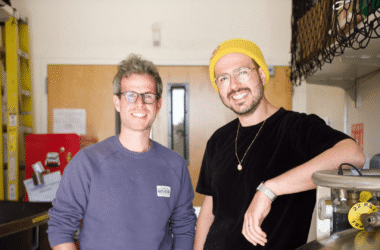




As enterprises increasingly deploy AI agents to automate workflows, a major limitation continues to hold back their effectiveness, the lack of real operational context. Interloom, a startup building infrastructure to capture and structure how work actually gets done inside organisations, has raised $16.5 million in seed funding to address this challenge.
The round was led by DN Capital, with participation from Bek Ventures and existing investor Air Street Capital. The funding will support the continued development of Interloom’s platform and its expansion into enterprise AI and workflow automation.
The missing layer in enterprise AI
While AI systems have become more capable at processing information and generating outputs, they often struggle in real world enterprise environments. This is because much of a company’s operational knowledge is not formally documented.
In many organisations, critical knowledge exists in fragmented forms such as emails, internal chats, support tickets, and individual employee experience. This creates a gap between what AI systems can access and how work is actually performed.
Interloom is focused on bridging this gap by capturing knowledge directly from workflows as they happen, rather than relying on static documentation or manual input.
Turning experience into structured memory
At the core of Interloom’s platform is the concept of a persistent memory layer for AI agents. The system observes and records how tasks are completed, storing decisions, actions, and outcomes in a structured format.
This information is then organised into what the company calls a context graph, a continuously evolving system that reflects how work is performed across the organisation. Unlike traditional knowledge bases, which require manual updates, this graph grows automatically as new work is completed.
By grounding AI agents in this accumulated experience, the platform enables them to make decisions based on proven solutions rather than generic or incomplete information.
Enabling smarter automation
The use of a context graph allows AI agents to access past resolutions and apply them to similar situations. This significantly improves their ability to handle complex workflows, where context and historical knowledge are essential.
Instead of treating each task as a new problem, the system allows agents to build on previous outcomes, increasing both efficiency and accuracy. This approach is particularly valuable in environments where decisions depend on nuanced understanding and past experience.
The platform also incorporates oversight mechanisms, ensuring that the knowledge captured and applied remains aligned with expert judgement within the organisation.
Preserving institutional knowledge
One of the challenges many companies face is the loss of knowledge when employees leave or roles change. Valuable expertise often disappears with individuals, making it difficult to maintain continuity and efficiency.
Interloom addresses this issue by embedding knowledge into the organisation itself. By capturing how work is performed and storing it in a persistent system, the platform ensures that expertise is retained and accessible over time.
This not only supports AI driven automation but also provides value to human employees, who can access past solutions and insights when performing their own tasks.
A foundation for AI driven operations
As AI agents take on more operational responsibilities, the need for reliable and context rich data becomes increasingly important. Interloom’s platform is designed to serve as a foundation for this shift, enabling AI systems to operate with a deeper understanding of how organisations function.
The company’s approach reflects a broader trend in enterprise technology, where the focus is moving from standalone tools to integrated systems that combine data, context, and automation.
Scaling the next phase
With the new funding, Interloom plans to further enhance its platform and expand its capabilities. This includes improving how the system captures and structures knowledge, as well as extending its applications across different enterprise use cases.
The company is positioning itself at the intersection of AI and enterprise operations, aiming to make automation more effective by ensuring that it is grounded in real world experience.
As businesses continue to adopt AI at scale, solutions that address the gap between data and context are likely to play a critical role. By transforming everyday workflows into a structured memory layer, Interloom is working to enable a new generation of AI systems that can learn, adapt, and operate with greater precision over time.