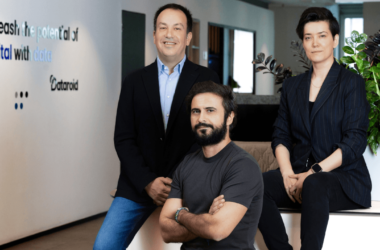




Kyiv based defence technology company The Fourth Law, TFL, has secured a new funding round backed by Axon, the US public safety technology group best known for its work in law enforcement and security infrastructure. The investment marks a significant milestone for the Ukrainian startup as it continues to scale AI driven autonomy technologies developed and validated in real world conflict environments.
Building autonomy for modern defence
Founded in Ukraine, The Fourth Law focuses on artificial intelligence and robotics for defence and public safety applications, with autonomy at the core of its technology offering. Rather than building single purpose hardware, TFL develops a modular, autonomy first software platform designed to operate across a wide range of unmanned systems.
The company’s technology stack includes simulation and analytics tools, autonomous mission software, and fleet management systems that allow operators to coordinate large numbers of unmanned vehicles. The system is platform agnostic and can be integrated into quadcopters, fixed wing UAVs, missiles, and both ground and maritime drones.
A key differentiator is the platform’s ability to function independently of satellite navigation systems. In GPS denied environments, where electronic warfare and jamming are common, TFL’s autonomy software enables drones to continue operating using onboard perception, sensor fusion, and AI based decision making.
Deployed at scale on the front lines
TFL’s technology is already in active use. Its flagship hardware products include the Lupynis 10 TFL 1 unmanned aerial vehicle and the TFL 1 autonomy module, which are currently deployed by more than 50 Ukrainian military units across multiple frontline regions.
According to the company, its first level autonomy capabilities significantly improve operational effectiveness. In FPV drone missions, TFL reports success rate increases of between two and four times, while adding approximately 10 per cent to unit costs. This trade off has proven attractive in high intensity environments where reliability and speed are critical.
Beyond its own UAVs, TFL’s autonomy modules have been integrated into platforms from dozens of third party drone manufacturers. The modules can be installed on external airframes, used with different ground control stations, and adapted to a range of communications architectures, making the technology flexible and scalable.
Countering aerial threats with on edge AI
One of TFL’s most recent developments is TFL AntiShahed, an AI powered module designed for interceptor drones. The system uses on edge artificial intelligence to detect and identify incoming strike drones such as the Shahed and Geran models.
By processing data directly onboard rather than relying on remote analysis, the module enables faster identification and response compared to manual observation. This capability is increasingly important as low cost strike drones are deployed at scale to target cities, energy infrastructure, and other critical assets.
Strategic backing from Axon
Axon’s investment brings both capital and strategic alignment with a global leader in public safety and security technology. While Axon is widely known for body cameras, sensors, and digital evidence platforms, the partnership reflects growing interest in autonomy systems capable of operating in complex and high risk environments.
According to Yaroslav Azhnyuk, founder and chief executive of The Fourth Law, the new funding will be used to accelerate research and development of advanced autonomy capabilities. These include technologies designed to help protect cities and critical infrastructure from sustained drone attacks, particularly those involving Shahed type platforms.
Beyond defence applications
Although TFL’s technology has been shaped by wartime deployment, the company notes that its autonomy stack has potential applications beyond defence. Industries such as logistics, manufacturing, construction, and industrial inspection could benefit from GNSS independent navigation and scalable autonomous fleet management.
For now, however, The Fourth Law remains focused on advancing autonomy technologies that address urgent security needs, using real world deployment to refine systems that may later support broader commercial use.