



Modern warfare is increasingly shaped by unmanned systems, yet the way drones are deployed often still relies heavily on constant human control. As military forces adopt larger fleets of autonomous systems, managing them efficiently in complex environments has become a major operational challenge. British defence technology startup Mutable Tactics is developing artificial intelligence software designed to address this gap, enabling multiple drones to operate together even when communications are disrupted. The company has now raised $2.1 million in seed funding to advance its technology and expand its engineering capabilities.
Funding to accelerate AI driven drone coordination
The investment round was led by spacetech focused investor Seraphim Space. Additional participation came from the United Kingdom’s National Security Strategic Investment Fund, along with venture investors Koro, Entrepreneurs First and Transpose. The capital will help the company expand its team and continue developing its AI software platform.
Mutable Tactics plans to use the funding to grow its engineering team based in Cambridge and accelerate the development of its decision making software. The company also intends to validate its technology through collaborations with two European governments, allowing it to test and refine the system in realistic operational scenarios.
A new approach to drone command and control
Mutable Tactics is developing AI software that operates as a decision layer between a human commander and a fleet of drones. Instead of requiring operators to control each drone individually, the system interprets a commander’s high level instructions and translates them into coordinated actions across multiple unmanned systems.
This approach allows mixed fleets of drones to function as a unified team rather than as separate platforms. By automating certain elements of coordination and decision making, the technology aims to increase the number of drones that can be effectively deployed at the same time.
Traditional drone operations typically rely on a one to one relationship between operator and system, meaning each drone requires direct human supervision. While this model can work in limited scenarios, it becomes inefficient when large numbers of drones are involved or when conditions change rapidly.
Overcoming communication challenges in combat
Battlefield environments often present additional complications, particularly when communication signals are interrupted or degraded. Many current drone systems depend on constant links with human operators, which can limit their usefulness when communications become unreliable.
Mutable Tactics’ software is designed to help address this issue by enabling drones to continue operating as a coordinated group even if direct communication with operators is temporarily disrupted. The AI system maintains the overall intent of the mission while allowing drones to carry out tasks autonomously within predefined parameters.
According to the company, this capability could help military forces maintain operational effectiveness in situations where traditional command structures struggle to keep pace with the speed and complexity of modern engagements.
Experienced founders and technical expertise
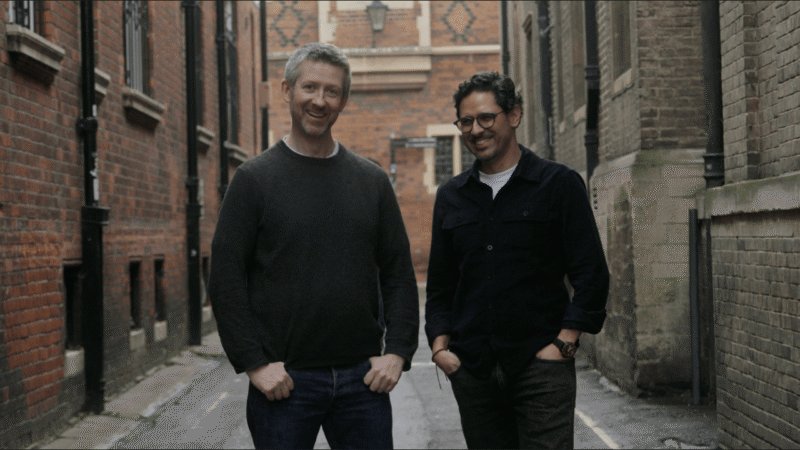
Mutable Tactics was founded in 2024 by Colin MacLeod, a former British Army officer, and Enrique Muñoz de Cote, a robotics and artificial intelligence specialist. The founding team combines operational military experience with technical expertise in AI and robotics.
MacLeod emphasised that one of the main constraints in deploying large drone fleets today is not the availability of hardware but the limited attention of human operators. As drone technology continues to advance, the ability to manage multiple systems simultaneously becomes increasingly important.
He explained that true autonomy allows human commanders to supervise teams of drones rather than manually controlling individual machines. This shift, he noted, enables operators to focus on strategic outcomes and mission objectives instead of constant manual control.
Supporting the future of autonomous defence systems
The company believes its technology could play a key role in enabling scalable drone operations for defence organisations. By allowing multiple unmanned systems to act as coordinated units, the software could support missions that require speed, resilience and rapid adaptation to changing conditions.
With the new funding secured, Mutable Tactics is preparing to continue refining its platform while building partnerships that will allow its AI driven system to be tested and deployed in real world defence scenarios. As unmanned systems become increasingly central to military strategy, tools that improve coordination and autonomy may become essential for future operations.