



The Cubish spatial web proposes a simple yet ingenious trick, treat the planet like a vast address book made of 10-metre cubes, and let people pin files, memories, and tiny websites to those cubes. The idea sounds like a design-school thought experiment, we know, but wait till you hear the practicalities explained by the team building it. Founder Dorian Lazzari walked us through the platform’s core ideas, its spatial indexing, real-world ownership (which ensures that users have control over their digital content), and the infrastructure required to deliver instant results from a 5.1-trillion-cube network.
Interview with Dorian Lazzari, Founder of Cubish

Cubish is introducing a new layer of the internet, one organised by location instead of folders or URLs. When we spoke to Dorian Lazzari, the idea felt less abstract. He took us through the grid and showed how each one can hold a Cube Domain. In the deck, these domains resemble tiny digital rooms where you can leave text, images, PDFs, audio, or video. You can add Expansions to stretch a Domain across other cubes, whether they’re next door or on another continent. Expansions are a unique feature of Cubish that allows users to connect their digital spaces in a spatial context.
The Tech News Portal: Cubish divides the planet into over 5.1 trillion 10-meter cubes and mentions that Cubes index Cube Domains by quality, similar to a search engine. What does the indexing/ranking algorithm specifically prioritise – is it sheer data volume, the number of Expansions, user-engagement signals within the Cube Domain, or a different metric entirely?
Dorian: The Cube works as a contextual search engine. Domains inside it are ranked based on real, measurable signals, such as Domain visits, time spent within the Domain, clicks on content, saves to favourites, and overall engagement. These signals will continue to evolve, to always return the most valuable and relevant Cube Domains for each specific Cube.
Cube Domains with the .cube extension (Pro) also benefit from a higher visibility coefficient compared to Free Domains, given the same level of interaction. This helps curated and professional content surface more effectively.
Regarding the Home, it displays content from Domains within 30 meters of the user in a social-style scroll. Here, too, likes, shares, saves, and preview views contribute to showing the most interesting content available in the user’s immediate surroundings.

The Tech News Portal: In a world where Big Tech is being scrutinised for data control, Cubish is creating a global digital layer for personalised content that is anchored in the real world. Does Cubish have plans to integrate with decentralised web technologies (like blockchain) to give Cube Domain owners absolute data sovereignty and control over who can access their content?
Dorian: Decentralised technologies can potentially be integrated at the level of each Domain. Just as a traditional web domain can host Web3 experiences today, a Cube Domain can act as an access point to decentralised digital environments created by its owner.
Cubish itself is not built on blockchain. We prefer not to depend on technologies that may be influenced by market hype or volatility. The goal is to remain a neutral, accessible and easy-to-use service. Cube Domains are purchased using traditional currencies and payment methods, and ownership works similarly to web domains. Domain ownership is managed through Cubish’s internal registry and can be renewed, and in the future, transferred or resold between users within the ecosystem without requiring a decentralised layer.
The Tech News Portal: How does the Cubish application handle the real-time processing of over 5.1 trillion Cubes globally to ensure instantaneous, low-latency content retrieval for a user walking through a high-density area?
Dorian: The system does not process all 5.1 trillion Cubes at the same time. It works through geo-filtered queries that focus only on the relevant area around the user. This dramatically reduces computational load and ensures fast response times.
From the beginning, we designed a highly scalable infrastructure. The app runs on Google’s cloud environment, which provides the elasticity needed to support a global grid of Cubes and to deliver low-latency content retrieval even in high-density environments. As the ecosystem grows, we continue to optimise the architecture through territorial caching, efficient data partitioning and progressive performance improvements.
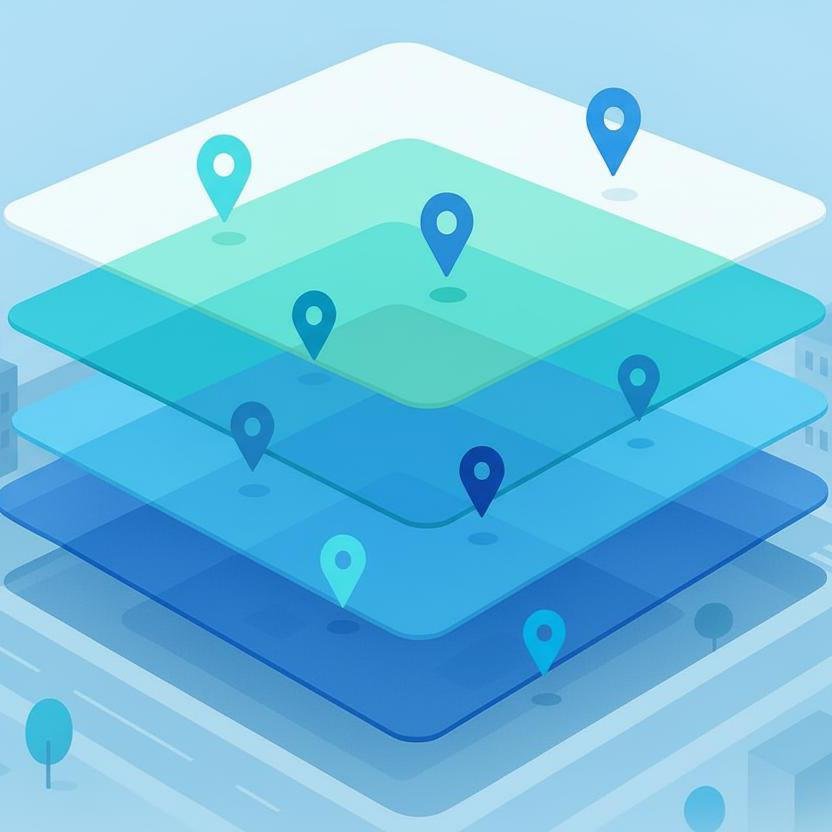
What resonated in our discussion was Cubish’s user-centric approach. The platform carefully observes user behaviour and operates on a simple ranking model that considers visits, time spent, clicks, and saves. These signals discreetly determine the content that rises to the top when a user opens a Cube, ensuring a personalised and engaging experience. The visibility boost for pro domains, such as the .cube ones, when engagement is equal, is a testament to Cubish’s commitment to empowering creators and professionals to showcase their work. The hyper-local Home feed, pulling in content from around 30 meters of the user’s location, further underscores Cubish’s focus on the user.
Dorian also shared why they didn’t anchor Cubish on blockchain. The team wants anyone to be able to claim a Cube Domain without dealing with wallets or market volatility. Ownership sits in an internal registry, which keeps the product lightweight. But the door to Web3 isn’t closed. Each Domain can host decentralised experiences if the creator chooses. The “core simple, edge flexible” approach also reflects the deck.
Cubish covers 5.1 trillion cubes, but they don’t treat that as a single load. Your phone queries only the sliver of the grid around you. Everything else is handled with geo-filtered searches, territorial caching and efficient data partitioning. The app resides on Google Cloud, allowing it to scale and adapt as usage increases. It’s a familiar approach in mapping, but here it’s applied to personal content, memories and micro-sites.
It is exciting to know what’s next – richer 3D layers, AR content, smoother mobile flows, and additional tools for building truly expressive Domains. It’s a mix of infrastructure and imagination.
As our conversation unfolded, it became clear that the most significant challenge Cubish faces is not technological, but cultural. Will people be willing to anchor their memories and files to specific locations? Will they accept a centralised registry for ownership? If a place becomes the new homepage, who will we choose to be discoverable and why? These are the thought-provoking questions that Cubish is navigating as it seeks to revolutionise the digital landscape.
Talking to Dorian, Cubish felt like a spatial rethinking of how we store and find our digital life. If they get the experience right, the grid could feel like a quiet layer sitting beneath the city, which is always there, waiting to be discovered.
Cubish is available on Android Play Store and iOS App Store