

What if travelling between smaller European cities no longer required a long road journey or a connecting flight through a major airport? Munich based aerospace startup VÆRIDION is working towards that possibility with an all electric aircraft designed to make short distance regional travel quieter, more affordable and free from direct in flight emissions. The company has raised €30 million in a Series A2 funding round to develop its first certification conforming aircraft and advance its plans for commercial electric aviation.
The funding round was led by Dutch investors SHIFT Invest and Invest-NL, with participation from existing backers World Fund, Project A and Vsquared Ventures. PAYBACK founder and deep tech investor Alexander Rittweger also joined the investment. Including the latest round and earlier public funding, VÆRIDION has raised approximately €60 million to date.
Building an Electric Alternative to Regional Aircraft
Founded in 2021 by former Airbus managers Ivor van Dartel and Dr Sebastian Seemann, VÆRIDION is developing the Microliner, a fully electric aircraft designed specifically for regional passenger and cargo transportation.
The aircraft is being developed to carry up to nine passengers over approximately 400 kilometres under Instrument Flight Rules. A four passenger configuration is intended to achieve a range of up to 550 kilometres under Visual Flight Rules.
Unlike conventional aircraft that rely on fossil fuels, the Microliner will use battery powered electric propulsion. Its design combines a glider inspired wing with integrated modular batteries and a multi engine system connected to a single propeller.
The company believes this approach could make regional flights more economical while reducing noise and eliminating direct in flight carbon dioxide emissions.
Connecting Underserved European Regions
Many smaller cities and regional communities have lost direct air connections because short routes can be expensive to operate using conventional aircraft. Fuel consumption, maintenance requirements and operating costs make these services challenging for airlines.
VÆRIDION wants to address this gap by developing an aircraft that can operate from existing regional airfields without requiring entirely new airport infrastructure.
The company is targeting operating costs below €0.40 per seat kilometre. Its ambition is to make fares comparable to first class rail tickets while creating commercially viable regional routes.
The Microliner is also intended to support cargo operations, giving regional logistics providers another potential option for transporting goods between smaller destinations.
€94.5M EU Grant Selection Adds Industrial Ambition
Alongside its €30 million equity round, VÆRIDION announced that its CAROLUS project has been selected for a €94.5 million grant from the European Commission’s Innovation Fund.
The proposed grant is intended to support the establishment and expansion of a final assembly facility at Oberpfaffenhofen Airport near Munich. The selection followed a competition involving 358 applications, with CAROLUS chosen as one of 12 large scale projects.
However, the grant remains subject to completion of the funding agreement, which the company expects to sign in 2027.
The two funding developments address different stages of the programme. The equity investment will support the first conforming aircraft and integrated battery and propulsion testing, while the proposed EU funding is intended to help establish industrial manufacturing capacity.
Moving From Engineering to Aircraft Testing
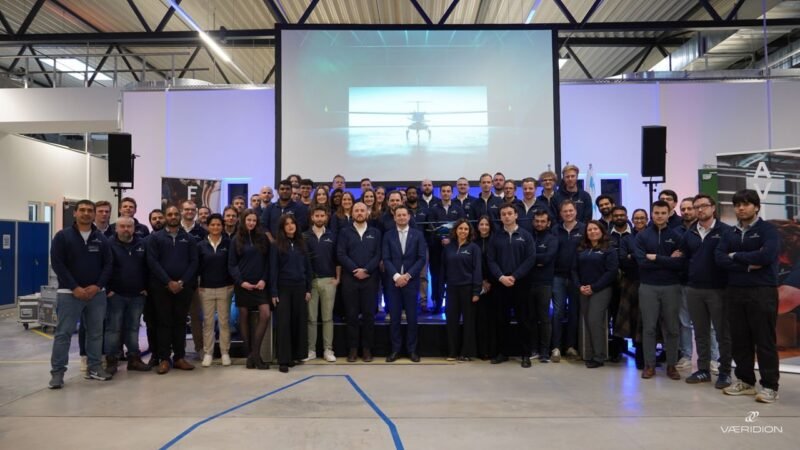
VÆRIDION opened its production and testing facility at Oberpfaffenhofen Airport in March 2026 and has since powered on its electric engine for the first time.
The next stage involves integrating battery packs and propulsion technology on a ground testing platform known as a copper bird. Wind tunnel testing will also support the development process and preparations for flight testing.
The company has secured commercial commitments for more than 130 aircraft, valued at over €730 million, with ASL Group identified as its launch customer.
Targeting Commercial Flights by 2030
The latest funding marks an important step in VÆRIDION’s transition from aircraft design towards prototype development and industrial preparation.
Led by CEO Ivor van Dartel, the company aims to make its Microliner commercially available by 2030. Its broader ambition is to establish electric aircraft as a practical alternative for regional transportation, connecting communities that conventional aviation increasingly struggles to serve.