



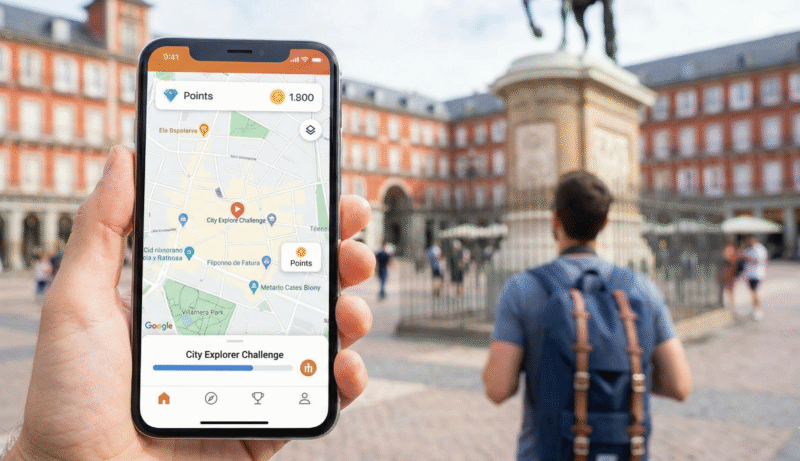
Travel App Gamification is the most powerful tool that modern travel platforms use to capture the attention of the mobile generation. In an era where consumers have dozens of booking options at their fingertips, loyalty is harder to maintain than ever before. To combat this, companies are moving away from traditional rewards programs and moving toward interactive experiences that feel more like a video game than a transaction. By integrating points, badges, and progress bars, these apps trigger dopamine releases that keep users engaged with the platform every single day. This guide explores the strategic framework of these digital games and how they are fundamentally changing the way we plan our journeys.
Why Travel App Gamification is the Secret Weapon for Retention
The primary reason for the rapid adoption of Travel App Gamification is the need to create a habit loop. Most people only book a flight or a hotel a few times a year, which means they often forget about an app between trips. Gamification solves this problem by giving the user a reason to open the app even when they are not travelling. By offering daily rewards or challenges, the platform stays top of mind, so when it’s time to book a real trip, they don’t look anywhere else. This strategy mirrors the sophisticated predictive logic we see in our guide on Using AI for Finding Cheap Flights, which aims to provide value before the user even knows they need it.
The motivation behind these features stems from human psychology. People have an inherent desire to complete sets and achieve a higher status. When an app shows a progress bar that is 80% full, it creates a psychological tension that the user wants to resolve by finishing the task. This is why gamers spend hours trying to unlock a rare achievement. By applying these same principles to travel booking companies, we can guide user behaviour and encourage actions that lead to long-term profitability. It is a strategic move that aligns the business’s goals with the natural inclinations of the human brain.
Using Travel App Gamification to Create Daily Habit Loops
Understanding the how behind Travel App Gamification reveals the technical and creative sophistication required to build a winning platform. The implementation involves several key mechanics that work together to create a seamless experience.
Progress tracking is the foundation of any gamified system. Apps use visual indicators to show users how close they are to the next tier of rewards. This creates a sense of momentum and accomplishment. Another vital mechanic is the use of variable rewards. Instead of giving the same discount every time, an app might offer a surprise bonus or a mystery box. This uncertainty makes the experience more exciting and encourages users to check the app more frequently to see what they might win. This level of engagement is becoming just as important as environmental accountability, as discussed in our take on Carbon Neutral Travel.
Hopper and the Power of Carrot Cash
The travel app Hopper has become a global leader in Travel App Gamification by making the act of watching flight prices feel like a game. Their entire interface is designed around a friendly rabbit character that guides the user through the booking process. One of their most successful features is Carrot Cash, a digital currency users earn by performing specific actions in the app.
Users can earn rewards by checking in daily or by inviting friends to join the platform. This creates a powerful referral engine that drives organic growth without the need for expensive advertising. Hopper also uses countdown timers and flash sales to create a sense of urgency that feels like a game challenge. This strategy has enabled them to achieve some of the highest retention rates in the industry, as users think they are winning every time they secure a deal or earn more digital currency.
Booking.com and the Genius Level System
Booking.com utilises Travel App Gamification through its highly effective Genius loyalty program. Unlike old-school programs that require complex point calculations, the Genius system is built on clear levels. Once a user completes a certain number of stays within a specific timeframe, they are levelled up for life. This permanent status is a massive incentive for users to consolidate all of their bookings onto a single platform.
The app uses bright badges and progress trackers to highlight the benefits of reaching the next level, such as a complimentary breakfast or a room upgrade. This creates a clear roadmap for the user and makes the rewards feel attainable. By labelling users as Genius members, the platform also provides a sense of social status and exclusivity. This simple change in terminology turns a standard discount program into a status game that millions of travellers are eager to play.
TripAdvisor and the Badge of Authority
The review giant Tripadvisor has mastered Travel App Gamification to drive content creation. The platform relies on user-generated reviews to remain relevant and uses a sophisticated badge system to reward its top contributors. Users earn different badges based on the quality and frequency of their reviews, such as the Top Contributor or Review Ninja titles.
These badges are prominently displayed on the user profile, serving as digital social proof. It encourages people to write more detailed, helpful reviews to maintain their rank within the community. This system effectively crowdsources platform quality control by making users feel like they are part of an elite club of travel experts. It proves that gamification is not just about discounts but about recognition and influence.
Expedia and Unified Reward Tiers
Expedia recently unified its loyalty programs under the OneKey banner to simplify the gamification experience for its users. They use a unified currency called OneKeyCash that can be earned and spent across their entire family of apps, including hotels and car rentals. The app features a prominent status bar that shows the user exactly how many trip elements they need to reach the next tier of silver, gold, or platinum.
This transparent approach allows travellers to gamify their own vacations by planning how to reach the next level with a single trip. The app also offers Member-Only Deals, highlighted with gold icons, creating a visual treasure hunt for users. By making the rewards visible and easy to understand, Expedia has created a friction-free game that encourages repeat bookings across multiple travel categories.
The Future of Gamified Travel Infrastructure
The integration of Travel App Gamification is moving toward a more personalised and immersive future. We are seeing the rise of Augmented Reality treasure hunts where travellers can find digital rewards while exploring a physical city. This bridges the gap between the digital app and the real-world experience. Furthermore, the use of artificial intelligence will allow apps to create personalised challenges for each user based on their specific travel habits.
As more startups enter the market, the ones that can build the most engaging and rewarding games will survive. The industry is shifting from being a utility to being a form of entertainment. This means that developers must think like game designers to ensure that their platforms are fun and intuitive. The goal is to turn the stress of travel planning into a joyful and rewarding experience that users look forward to every day.
Conclusion
Travel App Gamification has transformed the way we interact with the tourism industry by turning loyalty into a high-energy digital game. By understanding the how and why behind these mechanics, such as progress tracking and variable rewards, we can see why brands like Hopper, Booking.com and Tripadvisor are so successful. These companies have proven that if you make an experience fun and rewarding, the users will remain loyal for life. As the technology continues to evolve, the power of gamification will remain the primary engine for driving repeat bookings and building a global community of engaged travellers. The future of travel is no longer just about the destination but about the game we play to get there.