


As exhibitors and attendees prepare for the final day of CES 2026, navigating the last stretch of booth hopping, bright lights, and the endless hunt for swag (a friendly reminder to always say NO to USB sticks), Europe’s startups are pushing hard to make their mark. These founders and innovators are showcasing technologies that blend practicality with bold ambition, hoping to capture the attention of investors, customers, retailers, and ecosystem partners.
Here are some of the standout European startups you shouldn’t miss today.
Chimera Tech, Italy, SmartSailor Brings Intelligence to Boating
Italian startup Chimera Tech is combining AI, engineering, design, and strategic thinking to build solutions for real-world problems. Its flagship product, SmartSailor, is an AI and IoT platform designed to make boating smarter and safer. SmartSailor aggregates data from onboard systems, such as batteries, bilge pumps, weather instruments, cameras, and navigation tools, into a unified dashboard.
Owners can monitor system status both locally and remotely, even when far from the vessel. The platform detects anomalies such as low battery levels, high bilge water, anchor drift, or sudden weather changes, sending real-time alerts directly to the owner’s phone. It also tracks energy consumption and performance trends, helping boat owners make informed decisions. Depending on onboard hardware, owners can remotely control lights, pumps, or refrigeration via the cloud.
Coroflow, Ireland, Real-Time Breastfeeding Insights
Ireland’s Coroflow has developed Coro, a breastfeeding monitoring device that helps parents measure the amount of milk their baby consumes in real time. Coro resembles a soft silicone nipple shield but includes a miniature built-in sensor that captures milk flow and volume during feeding.
Paired with a mobile app, Coro displays real-time metrics such as volume consumed, feeding duration, and flow rates. It offers parents peace of mind and clarity, especially when traditional indicators like weight gain or nappies do not provide enough reassurance.
Factorial Robotics, Ukraine, Autonomous Warehouse Movement
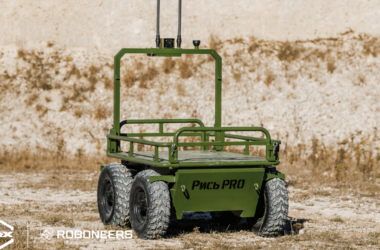
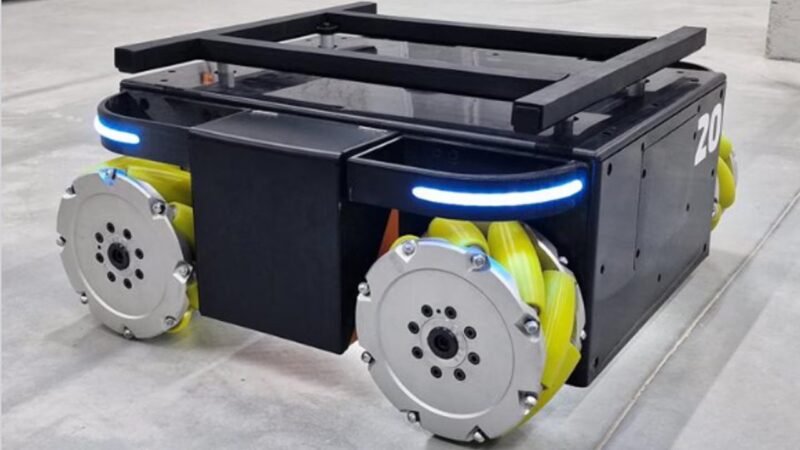
Ukrainian startup Factorial Robotics has introduced Shapid, a family of autonomous mobile robots designed to move goods across warehouses, factories, and distribution centres. Using lidar, sensors, and QR-code guidance, Shapid robots navigate independently, transporting pallets and parts directly to workers as part of a goods-to-person workflow.
Each robot can carry loads of roughly 600 kg and operate safely thanks to 360-degree sensors that detect people and obstacles. A central fleet management system coordinates tasks, routes, and communication across multiple robots. The platform’s modular design allows reconfiguration for various warehouse needs and connects with existing warehouse management systems.
Willo, Finland, Wireless Power for the Next Generation
Finland’s Willo is aiming to eliminate power cables with its over-the-air wireless power system. Inspired by Nikola Tesla’s original ideas, Willo’s technology transmits power through the air in all directions, similar to how Wi-Fi distributes data.
The system delivers uninterrupted omnidirectional power, enabling multiple devices to charge simultaneously without being precisely aligned to a transmitter. Its potential spans consumer electronics, industrial automation, robotics, healthcare devices, logistics, and large-scale IoT networks.
GYM 3000, Croatia, The Smart Fitness Towel
Croatia’s GYM 3000 is giving fitness gear a digital upgrade with its FitButlr Smart Fitness Towel. The towel incorporates NFC technology, letting gym-goers tap their phone to claim it, personalise it, and link it to their profile. The dual-zone design separates the side for your body from the one used on gym equipment.
While the towel is a novelty item today, the long-term vision is more ambitious. The company wants it to function as a digital key, gym access pass, and interaction device, eventually integrating with apps that track training sessions. GYM 3000 is also developing biosensor modules that analyse sweat for fitness insights.
Yneuro, France, Brainwaves as Digital Identity
French startup Yneuro is redefining digital authentication with Neuro ID, a system that uses a person’s unique brainwave activity as a biometric key. EEG sensors capture raw neural signals through wearable devices, while AI models translate them into a secure authentication signature.
Because brainwave patterns are unique and extremely difficult to spoof, this approach could replace passwords for secure login, financial services, government identity verification, and AR or VR interactions.
XIVIX, Belgium, Robotics to Improve Dental Care
Belgium’s XIVIX is building a digital and robotic workflow for restorative dentistry. The process begins with a 3D scan that creates a digital twin of the patient’s mouth. AI then designs a precisely fitted crown before the patient even arrives.
During the appointment, a six-axis robotic arm, supervised by a clinician and equipped with force sensors, prepares the tooth and places the crown with high accuracy. The system adjusts in real time to natural micro-movements, reducing the need for head restraints. This allows many crowns or bridges to be completed in a single visit with less drilling, fewer adjustments, and improved patient comfort.
As CES wraps up, Europe’s startups continue demonstrating that innovation thrives when bold ideas meet real-world needs, transforming everything from healthcare and logistics to boating, fitness, and identity itself.