


Europe’s strong drive to establish digital sovereignty has been a major factor behind the evolving priorities in cloud computing, telecommunication networks, and data infrastructure. Efforts to reduce dependency on non-European platforms for critical systems have gained momentum among governments and enterprises alike. Yet smartphones arguably the most personal and widely used technology have remained largely absent from this debate. Despite underpinning government operations, emergency response, journalism, and everyday life, these devices continue to rely on operating systems that users and institutions cannot fully audit, influence, or secure.
Soverli Emerges from ETH Zurich with Fresh Capital
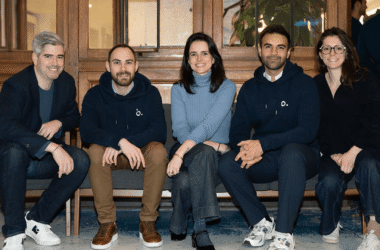
Soverli, a Swiss startup spun out of ETH Zurich, aims to redefine mobile security and sovereignty. The company has closed a $2.6m pre-seed round, led by Founderful, with participation from the ETH Zurich Foundation, Venture Kick, and several seasoned cybersecurity professionals. While early-stage, the funding marks an important milestone in addressing what policymakers and security experts increasingly view as a critical gap in Europe’s digital sovereignty agenda.
Rethinking Mobile Security Architecture
Modern smartphones are built around a single, monolithic operating system that controls the entire device. Enhancing security within this model often comes at the cost of functionality, app availability, or extensive trust in OS vendors. For governments, public institutions, and critical industries, this creates an uneasy trade-off between usability and control. Highly secure mobile devices do exist, but they are typically designed for extreme threat scenarios and impose limitations that make them unsuitable for everyday use.
Breaking the Security, Usability Trade-Off
Soverli approaches the problem from a fundamentally different angle. Instead of uniformly hardening the entire device, the company introduces a dedicated, highly secure environment that runs alongside the standard smartphone operating system. This isolated space can be tightly locked down and used exclusively for sensitive tasks, while the rest of the phone continues to function normally. The approach delivers levels of privacy and protection previously reserved for high-risk users—without forcing ordinary users to sacrifice convenience.
From Academic Research to Commercial Product
Soverli’s technology originated from a four-year research project at ETH Zurich, focused on unlocking new smartphone capabilities while achieving higher security than existing platforms. According to co-founder and CEO Ivan Puddu, the research demonstrated technical viability early on. However, deploying the solution in real-world environments required deep integration with system software controlled by device manufacturers.
“The only way to get the technology in people’s hands was by commercialising it,” Puddu said, noting that engagement with OEMs became essential. Growing interest from government and public-sector users helped convince manufacturers of the technology’s commercial and strategic value, enabling Soverli to spin out as an independent company.
Smartphones as a Strategic Weak Point
Smartphones now sit at the centre of mission-critical operations, from emergency coordination to government communications and enterprise workflows. Yet they remain closed systems, vulnerable to forced updates, hidden dependencies, and systemic failures. Recent global disruptions caused by faulty software updates have underscored the fragility of this model.
Until now, gaining greater control typically meant abandoning mainstream ecosystems or adopting cumbersome solutions that require switching between systems. Soverli’s core belief is that this trade-off is unnecessary.
Secure Communication In Total Isolation
As a proof point, Soverli demonstrated Signal running entirely within its isolated environment, ensuring message confidentiality even if the main operating system is compromised by advanced spyware. Sensitive operations remain protected while the rest of the phone continues to operate normally.
From Pilots To Public Infrastructure
Early prototypes quickly attracted interest from governments, public-sector organisations, and enterprises seeking secure communication without restrictive hardware. Initial deployments focus on mission-critical communication, with pilots already underway among emergency services and operators of critical infrastructure. Even if the primary operating system fails or is attacked, Soverli’s secure environment continues running independently.
The same architecture supports use cases for journalists, human rights activists, and enterprises adopting bring-your-own-device models, enabling secure workspaces alongside personal use.
Looking Ahead
With fresh funding, Soverli plans to expand its engineering team, support a broader range of smartphone models, deepen integration with device management systems, and strengthen collaboration with OEMs. Future plans include running multiple operating systems side by side combining a Google-enabled Android environment with a fully auditable, de-Googlified system giving users unprecedented control over how their data is used.
“Closing the last gap in digital sovereignty without asking users to give anything up is our goal,” Puddu said. Soverli’s approach offers a potential blueprint for how mobile security, usability, and sovereignty can finally coexist on everyday devices.