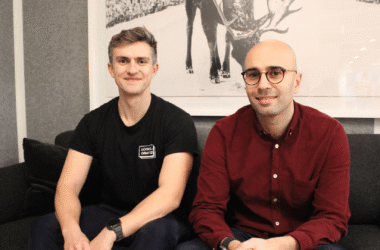



Dutch payments giant Mollie has agreed to purchase UK-based GoCardless in a €1.05 billion landmark deal, thus combining the two most prominent European fintech scale-ups. The companies made this announcement this week after a long period of speculation about the deal. The combined group will compete with global payment providers such as Stripe, PayPal, and Adyen.
The acquisition, which is mostly stock-based with about 90% of the consideration paid in shares, is an important fintech deal in Europe in recent years. GoCardless in their statement said, “It’s too early to tell if the merger will lead to job cuts,” however, both companies warned that the main concern is the transition of more than 350,000 businesses that they serve together to be without a hitch.
Europe’s Fragmented Payment Landscape Problem
Addressing Europe’s fragmented payment landscape is the challenge that the companies take up as the next step after their merger, one highly challenging factor that has been persistently present in the scaling of European businesses: fragmentation of payment systems. By acquiring Mollie for its expertise in card acceptance and local payment methods and using the GoCardless skills in bank-to-bank payments and direct debit, the resulting entity will be the one that provides a single integrated stack for SMEs and enterprise customers.
Such consolidation offers fast-growing companies simplified onboarding, less integration complexity, and a single provider that can meet their cross-border payment needs. What SMEs will be able to accomplish is to have enterprise-grade capabilities – such as sophisticated fraud prevention, enhanced analytics, and embedded financing tools – without heavy technical overhead. Meanwhile, bigger enterprises will be able to simplify their European payments infrastructure by replacing a patchwork of local providers with a single partner.
Using bank payments as a competitive edge
GoCardless, which was set up in 2011 by Hiroki Takeuchi, Matt Robinson, and Tom Blomfield, is now the leader of the category for recurring revenue and subscription payments. Its platform supports businesses in collecting recurring and one-off payments through direct debit and open banking, thus enabling them to cut down on involuntary churn and payment failures – the latter being a problem most of the time in systems based on cards.
Mollie CEO Koen Köppen stressed that this feature was at the heart of the collaboration: “A card-only approach is limited, resulting in high costs from failed payments and customer churn. The most efficient way to solve this problem is the one GoCardless has done by optimising the process through its global bank payment network.”
After being introduced by Adriaan Mol, Mollie has become one of Europe’s major independent payments processors, facilitating the movement of tens of billions of euros annually and providing online retailers, SaaS platforms, and marketplaces with services across the continent.
Keeping the Local, Gaining the Future
The joint platform will continue to support the most commonly used local payment methods in Europe, like iDEAL in the Netherlands, Satispay in Italy, and Twint in Switzerland, as well as by intensifying hyperlocal onboarding and compliance features. By using Mollie Connect SaaS platforms will have the ability to integrate GoCardless’s account-to-account payments network straight away, thus simplifying access to both card and bank payments.
Additional options such as Mollie Capital financing and more robust fraud monitoring are some of the ways the business could extend the value proposition to their customers.
The CEO of GoCardless Hiroki Takeuchi said that the combination would allow the company to “accelerate growth and raise the bar for the industry;” He also believed that as a combined entity, the total value would be “greater than the sum of its parts.”
Closing Timeline and Regulatory Review
Among the investors supporting the deal are Blackstone, Accel, Balderton, Permira, and BlackRock. Both sides are optimistic about closing the deal by mid-2026, after getting the green light from regulatory authorities. They will be gradually integrating to maintain continuity for their existing customers.
The merger, if allowed to proceed, will result in one of Europe’s most versatile payment providers combining the card business, bank payments, and local methods. It can significantly change the competitive landscape of the regional fintech sector for years to come.