

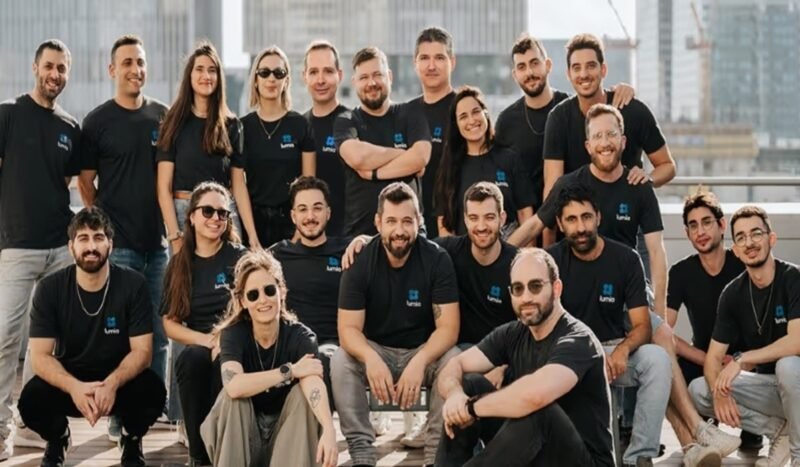
As companies speed up the incorporation of automation and smart assistants, a new problem arises in the field of security. Employees and digital agents are, in fact, interacting with powerful systems that are beyond the traditional IT oversight. Meanwhile, Lumia, a security and governance platform designed for the autonomous AI era, fills the gap that is getting wider.
The firm has made an announcement about a seed round of $18 million lead by Team8 with New Era as an investor along with another big strategic announcement: Admiral Michael Rogers, former NSA Director and US Cyber Command Commander, will be a part of Lumia’s Advisory Board.
With this new capital, the company plans to hire more engineers and researchers, increase deep integration with the company’s technology stacks, and spread its platform to the highly regulated sectors like financial services, advanced technology companies and other data-sensitive industries. The main innovation of Lumia, its Protocol Analysis Engine, allows a local risk review and automatic policy implementation without staff having to be interrupted, thus aiming secure automation to be “the default rather than an aspiration”.
Autonomous Agents Are Growing at a Much Higher Rate than Enterprise Security
The workplace is changing very fast with enterprises that embed task-oriented digital agents into the daily activities. Gartner predicts that within a year, 40% of enterprise applications will have automated agents whereas the figure was less than 5% not long ago. These agents are already executing sensitive functions such as drafting contracts, analysing financial records, accessing confidential documents, scheduling meetings and system-level initiating actions.
The rapid growth of the autonomous capacity leads to the increase of productivity but at the same time, the organisations become exposed to the risks that they have never had before. When AI tools operate independently or share sensitive information, traditional cybersecurity frameworks often fail to provide answers to the most basic questions: who accessed what, through which tool, for what purpose, and with what permission? Old systems were not made to give such visibility or control in dynamic, AI-driven environments.
Admiral Rogers believes that the pace of change is beyond the readiness level. “Autonomous AI is going at a speed that most organisations are not prepared for,” he mentioned. “Enterprises will have to get early insight, have well-defined guardrails, and an accountability framework before these systems get deeply embedded into every workflow.”
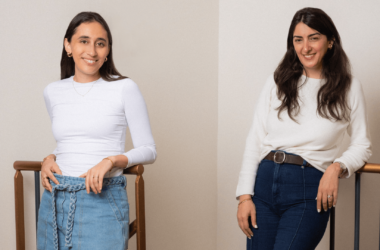
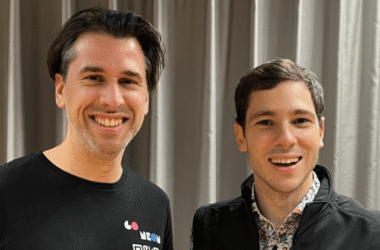
Lumia looks forward to providing the oversight that is needed but is missing there. The platform, founded by Omri Iluz, ex-PerimeterX Co Founder and CEO, and Bobi Gilburd, ex-Unit 8200 CTO, watches and controls the real-time interactions of employees, digital tools and AI agents. Not only does the company keep track of the use of tools, but Lumia also understands the context, content, intent and action of the tool usage, thus identifying risk and applying the suitable mitigating measures instantly.
The solution is implemented at the network layer, thus it can assist thousands of applications without the need for organizations to change endpoints or their existing tools setups. This framework provides what the firm calls “infrastructure native control,” which gives corporations complete insight into the behavior of agents, interactions of the system and usage of permissions at the same time, productivity bottlenecks are being avoided.
Francis Odum, Founder and CEO of SACR, pointed out the unique aspect of Lumia. “By providing a deeper, more specialized approach to AI security, Lumia sets itself apart from standard SASE vendors,” he stated. “It enables quicker support for new AI modalities and native applications by means of automated protocol analysis.”
To Chief Information Security Officers (CISOs), the emergence of autonomous agents is a predicament; on the one hand, they could unleash the huge productivity boosts that AI promises, but on the other hand, they may have to limit the access because of the unquantified risks. Iluz is of the opinion that companies should not be put in a position to have to make such a choice.
“The CISOs are under tremendous pressure they are not in a position to be the ones putting the brakes on the business that is giving us the greatest productivity boost of this century,” he said. “On the other hand, AI brings about risks that the business is not in a position to bear. With Lumia, companies can safely and responsibly onboard AI thus allowing extensive use, while at the same time, implementing invisible controls.”
As the introduction of autonomous systems into daily life of enterprises moves from the experimental phase to the dependent one, Lumia plans to secure its position at the centre of this transformation. According to the company, those organisations that will be able to accept automation without losing control will be the ones to make a responsible growth in the next decade.
Lumia is gearing up to provide the essential infrastructure for a future when human work and autonomous agents will be next to each other, safe and clear with its new capital, top notch advisers, and growing technological partnerships.