


As the global race to develop practical quantum computers accelerates, a new Munich based startup is focusing on a fundamental challenge that has long limited the technology’s real world application, reliability. Peak Quantum has secured €2.2 million in pre seed funding to advance a new generation of superconducting quantum processors designed to overcome persistent error issues at the hardware level.
Backed by Deeptech Investors and Public Support
The funding round was led by Cloudberry Ventures, with participation from United Founders, QAI Ventures, Golden Egg Check, and several experienced business angels.
In addition to private investment, the company has benefited from public funding initiatives, including support linked to the EU Chips Act. With these combined resources, Peak Quantum’s total funding now exceeds €5 million, providing a strong foundation for its early development.
Academic Roots and Technical Expertise
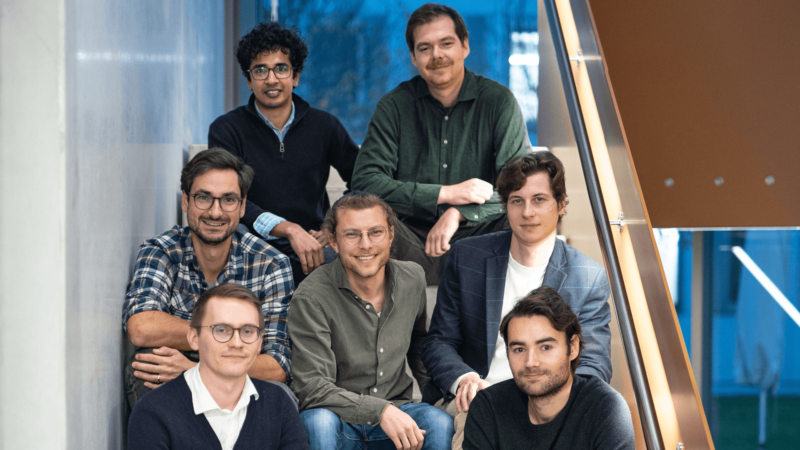
Founded in 2024, Peak Quantum is a spin off from the Walther Meißner Institute, which is part of the Technical University of Munich. The company brings together scientists and entrepreneurs with expertise in chip design, fabrication, and system integration.
This academic foundation enables the company to approach quantum hardware development with a deep understanding of both theoretical physics and practical engineering challenges.
Rethinking Quantum Hardware Design
Peak Quantum’s approach centres on developing superconducting qubits that are inherently resistant to errors. In most existing quantum systems, error correction is handled through complex software and post processing techniques, which add significant overhead and limit scalability.
By contrast, Peak Quantum integrates error resilience directly into the physical design of its qubits. This reduces the need for extensive correction mechanisms and simplifies overall system architecture.
The company argues that increasing the number of qubits alone is not sufficient if those qubits remain unreliable. Instead, improving the quality and stability of each qubit is essential for building quantum systems that can deliver meaningful results.
Building Europe’s Quantum Manufacturing Capability
A key milestone in Peak Quantum’s roadmap is its role in establishing a European pilot manufacturing line for quantum chips. The company has been selected to operate the SUPREME pilot line under the EU Chips Act, with operations expected to begin in April 2026.
This initiative is designed to strengthen Europe’s capabilities in quantum chip development and production, reducing reliance on external suppliers and supporting the growth of a local quantum ecosystem.
By combining research, development, and manufacturing within Europe, the project aims to accelerate the transition from experimental prototypes to scalable quantum technologies.
Funding to Accelerate Development
The newly raised capital will be used to further refine Peak Quantum’s superconducting qubit technology and support the setup of the pilot production line. This includes advancing fabrication processes, improving device performance, and preparing for larger scale manufacturing.
The company’s focus on hardware level innovation positions it as a key contributor to the next phase of quantum computing, where reliability and scalability become critical.
Toward Practical Quantum Computing
As the quantum computing industry evolves, the emphasis is shifting from experimental breakthroughs to practical usability. Achieving this requires not only more powerful systems but also more stable and efficient hardware.
Peak Quantum’s strategy reflects this transition, prioritising error resilience as a core design principle. By addressing one of the most significant barriers to adoption, the company aims to bring quantum computing closer to real world applications.
With strong backing from both investors and public initiatives, Peak Quantum is emerging as part of a broader European effort to build a competitive and self sufficient quantum technology ecosystem.