



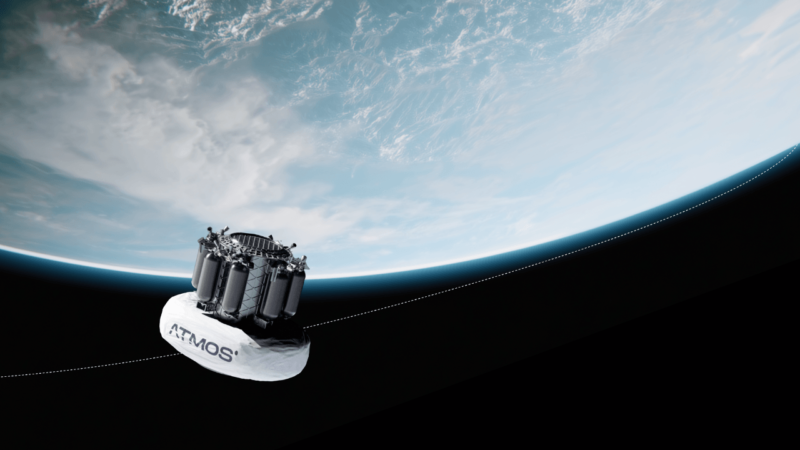
As the global space economy expands beyond launches into full scale orbital operations, one critical capability is gaining urgency, bringing materials back to Earth efficiently and independently. ATMOS Space Cargo is stepping into this emerging frontier, securing €25.7 million in Series A funding to establish Europe’s first scalable orbital return infrastructure.
Major Funding to Enable Operational Scale
The funding round was co led by Balnord and Expansion, with participation from Keen Defence and Security and the European Innovation Council through its Accelerator programme.
A wide range of additional investors, including OTB Ventures, High-Tech Gründerfonds, APEX Ventures, Seraphim, and others, further highlight strong confidence in the company’s long term vision.
This capital will support the deployment of an initial fleet of three PHOENIX 2 vehicles, alongside the development of future platforms and expansion into government and defence markets.
Building a New Class of Orbital Vehicles
At the core of ATMOS Space Cargo’s technology is the PHOENIX platform, designed to transport and return payloads from Low Earth Orbit. The PHOENIX 2 vehicle is a free flying spacecraft equipped with integrated propulsion and power systems, capable of operating in orbit for durations ranging from hours to several months.
One of its defining features is the use of Inflatable Atmospheric Decelerator technology, which functions as both a heat shield and an aerodynamic braking system during re entry. This innovative design enables controlled descent while reducing material loss and environmental impact compared to traditional systems.
Turning Orbital Return into a Routine Service
The company plans to build and operate three PHOENIX 2 orbital transfer and return vehicles as part of a phased mission campaign. These vehicles will serve both commercial and institutional clients, supporting a wide range of payloads and mission profiles.
By establishing a repeatable service model, ATMOS aims to shift orbital return from occasional demonstrations to a reliable and scalable capability. Initial recovery operations are being prepared near Santa Maria in the Azores, under a European Union member state licence, marking a significant step toward independent European operations in this domain.
Advancing Toward Next Generation Systems
Alongside the PHOENIX 2 rollout, ATMOS has begun development of PHOENIX 3, a next generation vehicle designed to handle payloads of approximately one metric tonne. This represents a tenfold increase in capacity, significantly expanding the range of applications and industries that can benefit from orbital return services.
The company’s long term vision is to create a comprehensive architecture that supports commercial, institutional, and defence use cases simultaneously.
Launching ATMOS WORKS for Strategic Missions
To further strengthen its position, ATMOS is launching ATMOS WORKS, a dedicated business unit focused on serving governmental and defence customers. This initiative will provide specialised space logistics capabilities, including secure return of sensitive hardware and data, as well as time critical mission support.
The dual use nature of the PHOENIX platform makes it particularly valuable for these applications, enabling both civilian and strategic operations from a single system.
Strengthening Europe’s Space Independence
As global competition in space intensifies, the ability to independently access and return from orbit is becoming a strategic priority. ATMOS Space Cargo is positioning itself as a key enabler of this capability within Europe.
By developing scalable and efficient return systems, the company is contributing to the creation of a robust space industrial base that can support a wide range of missions and industries.
A New Era of Space Logistics
With fresh funding, an expanding fleet, and a clear roadmap for future development, ATMOS Space Cargo is moving toward regular operational service. The company’s approach reflects a broader shift in the space industry, where logistics and infrastructure are becoming as important as launch capabilities.
By focusing on the often overlooked challenge of returning materials from orbit, ATMOS is helping to unlock new possibilities for research, manufacturing, and commercial activity in space, bringing the vision of a fully integrated space economy closer to reality.