


Paris based industrial biotechnology startup baCta has secured €7 million in seed funding to accelerate the development of its AI powered platform for producing high value industrial ingredients through precision fermentation. The round was led by LocalGlobe and Daphni, with participation from OVNI Capital and a group of business angels, including founders from companies such as Phagos, Genomines and Mistral AI. The investment reflects growing interest in new biomanufacturing technologies that aim to make ingredient production more resilient, sustainable and scalable.
Rethinking how industrial ingredients are produced
Global demand for industrial ingredients used in sectors such as food, cosmetics, pharmaceuticals and materials continues to increase. However, many existing production methods rely either on extracting compounds from natural sources or synthesising them through petrochemical processes. These approaches often come with significant limitations.
Extraction from natural resources can be constrained by seasonal availability and environmental conditions, while petrochemical synthesis depends on fossil based inputs and complex supply chains. Both methods can be exposed to fluctuations in cost and supply due to climate factors, geopolitical developments and resource scarcity.
Bioproduction has long been seen as a promising alternative because microorganisms can be engineered to produce complex molecules. Yet designing efficient microbial strains has traditionally involved lengthy experimentation and iterative engineering, making development cycles slow and expensive.
Programming microorganisms as molecular factories
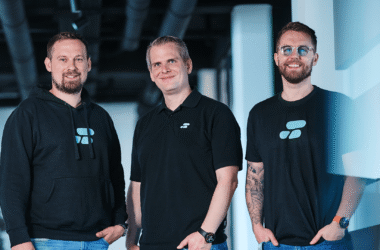
Founded by Mathieu Nohet and Marie Rouquette, baCta is developing technology designed to overcome these limitations. The company’s approach centres on programming microorganisms to act as molecular factories capable of producing valuable organic compounds at industrial scale.
By combining artificial intelligence with precision fermentation, baCta aims to accelerate the development of high performing microbial strains that can efficiently produce target molecules. The technology is intended to support more sustainable manufacturing while reducing the time and resources typically required for strain engineering.
The baCtaForge platform
At the core of the company’s work is its proprietary baCtaForge platform. The system integrates advances in synthetic biology, robotics and generative AI to analyse and engineer microbial genomes.
Traditional strain engineering often focuses on well understood genetic pathways. In contrast, baCtaForge explores broader genomic regions, including long range interactions and regulatory mechanisms that may be overlooked by conventional approaches. This expanded view allows the platform to identify new opportunities for improving production efficiency.
The system also incorporates bio based reinforcement learning, enabling algorithms to learn from experimental outcomes and progressively refine strain design strategies. By automating and accelerating this discovery process, baCta aims to significantly reduce the cost and development time required to bring new bioproduction processes to market.
Scaling from research to industrial production
The newly secured funding will support the next stage of the company’s development, focusing on scaling its technology from laboratory experimentation to industrial manufacturing. This includes validating production processes at pilot and commercial levels.
As part of this effort, baCta has established a strategic partnership with a French industrial player that will provide access to production capacity. This collaboration is expected to help the company move more quickly from strain development to large scale fermentation and ingredient manufacturing.
In parallel, baCta plans to begin the commercialisation of its technology and expand the capabilities of the baCtaForge platform to support the production of additional high value ingredients across multiple industries.
Building the future of sustainable biomanufacturing
According to CEO and co founder Mathieu Nohet, the industrial biotechnology sector is entering a phase where microorganisms can increasingly be programmed to produce complex organic molecules at commercial scale. Advances in artificial intelligence and synthetic biology are enabling a shift from traditional experimentation toward more predictive and programmable biological systems.
By combining these technologies into a unified platform, baCta aims to make bioproduction faster, more cost effective and accessible for a wide range of applications. As demand grows for sustainable alternatives to resource intensive manufacturing, platforms like baCtaForge could play an important role in reshaping how industrial ingredients are produced.