

German space technology company InSpacePropulsion Technologies (ISPTech) has secured €5.5 million in new funding to accelerate the commercial deployment of its non toxic propulsion systems, as the space industry faces rising demands for safer, more agile in orbit manoeuvring. The investment supports ISPTech’s transition from advanced development into operational missions, positioning the company at the centre of a rapidly evolving satellite and in orbit services market.
Meeting the next phase of space operations
As satellite constellations continue to expand and orbital environments become more crowded, spacecraft operators face increasing pressure to manoeuvre with greater precision and responsiveness. Collision avoidance, constellation maintenance, and mission flexibility now require propulsion systems that can deliver fast reaction times and reliable thrust throughout a satellite’s lifecycle.
Many existing propulsion technologies were not designed for these new realities. Traditional systems often prioritise simplicity over agility, while chemical propulsion based on toxic fuels such as hydrazine is increasingly constrained by regulation, handling risk, and rising operational costs. These pressures are pushing manufacturers to adopt propulsion solutions that combine performance, safety, and regulatory compliance.
ISPTech is developing propulsion technologies specifically designed for this shift, focusing on systems that enable agile orbital changes while eliminating the risks associated with highly toxic propellants.
Non toxic propulsion for modern missions
Founded to address the growing gap between propulsion capability and mission requirements, ISPTech is building spaceflight ready propulsion systems tailored for both small satellites and larger spacecraft. Its portfolio includes the HyNOx and HIP_11 propulsion systems, which are positioned as non toxic alternatives capable of delivering high performance manoeuvring in orbit.
These systems are designed to support a wide range of use cases, including constellation operations, collision avoidance, defence related missions, in orbit servicing, and future refuelling applications. By focusing on responsiveness and scalability, ISPTech aims to give operators greater control over satellite positioning and mission outcomes throughout operational lifetimes.
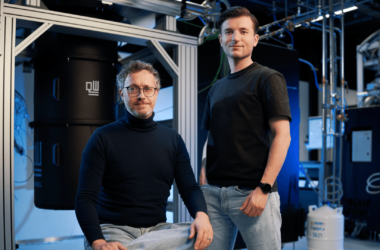
Dr Lukas Werling, CEO and co founder of ISPTech, explained that while launch costs have fallen significantly due to reusable rockets, the next bottleneck lies in spacecraft mobility once satellites are in orbit. According to Werling, enabling flexible and precise manoeuvring is essential to unlocking the full economic and operational potential of space infrastructure.
Backing from deeptech and aerospace investors
The €5.5 million round was led by Join Capital and included participation from High Tech Gründerfonds, Faber, First Momentum Ventures, Lightfield Equity, Final Frontier Liftoff, the German Aerospace Center, and Start up BW Seed Fonds. The mix of venture investors and institutional aerospace partners reflects growing confidence in propulsion as a critical enabling technology for the space economy.
The funding will be used to advance flight qualification, scale manufacturing readiness, and deepen commercial engagement with satellite manufacturers and mission operators. ISPTech is also continuing development work supported by European Space Agency backed programmes, particularly in areas such as orbital refuelling and next generation propulsion architectures.
From testing to orbit
ISPTech is currently preparing two customer missions, marking a key milestone in its move toward operational deployment. Its first small satellite mission using ISPTech propulsion is scheduled for launch in 2026. CubeSat propulsion units are already in acceptance testing, and the company reports early traction from commercial customers seeking alternatives to legacy propulsion systems.
These near term missions are intended to validate performance in orbit and support wider adoption across different spacecraft classes.
Enabling future space mobility
Looking ahead, ISPTech’s long term vision extends beyond individual missions. The company aims to help establish a more dynamic and service oriented orbital environment, where satellites can be repositioned, serviced, refuelled, and upgraded rather than replaced.
By combining non toxic propellants with high agility propulsion, ISPTech is positioning itself to support a safer, more flexible, and more sustainable space ecosystem, one where in orbit mobility becomes a core capability rather than a constraint.