


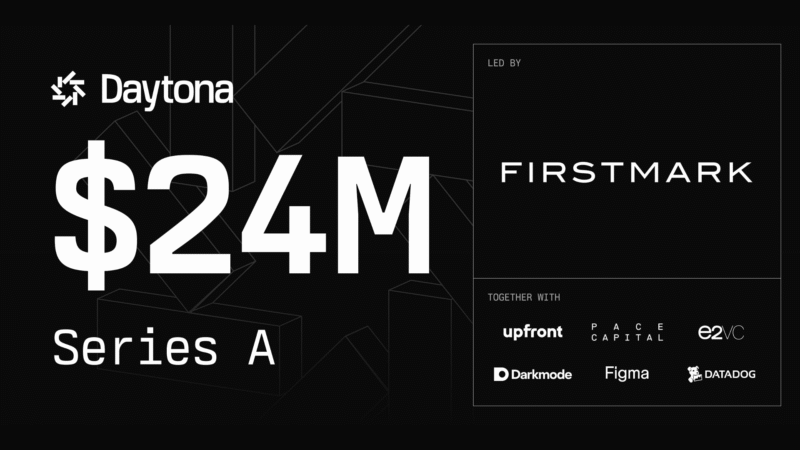
Croatian-founded Daytona is positioning itself at the centre of the next major shift in cloud infrastructure as software agents move from experimentation into large-scale deployment. The company has raised a $24 million Series A round to build infrastructure designed specifically for massive agent workloads, addressing a growing gap between traditional cloud systems and the needs of autonomous software.
The funding round was led by FirstMark Capital, with Matt Turck joining Daytona’s board. Additional participation came from Pace Capital, Upfront Ventures, Darkmode, and E2VC, alongside strategic investments from Datadog and Figma Ventures. A group of prominent angel investors also joined the round, including founders from Fal, T3 Chat, Factory.ai, and Neon.
From human centric cloud to agent native infrastructure
Modern cloud infrastructure was built for human driven software development and production workloads. These systems are optimised for stateless execution, predictable scaling, and immutable environments, which work well for serving applications but fall short when flexibility, persistence, and experimentation are required.
As software agents increasingly take on complex knowledge work, their infrastructure needs begin to resemble development environments rather than production servers. Agents must spin up environments in milliseconds, branch execution paths, store intermediate state, and operate continuously across thousands or even millions of concurrent instances.
Daytona was founded to address this shift by rethinking compute infrastructure around agents rather than humans.
Sandboxes as a new core primitive
At the heart of Daytona’s platform is the concept of a sandbox. A sandbox is a fully programmable computing environment where CPU, memory, storage, GPU, networking, and the operating system can be provisioned on demand. These environments are composable and stateful, allowing them to be started, paused, forked, snapshotted, resumed, or terminated at any point.
This enables agents to explore multiple execution paths in parallel. An agent can run inside a sandbox, reach a decision point, fork into several branches to test different approaches, snapshot promising states, and discard the rest. If a failure occurs, the agent can resume from a previous snapshot rather than starting over.
Workloads running in these sandboxes may last minutes or persist for days, supporting long-running reasoning, experimentation, and complex task execution.
Built for scale and persistence
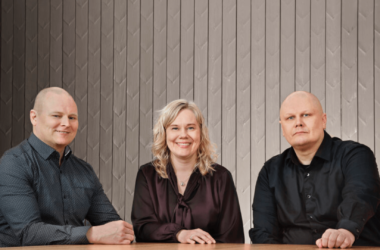
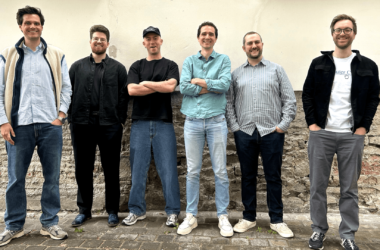
Daytona was founded in 2023 by Ivan Burazin, CEO, Vedran Jukić, CTO, and Goran Draganić, Chief Architect. The team brings deep experience in developer tooling and infrastructure, with a focus on making stateful compute practical at scale.
Unlike ephemeral containers designed for short lived tasks, Daytona’s sandboxes are built for persistence. State survives failures, environments can be cloned or merged, and execution paths remain reproducible. This design makes the platform particularly well suited for agent workloads that involve reasoning, iteration, and long-term context.
Integrated tooling also allows agents to write and execute code, interact with version control systems, and operate securely across isolated environments.
Infrastructure for the agent era
Daytona’s approach reflects a broader industry transition. As agents begin to act as autonomous knowledge workers, infrastructure must evolve beyond human centric assumptions. Millions of agents running simultaneously cannot rely on fragile, manually managed environments.
By treating sandboxes as a first class infrastructure primitive, Daytona aims to make agent compute reliable, scalable, and economically viable.
What comes next for Daytona
Following the Series A, Daytona plans to expand beyond sandboxes into a broader agent native infrastructure layer. This includes scaling systems to support significantly higher volumes of concurrent workloads, deepening integrations with developer and agent tooling, and continuing to improve performance, security, and reliability.
The company also plans to grow its team to support product development and increasing customer adoption as agent workloads move from experimentation into production environments at scale.
As agents become a foundational part of how work is done, Daytona is betting that the future of cloud infrastructure will be built not for humans, but for the software that works alongside them.