

Healthtech startup Gardia has raised €8.5 million in Series A funding as Europe faces a defining demographic shift. With millions of seniors choosing to live independently for longer and care systems struggling to keep pace, the company is positioning its mobile fall detection technology as a critical layer of everyday safety for ageing populations.
The round was led by European venture capital firm Peak, with participation from amberra, the corporate venture studio of Germany’s Cooperative Financial Group, and the butterfly & elephant accelerator by GS1 Germany. Existing investors BONVENTURE, Dieter von Holtzbrinck Ventures, and Beurer also reinvested, signalling continued confidence in Gardia’s growth trajectory.
Ageing at home creates new healthcare demands
Across the European Union, nearly 97 million people are currently aged 65 or older. That figure is expected to surpass 110 million by the mid 2030s. In Germany alone, most seniors live independently in private households, reflecting a strong preference to age at home rather than move into institutional care.
However, this trend is unfolding alongside a growing shortage of professional caregivers. As fewer care workers are available to provide in person support, families and healthcare systems are increasingly looking for technology driven solutions that can help seniors remain safe while preserving autonomy.
One of the most pressing risks facing older adults is falls. Each year, millions of seniors in Germany experience falls, and in many cases they are unable to reach a phone or call for help. When assistance is delayed, the likelihood of serious injury, hospitalisation, and long term dependency rises sharply.
A mobile emergency system designed for seniors
Gardia addresses this challenge with a mobile emergency system built specifically for older users. At the centre of the solution is a discreet wristband equipped with automatic fall detection that works both indoors and outdoors. The device does not require a smartphone, removing a major barrier for users who are less comfortable with complex digital tools.
Unlike many legacy emergency systems, Gardia develops its hardware, software, mobile application, and artificial intelligence in house. This integrated approach allows the company to optimise reliability while ensuring the system remains simple and intuitive to use.
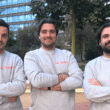
Marlon Besuch, co founder and CEO of Gardia, explained that technical precision alone is not enough.
Reliable fall detection requires highly advanced technology, but adoption fails if people do not want to wear the device every day. Many existing systems are stigmatising or too complicated. Our goal was to create a solution that seniors feel comfortable using and that delivers help when it truly matters.
Traction across the DACH region
Gardia has already reached a five figure active user base across Germany, Austria, and Switzerland. The company reports strong retention, an important indicator in a market where long term daily use is essential. The solution is also reimbursed through German health insurance, making it accessible to a broad segment of the senior population.
Beyond individual users, Gardia is increasingly working with care providers and healthcare organisations. These partnerships allow the technology to be embedded into broader care and safety workflows, supporting both independent seniors and professional caregivers.
Scaling safety across Europe
With the new funding, Gardia plans to accelerate expansion across the DACH region while laying the groundwork for international growth. The company also intends to strengthen its B2B offering, targeting care organisations, insurers, and healthcare partners seeking scalable solutions for ageing populations.
As Europe grapples with demographic change, rising healthcare costs, and workforce shortages, technologies that combine independence, prevention, and reliability are becoming essential infrastructure. Gardia’s latest funding round positions the company to play a growing role in how societies support seniors living safely on their own.