

Finnish deeptech startup Willo has secured €2.9 million in pre-seed funding to accelerate development of its wireless power system, a technology designed to keep devices charging over the air even while they move and rotate. The raise marks an important step toward removing one of the last major constraints in autonomy, the need for cables, docking stations, and manual charging.
Unlike most wireless charging systems that rely on precise alignment or fixed positioning, Willo’s technology maintains power delivery regardless of orientation or motion. The company believes this capability could fundamentally change how autonomous devices, robots, and connected hardware operate across industries.
From a hackathon meeting to a deeptech founding team
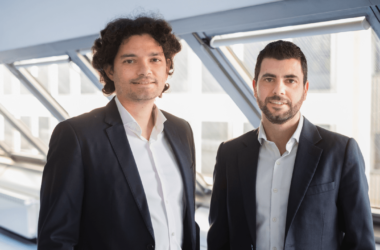
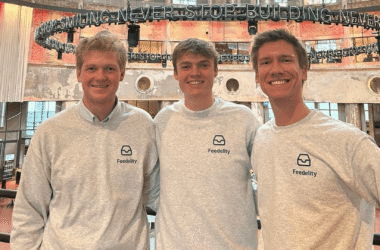
Willo was founded by Harri Santamala, CEO, Dr Nam Ha Van, CTO, and Marko Voutilainen, who first met at a hackathon as Voutilainen was transitioning out of Slush. While the initial meeting did not immediately point toward forming a company, the founders quickly recognised strong technical and personal alignment.
At the heart of Willo’s technology is more than a decade of wireless power research led by Ha Van. After completing his PhD in South Korea, he returned as a postdoctoral researcher focused on wireless power transfer, building the scientific foundation that now underpins Willo’s system.
That early trust and shared ambition shaped the company’s direction and its focus on solving wireless power as an infrastructure challenge rather than a niche feature.
Removing the last constraint in autonomy
Willo’s ambition is to enable a world where devices no longer rely on cables or manual charging. The company sees wireless power as a missing layer in modern infrastructure, particularly for autonomous systems.
According to Santamala, until power can be delivered continuously without physical connections, robots and devices will remain operationally limited. Willo’s system is designed to remove that limitation, allowing devices to operate without planned downtime for charging.
This has particular relevance for autonomous robotics, where current systems must pause work to dock and recharge. By enabling constant charging, Willo’s technology could turn downtime into continuous operation and reduce the need for oversized batteries, lowering material use and improving sustainability.
Industry attention and a layered protection strategy
Willo publicly demonstrated its system at CES 2026, where it received CNET Group’s Best of CES 2026 Award. While the technology is still early in its engineering phase, the team has already proven key fundamentals, including charging while devices move, rotate, and operate simultaneously.
The demonstrations have attracted inbound interest from large global companies, many of which are still exploring potential use cases. Willo has chosen not to announce commercial partnerships yet, focusing instead on refining its core system.
To protect its intellectual property, the company combines patents with tightly guarded trade secrets. Each technical breakthrough adds another protective layer around the core technology, a strategy the team describes as building an onion of defensibility over time.
Funding to move from breakthrough to engineering scale
The funding round was led by byFounders, with participation from Interface Capital, Unruly Capital, Wave Ventures, and a group of experienced angel investors from across European technology companies.
The capital will be used to move Willo from breakthrough demonstration into a full engineering phase, building reference systems that partners can evaluate and integrate into real products. The company plans to focus initially on autonomous robotics before expanding into other verticals.
Headquartered in Finland, Willo operates across Europe, the United States, and Japan. The founders believe the speed of the fundraising reflects growing confidence in European deeptech and an appetite to back category defining infrastructure companies.
As Willo continues development, its goal is clear, to redefine how power is delivered at the last meter and unlock a future where devices no longer stop working simply because they need to recharge.