



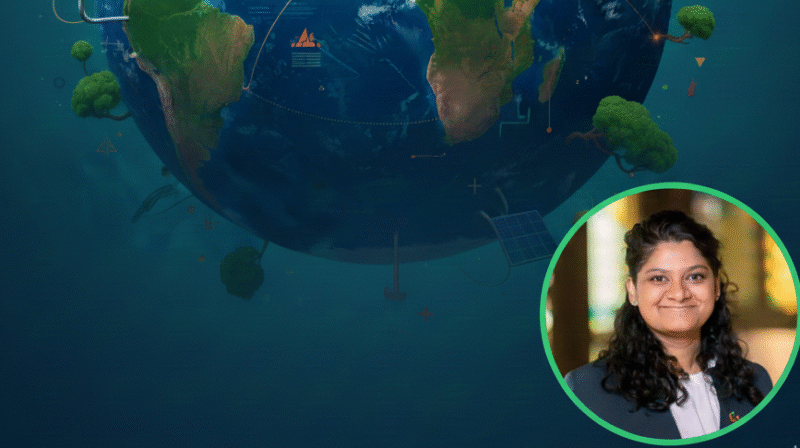
For much of the financial world, risk is a series of cells in a spreadsheet, a stochastic variable to be hedged or avoided. But for Rajashree Padmanabhi, a New Ventures Associate at Climate Fund Managers (CFM), risk is far more visceral. It is the reliability of a local power grid, the clarity of a child’s drinking water, and the economic stability of communities on the front lines of a changing planet.
In the rarefied world of climate finance, where trillions of dollars are discussed with a frequency that masks the difficulty of deploying them, Padmanabhi is working on the most stubborn frontier: the Global South. Her mission is to bridge the chasm between vast pools of private capital in the West and the urgent infrastructure needs of emerging economies.
The primary tool for this task is “blended finance” – a strategic blend of public, philanthropic, and private capital designed to de-risk high-impact projects. Yet, despite a decade of experimentation, the scale remains stubbornly small. According to the 2024 Convergence Blended Finance Reports, the sector reached only $18 billion—a mere rounding error in the global financial system.

“It’s not a problem of availability of capital,” Padmanabhi says, sitting at the intersection of European institutional rigor and the lived realities of emerging markets. “It’s a problem of execution.”
The Execution Gap
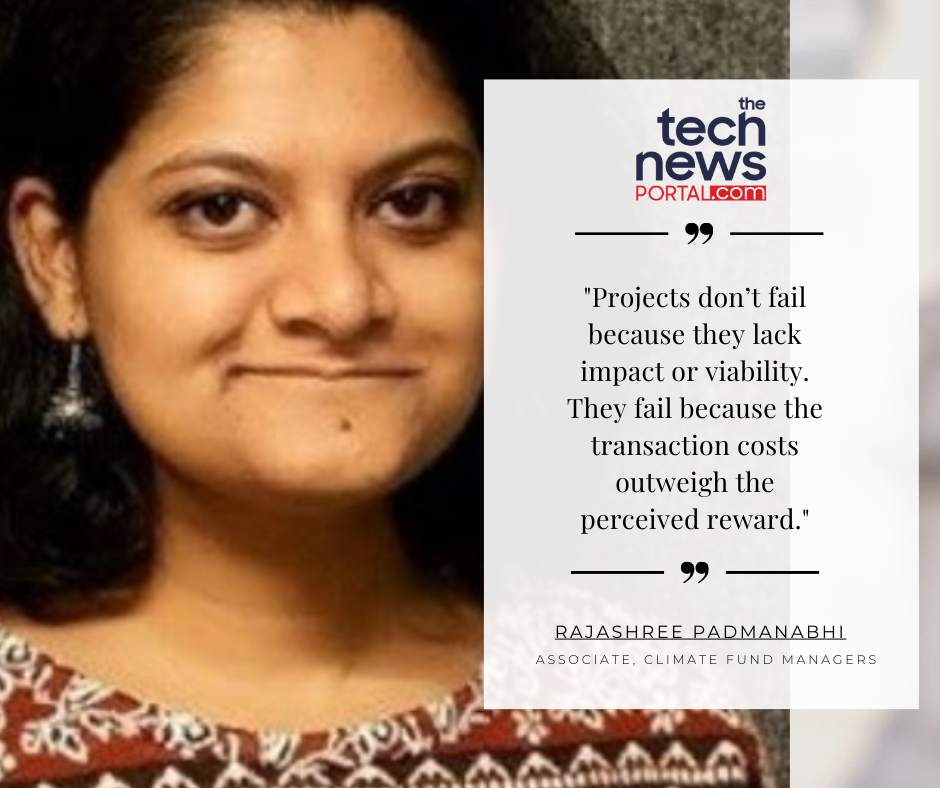
For Padmanabhi, the current ecosystem is a landscape of silos. Development finance institutions (DFIs), climate funds, and philanthropies often move in parallel, burdened by unique legal structures and duplicative due diligence processes. To a private investor, this fragmentation creates a mountain of transaction costs that often outweigh the perceived rewards.
This complexity is particularly acute in climate adaptation – projects designed to build resilience against floods, droughts, and rising heat. These have historically been a “tough sell” to private markets because their revenue streams are often diffuse or categorized as a public good. However, the economic argument is staggering: research from the Global Center on Adaptation suggests that every dollar invested in climate adaptation can yield four dollars in returns.
The Bureaucracy of Green
A significant portion of Padmanabhi’s work involves navigating the shifting sands of European regulation. While frameworks like the EU Taxonomy and the Sustainable Finance Disclosure Regulation (SFDR) have brought much-needed discipline and transparency to Europe, Padmanabhi warns they can act as “gatekeepers” rather than catalysts when applied rigidly to the Global South.
If a project in an emerging market doesn’t neatly fit a European definition of “green,” it risks being excluded from vital capital flows. “The opportunity lies in interpretation, not replication,” she argues. The goal is to evolve these frameworks to recognize transition pathways and local baselines, ensuring that European standards don’t unintentionally starve the very markets they aim to support.
Perhaps the most persistent “invisible” barrier is currency risk. When a project generates revenue in local currency but owes debt in dollars or euros, a sudden devaluation can wipe out years of progress. While initiatives like The Currency Exchange Fund (TCX) provide essential hedging instruments, Padmanabhi notes they remain the exception. Until currency risk mitigation is mainstreamed, the cost of capital will remain prohibitively high for many.
A Tale of Two Ecosystems
Padmanabhi’s perspective is uniquely shaped by her work across both European and Indian markets. In Europe, she sees a “multi-layered” and mature ecosystem, where institutions like the European Investment Bank (EIB) and FMO have pioneered large-scale blended vehicles for decades.
In contrast, India’s market is “nascent and emerging.” While demand is skyrocketing, the country lacks a coherent national blended finance framework. However, Padmanabhi points to recent moves by the International Financial Services Centres Authority (IFSCA) as a welcome step toward building the institutional infrastructure necessary to share knowledge and standardize risk-return expectations.
The Unlearning of an Academic
Padmanabhi’s journey into climate finance was not just a career move; it was a profound shift in perspective. Moving from traditional finance to the blended space required her to “unlearn” an academic, theoretical mindset.
“When you work in private markets, especially in sectors like renewable energy or water and sanitation, it becomes quite clear how the financial and risk modeling exercises have direct impacts on people’s day-to-day lives,” she says. “Risk doesn’t become an abstract concept, but a real issue you’re trying to solve within a local social, economic, and political context.”
This realization has fueled her vision for the next five years. She is calling for a move away from “capital export” – the traditional model of Western funds dictating terms—toward “capital partnership.”
Her vision is a future where European capital is “catalytic rather than dominant,” used to strengthen local banks, fund managers, and developers. By taking riskier positions earlier in a project’s lifecycle and standardizing impact indicators, she believes the “bureaucracy bottleneck” can finally be broken.
“Most importantly,” Padmanabhi says, “I want to see capital flows that strengthen domestic financial ecosystems. Local partnerships will be key.”
In the high-stakes theater of global climate action, Rajashree Padmanabhi is making the case that the most important investment we can make isn’t just in technology or infrastructure, it is in the very plumbing of how we move money across the world.