

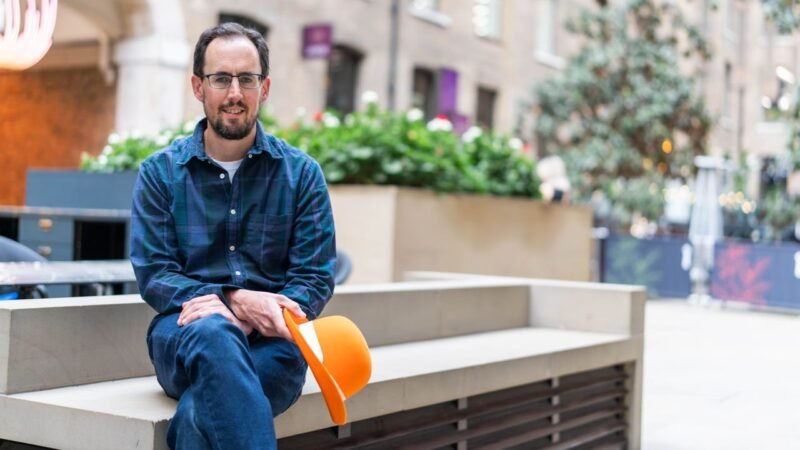
When the chief executive of Allica Bank, Richard Davies, travels for work, he indulges in what he describes as a “complete geek” habit: hunting down physical bank branches.
During a recent live recording of a fintech podcast in London, Davies shared the anecdote that a three-day trip to Stockholm yielded just one branch, a number compared with US cities where branches still line the streets. The host treated the tale with some gentle mockery, but Davies may yet have the last laugh. Allica is now actively considering buying a bank in northern Europe, and his encyclopaedic knowledge of Europe’s fragmented banking landscape may prove unexpectedly useful.
“It’s quite a big decision for us,” Davies says, sitting in Allica’s newly expanded two-floor London office. “It occupies a chunk of my time.”
A challenger focused on SMEs
Founded as a challenger bank focused squarely on established small and medium-sized enterprises, Allica targets businesses with between five and 250 employees. It offers commercial mortgages, equipment finance, and current and savings accounts — a segment Davies argues has been underserved by large UK banks wary of SME credit risk.
That has paid off: it has lent over £3bn to businesses, gathered more than £4bn in deposits and built a customer base of more than 25,000 SMEs. Pre-tax profits jumped 86 per cent to £29.9m, while revenue leapt 68 per cent to £292.1m, in the latest financial year. More than 90 per cent of income comes from net interest margin, with loan defaults standing at around one per cent over the past year, below the industry average.
Reshaping the bank
Davies joined Allica in 2020, when it was still a banking licence with relatively little scale. He reshaped the organisation since his joining with a fintech-style operating model, taking technology in-house, increasing the pay for engineers, and introducing cross-functional product and engineering “squads”. He reduced reliance on brokers, favouring direct lending relationships.
Funding and unicorn talk
To date, Allica has raised more than £390m, including a £100m Series C in 2022 from TCV. Davies says further fundraising would likely only be needed to support overseas expansion. “If we were to raise now, we’d probably be in unicorn territory,” he adds.
Brexit and the European question
Brexit complicates international growth. It is no longer possible to passport a UK banking licence into Europe, and applying for a new licence from scratch could take as long as three years. That has pushed Allica towards acquisition.
Davies invokes Jeff Bezos’ “one-way door” philosophy when describing the plan. “Buying a bank in Europe is a one-way door decision,” he says. “A small bank would give us the entry point, and we’d deploy our platform on top organically.”
Allica has already completed three acquisitions, including the buys of embedded finance provider Kriya and portfolios from Allied Irish Bank and Tuscan Capital.
A cautious embrace of AI
On artificial intelligence, Davies is cautious but optimistic. Allica is experimenting with agentic AI in customer service but he sees the biggest productivity gains in software development where AI-assisted coding could reduce the need for specialist roles.
“We’ll keep growing the business a lot,” he says. “But we’ll probably grow staff numbers much less.”
A seasoned fintech operator
Before Allica, Davies held senior roles at Lloyds, HSBC, TSB and OakNorth, and had a brief stint as COO at Revolut while it professionalised its governance through a tumultuous period.
IPO scepticism and big ambitions
A vocal advocate for fintech, Davies has been praised by politicians including Rachel Reeves, but he remains critical of the UK’s SME policy environment and the attractiveness of London as an IPO venue. “Apart from the US, public markets are challenging everywhere,” he says. “But right now, the UK is not a good jurisdiction to list in.”
Still, Davies is bullish on Allica’s prospects. The bank wants to reach a 10 per cent share of the UK SME lending market by 2028—up from just over five per cent today. “That’s not a small task,” he says. “But we want to keep scaling, and there’s plenty more to do.”