




Jignesh Dave spent 25 years watching the telecom industry get stuck in the 1990s. Now, from The Hague, he’s building the digital layer that finally sets it free.
In the modern digital economy, almost everything has become “embedded.” If you want to lend money, verify an identity, or process a payment, you don’t build a bank; you paste a few lines of code from Stripe or Adyen, and you’re in business. But if you want to offer mobile connectivity? You are suddenly thrown back into a world of physical plastic cards, 600 fragmented operator agreements, and opaque roaming tables that look like they belong in a fax machine.
Jignesh Dave, the Founder and Managing Director of Next Communications, calls this the “retail mindset trap.” And he is on a mission to break the industry out of it.
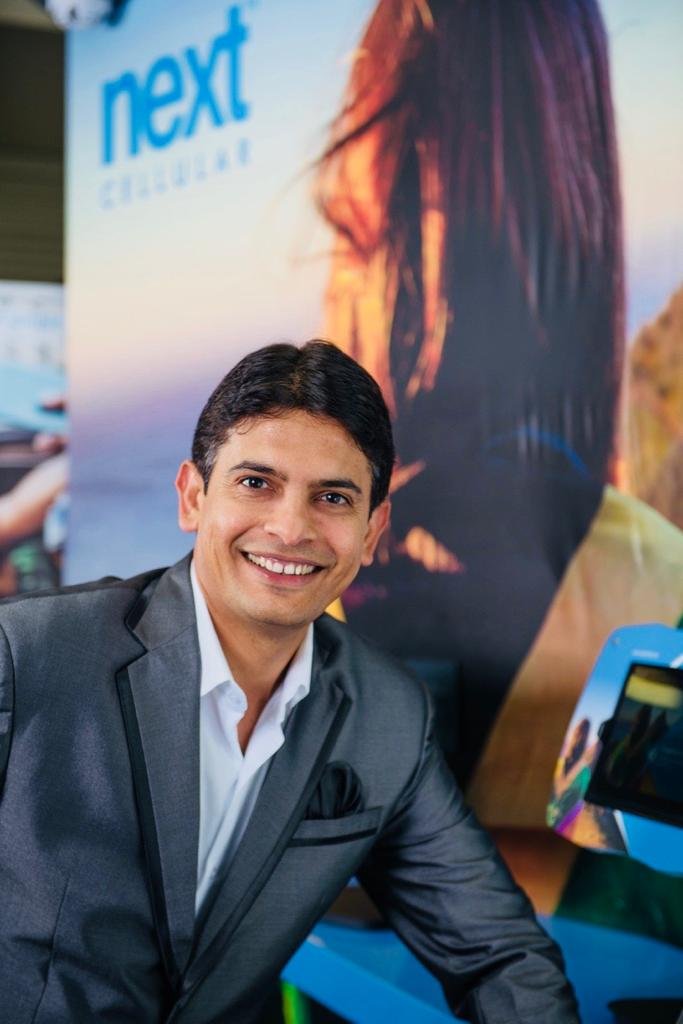
“For decades, mobile connectivity has remained trapped… physical SIMs, fragmented operator relationships, and opaque roaming structures,” Dave explains from his headquarters in The Hague, Netherlands. “Meanwhile, every other consumer-touching capability has become embedded: payments, KYC, identity verification, loyalty, and even lending.”
Dave is not the typical tech disruptor. He isn’t a college dropout coding in a garage; he is a veteran with a quarter-century of scars from the FMCG, banking, and telecom sectors. From selling Pepsi in India to navigating the boardrooms of European banks, Dave has seen the backend of global infrastructure. His latest venture, Next Communications, is the culmination of that journey – a company built on the premise that Airtime as a Service (AaaS) is the missing piece of the digital puzzle.
The Stripe Moment for Telco
The frustration that birthed Next Communications wasn’t technical; it was structural. Dave realized that while connectivity is arguably the “most fundamental digital enabler,” it sits stubbornly outside the digital experience.
“Despite the need for connectivity becoming a prevailing need for nearly ALL consumers across the globe, brands were unable to control, influence, or even leverage the connectivity layer,” Dave says.

He outlines three universal pain points that have kept global brands, from fintechs to travel giants, from touching telecom:
- Lack of Ownership: Brands have to rely on third-party telcos who own the consumer relationship.
- Lack of Integration: There has been no API-first, plug-in model for embedding mobile connectivity.
- Lack of Transparency: Brands couldn’t see usage, trigger engagement, or reward behavior in real-time.
“AaaS solves all three by putting connectivity inside the brand’s digital ecosystem, the same way Stripe embedded payments,” Dave asserts.
The “Layer 2” Disruptor
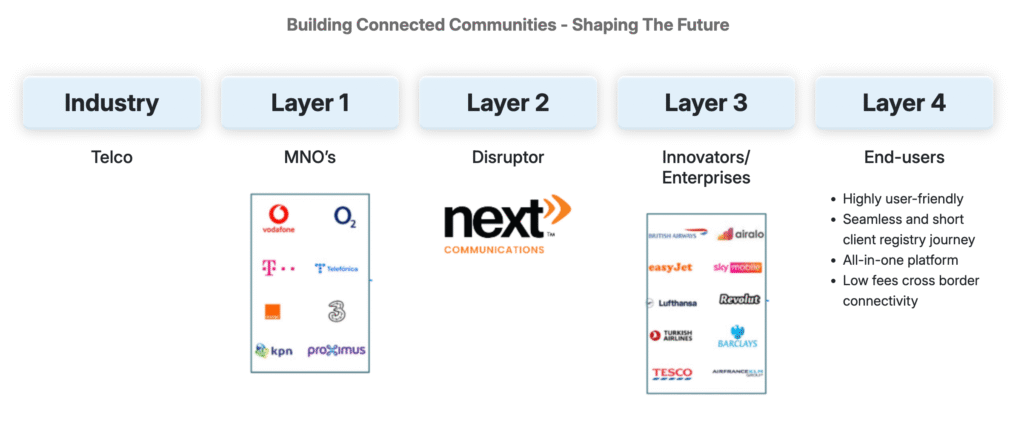
To solve this, Next Communications didn’t try to build more cell towers (Layer 1). Instead, they built a new digital brain to sit on top of them. Dave positions the company as a “Layer 2 disruptor.”
“We don’t replace telecom networks — we orchestrate them by absorbing their complexity and offering brands a unified, simplified digital layer,” he explains.
For a non-telco audience, this distinction is critical. Layer 1 is the hardware: towers, spectrum, switching. Layer 2 is the digital enablement layer—APIs, dashboards, billing logic, identity, and provisioning. By decoupling the two, Next Communications performs a magic trick of logistics:
- One integration instead of 600 operator agreements.
- One global price logic instead of 600 roaming tables.
- One billing engine instead of dozens of incompatible systems.
From the Jungle to The Hague
Dave’s journey to this point has been anything but linear. He describes entrepreneurship with a visceral intensity: “It’s just naked you versus the big, cruel, kill-you jungle.”
After years of corporate success, including founding the multi-country mobile network Next360, Dave chose the Netherlands for his latest venture not for tax reasons, but for infrastructure. He needed a launchpad with global connectivity to build a company that could act as a universal translator for the world’s telecom networks.
This “Layer 2” approach allows Next to offer something radical: Airtime as a Currency.
– Jignesh Dave, Founder and Managing Director of Next
Imagine a travel app that gives you free data miles instead of airline miles, or a bank that keeps your phone connected as long as you use their card. By turning connectivity into a software feature, Dave is allowing brands to give away the one thing every modern consumer craves.
The Regulatory Firewall
One of the primary reasons global brands have historically avoided becoming “virtual” telecom operators is the terrifying thicket of red tape. To solve this, Dave built Next Communications not just as a technology provider, but as a regulatory shield.
The company operates on a “compliance-first model,” effectively absorbing the legal burden so the client doesn’t have to. “We work within telecom regulatory frameworks, not around them,” Dave emphasizes, noting that Next maintains all necessary lawful intercept and data compliance standards.
By operating as the regulated entity (MVNA/MVNE) on the backend, they abstract the complexity away entirely. “The brand never becomes a telecom operator,” Dave says. “We become the regulated entity on their behalf”. This legal slight-of-hand is what allows a fintech app or a travel platform to go live with a branded mobile offering in minutes rather than spending two years in court.
The ‘Frenemy’ Advantage
When asked if Layer 2 disruption threatens the established order, Dave is quick to clarify his relationship with the industry’s giants.
“We don’t compete with telcos — we expand their market,” he asserts.
The strategy relies on a clear division of labor: Tier 1 operators are excellent at building heavy national infrastructure and managing spectrum, but they often lack the agility to serve niche digital markets. Next Communications bridges this gap by acting as a wholesale aggregator that brings new, high-volume customers, like neo-banks and global retail brands to the telcos’ networks.
Is the Bold “3-Minute Deployment” Claim Real?
Perhaps the boldest claim in Dave’s pitch is the promise of a “3-minute” deployment. In an industry where integration cycles are measured in quarters, this speed seems almost impossible. The secret lies in a complete virtualization of the core.
“We use a virtualized core, cloud orchestration, and API-based provisioning,” Dave explains, which means there is “zero capex, no hardware, and no long integration cycle” for the client. Because Next has already done the heavy lifting of testing and interconnecting a global network fabric, brands simply “plug into” this existing infrastructure.
This allows companies to launch a global mobile product with the same ease as spinning up a new cloud server, bypassing the legacy hardware that has slowed innovation in the sector for decades.
The Future is Embedded
As the interview draws to a close, it becomes clear that for Jignesh Dave, this isn’t just about selling SIM cards. It’s about invisible infrastructure.
“We are here to put a dent in the universe,” Dave says, quoting Steve Jobs, a sentiment that aligns with his ambitious roadmap.
Next Communications is betting that in five years, you won’t buy a mobile plan from a telco. You’ll get it from your bank, your airline, or your favourite streaming service – embedded seamlessly, managed via API, and powered by the invisible “Layer 2” orchestration that Dave and his team are building today.
The towers will still be there, but the “retail mindset” will be gone. And if Jignesh Dave has his way, we’ll wonder why we ever tolerated the old way at all.