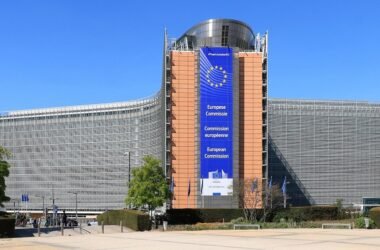




According to fresh information published by the Ministry for National Economy, Hungary has, for the first time since it became a member of the European Union in 2004, turned into a net contributor of the European Union. In the first 10 months of 2025, Hungary paid 609 billion forints (around 1.6 billion euros) into the EU budget, while subsidies received amounted only to 589 billion forints (approximately 1.55 billion euros). The change mirrors the ongoing freezing of substantial EU funding and is a landmark moment in Hungary’s 20 years of relations with Brussels.
Funding Freeze Keeps Stretching Hungary
The difference results mostly from the European Commission’s late 2022 decision to withhold the payment of billions of euros that Hungary is claiming she is entitled to under the rule-of-law conditionality mechanism of the EU. At that time, Brussels linked the delivery of money to 27 “supermilestones” related to judicial reforms, alleging that the courts of Hungary are not sufficiently independent from the executive.
After a long period of negotiations, the European Commission decided to suspend about €20 billion in December 2022. Although the official reason referred to rule-of-law issues, Commission President Ursula von der Leyen in her Early 2024 interview hinted at other factors such as Hungary’s attitudes towards illegal migration, its opposition to LGBTQ+ policy directives, and conflicts over academic freedom. Budapest, however, argues that these were the main reasons for the political character of the funding freeze and that the Commission’s statements merely confirm this.
Partial Money Is Released as a Result of a Tactical Compromise
After a quite dramatic moment at a European Council summit, Hungary managed to get 10.2 billion euros at the end of 2023. Prime Minister Viktor Orbán walked out of the room instead of actually vetoing the decision during the talks about starting EU membership negotiations with Ukraine. It was an act commonly seen as a political compromise to unfreeze a part of the funds withheld because by doing so the rest of the 26 member states were allowed to take the talks further and at the same time release a bit of the financial pressure from Budapest.
Nevertheless, most of the money whose disbursement has been suspended is still inaccessible, which is the main reason why Hungary has recently been in a position of a net contributor rather than a net recipient. There will be some additional EU funds, mainly in the form of agricultural subsidies, that will probably be delivered before the end of the year, but Hungary will be making no further contributions, hence the current situation will hardly change.
Brussels Criticized for Employing the ‘Polish Playbook’ Once Again
The frozen funds feature prominently in the politically and progressively more heated situation in Hungary that is taking place before the 2026 parliamentary elections. The European Commission seems to be using what some people in Hungary refer to as the “Polish playbook” according to which the Commission puts budgetary pressure on the government in order to attract the opposition side. Such a method was employed in the case of the Polish election held in 2023 when the opposition leader, Donald Tusk, heavily based his campaign on the promise of unfreezing EU funds that had been withheld from the conservative Law and Justice (PiS) government. After Tusk came out on top, Brussels quickly facilitated the release of a significant portion of the money that had been blocked during the judicial reforms and rule-of-law period, although it had concerns about these issues. Hungarian officials argue that Brussels is now employing a similar strategy to undermine the conservative government of Orbán that has been in power for a long time.
Budapest Is Counting on Washington’s Support to Overcome the Difficult Situation
Knowing how dangerous the economic consequences of the fund freeze may be, the Hungarian government secured an all-inclusive deal with the US. The agreement which was signed in November 2025 provides for a currency swap that has been a major factor in stabilising the Hungarian forint and also contains inducements for sizable American investment. Government insiders have said that the agreement will be the much-needed oxygen tank for the Hungarian economy during the 2026 election year.
It may slightly change the numbers for the last two months of 2025, but the fact that Hungary was temporarily transformed into a net contributor to the EU for the first time is indicative of the more significant implications of Brussels’ decision to freeze funding and the political game around it.