



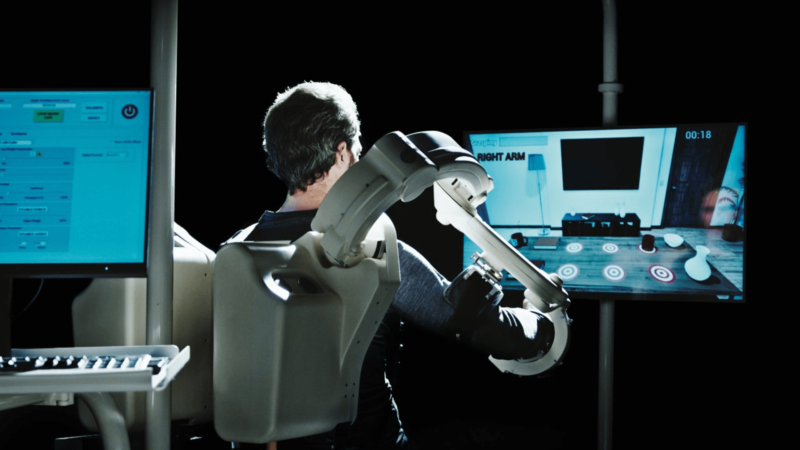
Italy based Wearable Robotics is accelerating its mission to redefine neuromotor rehabilitation after securing €5 million in Series A funding, a move that signals growing investor confidence in the convergence of robotics and immersive technologies in healthcare. The round was led by CDP Venture Capital, with participation from MITO Technology, LIFTT, SIMEST, RoboIT, and Toscana Next, a co investment fund managed by CDP Venture Capital.
Advancing the Future of Rehabilitation
Wearable Robotics is focused on developing advanced rehabilitation solutions that integrate wearable robotic systems with augmented and virtual reality technologies. By combining physical assistance with immersive digital environments, the company aims to enhance neuromotor recovery while also supporting patients in regaining independence in everyday activities.
This approach reflects a broader shift in rehabilitation, where technology is increasingly used to personalise therapy and improve patient engagement. By creating interactive and adaptive rehabilitation experiences, Wearable Robotics is working to deliver more effective and measurable outcomes.
Flagship Technology Driving Adoption
At the centre of the company’s current offering is its flagship device ALEX RS, a bilateral upper limb rehabilitation system designed to assist patients recovering from neurological conditions. The system enables controlled and repeatable movements, helping patients rebuild motor functions through guided therapy sessions.
With more than 50 units already deployed across international markets, ALEX RS has become a key driver of the company’s early traction. Its adoption across rehabilitation centres and clinical environments has helped establish Wearable Robotics as a credible player in the growing field of medical robotics.
The device also serves as a foundation for future innovation, providing insights and data that inform the development of next generation solutions.
Expanding a Modular Robotics Portfolio
Building on its existing technology, the company is now focused on expanding its product portfolio with modular and integrable robotic solutions. These new systems are designed to address a wider range of rehabilitation needs, extending beyond upper limb recovery to additional therapeutic applications.
The modular approach allows healthcare providers to integrate different components based on patient requirements, creating more flexible and scalable rehabilitation programs. This strategy is expected to increase the accessibility and adaptability of robotic rehabilitation technologies across diverse clinical settings.
Strengthening Global Presence
A key priority for Wearable Robotics is international expansion, with particular emphasis on entering and scaling operations in North America. The company is actively working to build a stronger commercial infrastructure, including distribution networks and strategic partnerships.
In parallel, efforts are underway to advance regulatory approvals in key markets and strengthen compliance processes. These steps are critical for ensuring that the company’s technologies can be deployed widely while meeting the stringent requirements of the healthcare sector.
Leadership Vision and Growth Plans
Under the leadership of CEO Lucia Lencioni, the company is entering a new phase of growth focused on scaling operations and accelerating innovation. The funding will support the completion of its product portfolio, enabling the company to deliver a broader range of solutions across the rehabilitation continuum.
Lencioni emphasised that the goal is to develop increasingly advanced and modular wearable robotics systems capable of delivering tangible impact throughout the entire rehabilitation journey. This includes improving recovery outcomes, reducing therapy time, and enhancing quality of life for patients.
Positioning in a Transforming Market
As healthcare systems worldwide look for more efficient and technology driven solutions, Wearable Robotics is positioning itself at the intersection of robotics, digital health, and patient centric care. Its integrated approach combining hardware and immersive technologies highlights the evolving nature of rehabilitation.
With fresh capital and a clear expansion strategy, the company is poised to strengthen its competitive position in international markets while continuing to innovate in one of healthcare’s most promising segments.