


Natural rubber is one of the world’s most essential industrial materials, quietly powering industries ranging from automotive manufacturing and healthcare to aerospace, defence, and consumer goods. Yet despite its strategic importance, global rubber production remains heavily dependent on a narrow tropical supply chain increasingly threatened by climate change, disease outbreaks, geopolitical instability, and environmental pressures. UK biotechnology company QuberTech is developing an alternative approach based on engineered dandelions and advanced biology systems, and the company has now secured new funding to accelerate its commercial development.
QuberTech has raised £3.4 million through a combination of grant funding and equity investment aimed at scaling its engineering biology platform and advancing commercial operations.
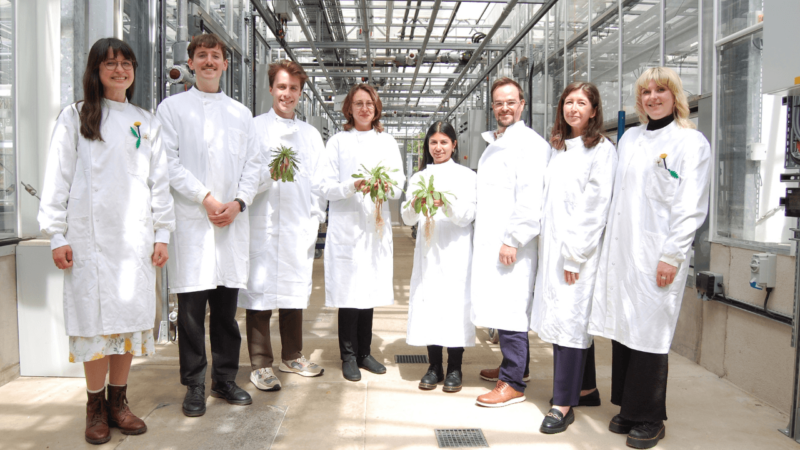
The company is developing biotechnology systems designed to cultivate high yield dandelions capable of producing natural rubber alongside additional high value bio based compounds.
Rethinking Global Rubber Supply Chains
Natural rubber remains a critical industrial resource used in products ranging from vehicle tyres and medical gloves to industrial seals, electronics, and defence applications.
However, most global production still relies on rubber trees grown within a limited tropical growing belt concentrated primarily in Southeast Asia. These supply chains are becoming increasingly vulnerable to climate stress, plant disease, environmental regulation, and geopolitical disruptions.
Traditional rubber trees also require several years to mature before becoming commercially productive, limiting flexibility and scalability.
QuberTech believes engineering biology can help create a more resilient and localised alternative to conventional rubber production.
Engineering Dandelions for Industrial Materials
The company uses advanced biotechnology and precision breeding techniques to engineer dandelions capable of producing high quality natural rubber within controlled growing environments.
Unlike traditional rubber trees, dandelions grow rapidly and can be cultivated in scalable local systems much closer to industrial demand centres.
According to QuberTech, this approach could reduce dependence on imported rubber while creating more resilient and sustainable supply chains for critical industrial materials.
The company says its platform also supports the production of additional bio based compounds with applications across sectors including food, cosmetics, sustainable packaging, and advanced biomaterials.
By combining engineering biology with controlled cultivation systems, QuberTech aims to create a broader platform for sustainable industrial biomaterials beyond rubber alone.
Support for Sustainable Industrial Innovation
QuberTech has also received support through the Defra Farming Innovation Programme, delivered in partnership with Innovate UK.
The programme supports technologies aimed at strengthening sustainable and resilient industrial and agricultural supply chains through advanced biotechnology and precision breeding approaches.
The company believes engineering biology will become increasingly important as industries seek alternatives to vulnerable global raw material supply networks.
Accelerating Commercial Development
Dr Ofir Meir said the company is focused on developing a new generation of sustainable biomaterials using engineering biology to create resilient and locally produced alternatives to imported natural rubber.
According to Meir, the newly secured funding will allow QuberTech to accelerate research and development activities, expand its team, and validate its platform through small scale pilot operations as the company moves toward commercial deployment.
The company is currently focused on demonstrating that its engineered dandelion systems can achieve commercially viable rubber yields while maintaining quality standards required for industrial applications.
Growing Interest in Bio Based Materials
The search for sustainable alternatives to conventional industrial materials has accelerated in recent years as industries face increasing environmental pressure and supply chain volatility.
Engineering biology companies are attracting growing investment as advances in genetic engineering, controlled cultivation systems, and synthetic biology create new opportunities to produce industrial materials through biological processes rather than traditional extraction or petrochemical methods.
Oliver Sexton, managed by Future Planet Capital, said natural rubber remains essential to global industrial systems while current supply chains remain highly vulnerable to disruption.
He added that QuberTech’s engineering biology platform offers a more resilient, scalable, and localised alternative by cultivating high yield dandelions under controlled conditions.
As industries increasingly prioritise supply chain resilience and sustainable production methods, companies developing bio based industrial materials are becoming an increasingly important part of the future manufacturing and climate technology landscape.