



As artificial intelligence moves beyond screens and into factories, vehicles, robots and other machines, a less visible problem is becoming increasingly important, getting software to work with the huge variety of chips inside physical devices. London based startup Embedd is targeting that challenge directly, raising €2.3 million, or about $2.7 million, in pre Seed funding to build infrastructure that helps semiconductor companies make their hardware easier for developers to integrate.
Funding to Build the Physical AI Stack
The funding round was led by Seedcamp, with participation from Cocoa, Connect Ventures, 2100 Ventures, Vesna Capital, U.ventures, Underline Ventures, Common Magic and Roosh Ventures.
Embedd plans to use the capital to further develop its platform and expand its relationships with semiconductor companies. The startup believes that the growing adoption of physical AI will create increasing demand for infrastructure capable of connecting hardware and software without requiring engineers to repeatedly rebuild integrations for every new component.
Michael Lazarenko, co founder and CEO of Embedd, said the next generation of AI would power factories, vehicles, robots and critical infrastructure, but changes in hardware currently create significant complexity for software teams.
Born From a Hardware Crisis
Embedd was founded by Ukrainian technology entrepreneurs Michael Lazarenko, Maxim Gorinov and Valentin Gololobov. The founders experienced the problem firsthand through their previous hardware company.
During the COVID 19 pandemic, chip shortages disrupted access to components. The business was subsequently affected by Russia’s invasion of Ukraine. As hardware suppliers and components changed, the team repeatedly found itself having to rewrite software to accommodate newly sourced chips.
That experience led the founders to identify a broader problem. As physical AI becomes more widespread, intelligent machines will increasingly depend on numerous processors, sensors and other semiconductor components. Yet these chips often have different architectures, documentation and software requirements.
For developers, integrating each component can therefore involve substantial engineering work.
Digital Twins Meet AI Agents
Embedd is attempting to automate this process through a combination of digital twins and AI agents.
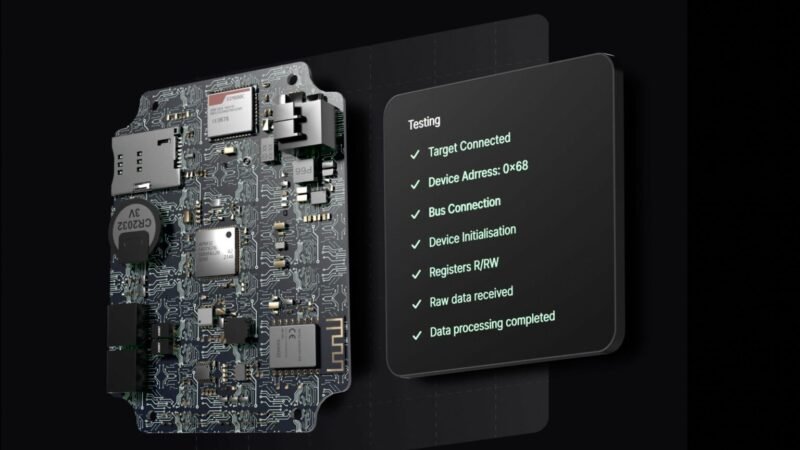
The company creates a digital representation of a semiconductor component, giving its AI systems a structured understanding of the hardware and the information required to integrate it into a software environment.
Instead of developers manually working through thousands of pages of technical documentation and writing integration code themselves, Embedd’s platform is designed to use that information to generate the software needed to make the chip accessible to applications and operating systems.
The approach is aimed at creating a common integration layer between semiconductor hardware and the increasingly complex software ecosystems that power physical AI.
Production Software Up to Six Times Faster
Embedd says its technology has enabled customers to deliver production ready software for chips up to six times faster. The company commercially launched its platform in April 2026 and has since signed contracts with multiple semiconductor businesses.
One of its customers is Microchip Technology, where Embedd is working to enable support for the Zephyr ecosystem.
The company sees semiconductor manufacturers as an important part of its strategy because making chips easier to integrate can help them reach more developers and emerging software platforms.
Building Infrastructure for Physical AI
Lazarenko said hardware fragmentation remains a major obstacle to the adoption of physical AI and that the new funding will allow Embedd to expand its platform and help more semiconductor companies bring their devices into emerging software ecosystems.
The startup is ultimately betting that physical AI will require more than powerful models. It will also need software infrastructure capable of making thousands of different hardware components work together reliably. By automating that connection, Embedd aims to become part of the underlying technology stack powering the next generation of intelligent machines.