



Intensive care units rely on constant monitoring to ensure critically ill patients receive timely treatment, yet many essential clinical tasks continue to depend on manual processes that consume valuable nursing time. One such routine is urine output monitoring, a key indicator of kidney function and overall patient health. Nurses are often required to visit each patient’s bedside every hour, manually record measurements, and transfer the information into hospital systems. While essential, this repetitive task adds to already demanding workloads and introduces the risk of human error. Czech medtech startup HTG Medical is addressing this challenge through automation, and the company has now reached an important milestone by securing fresh funding and regulatory approval for its flagship medical device.
HTG Medical has raised €450,000 from angel investors and venture capital firms while its proprietary HTG Urogram has successfully achieved certification under the European Union’s Medical Device Regulation.
The approval allows the company to begin commercial deployment across European markets while supporting future international expansion.
From Hackathon Idea to Certified Medical Device
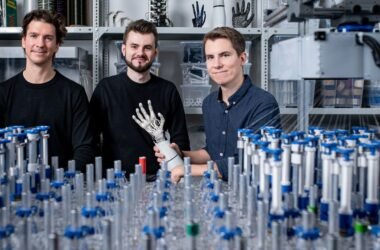
HTG Medical was founded following a medical technology hackathon organised by IKEM in 2019.
During the event, the founding team was challenged to develop a solution capable of digitising urine output monitoring within intensive care units.
Although the original concept did not win the competition, the founders continued developing the technology into a commercially viable medical device.
Over several years, the company refined both the engineering and clinical aspects of the platform before successfully completing the demanding regulatory approval process.
Automating Critical Patient Monitoring
The HTG Urogram automatically measures and records patient urine output without requiring manual intervention.
Instead of nurses repeatedly collecting readings from drainage bags and entering measurements into hospital systems, the device continuously monitors fluid output and displays live information through an integrated digital screen.
Measurement data is simultaneously transmitted directly into Hospital Information Systems, allowing healthcare professionals to access patient information immediately.
The automated workflow reduces administrative work while ensuring continuous monitoring throughout patient care.
Supporting Healthcare Professionals
Urine output remains an important clinical indicator used to monitor kidney function, hydration status, and overall patient condition within intensive care.
Manual documentation requires considerable nursing time, particularly in busy hospital environments where healthcare professionals already manage numerous responsibilities.
HTG Medical estimates that automating this process can return approximately one hour of working time to nurses each day.
The company also highlights that automation reduces documentation errors that can occur during manual recording, supporting more accurate clinical decision making.
Achieving Regulatory Milestones
Obtaining certification under the European Union’s Medical Device Regulation represents a significant achievement for the company.
The process required extensive engineering validation, quality management systems, product testing, technical documentation, and regulatory compliance.
HTG Medical completed this complex certification journey within approximately fifteen months by combining local European manufacturing with comprehensive component traceability throughout development.
The certification now provides a foundation for expansion into additional international healthcare markets.
Preparing for Global Expansion
The newly secured funding forms part of the company’s continuing pre seed financing and brings total investment beyond the €1 million mark.
The capital will support international commercial rollout while expanding operations beyond Europe.
HTG Medical plans to use its European regulatory approval as a pathway towards accelerated registrations in markets including Australia, Singapore, Malaysia, and Saudi Arabia.
As hospitals continue investing in digital healthcare technologies that improve efficiency and patient outcomes, automated clinical monitoring systems are becoming increasingly valuable. By replacing manual documentation with continuous digital measurement, HTG Medical aims to reduce administrative workloads, improve clinical accuracy, and help healthcare professionals dedicate more time to direct patient care.