


Paris based deeptech startup Qluster is taking a different route in the race to build practical quantum computers. Instead of focusing only on making individual quantum bits more powerful, the company wants to rethink how an entire quantum machine is designed, using light to process information and industrial requirements to guide its architecture. Its €4.7 million pre seed funding round will help turn decades of scientific research into technology aimed at real world computing challenges.
Funding to Accelerate Quantum Research
The funding round was led by Quantonation, an investment fund specialising in quantum technologies and physics based innovations, with participation from Quantum Launchpad and Bpifrance.
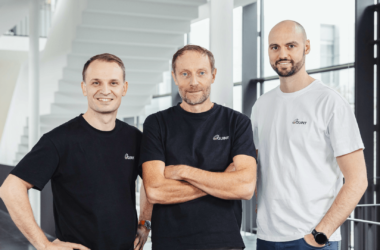
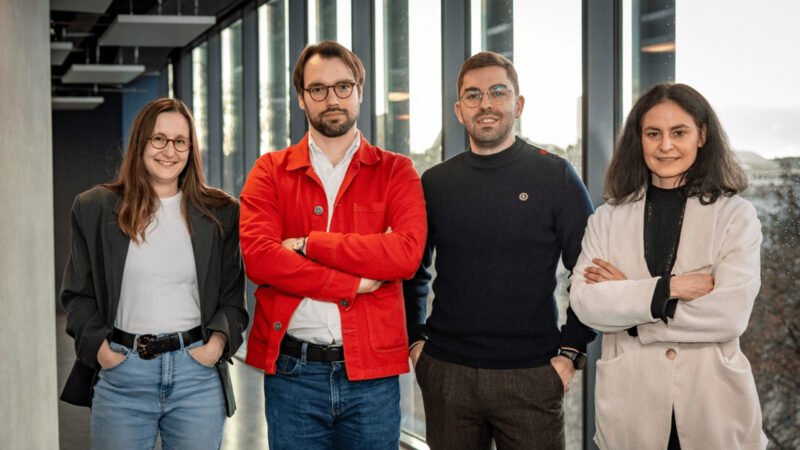
Qluster was founded by David Fainsin, CEO, Ambroise Boyer, CTO, Clarisse Thibault, COO, and Valentina Parigi, CSO and professor at Sorbonne University. The company emerged from Laboratoire Kastler Brossel, a research institution associated with three Nobel Prizes in Physics.
The founders are building on decades of research in quantum optics, with the ambition of developing a universal, fault tolerant quantum computer capable of handling complex industrial calculations.
Using Light to Power Quantum Computing
Unlike conventional computing systems, quantum computers use the principles of quantum mechanics to process information. They have the potential to tackle certain calculations that are extremely difficult for traditional computers, including complex simulations, optimisation and advanced machine learning.
Qluster is developing a continuous variable photonic quantum computing architecture. In simple terms, its technology uses light rather than relying exclusively on matter based quantum bits to carry and process information.
The company’s approach is based on measurement based quantum computing. It involves preparing a highly entangled state of light, known as a cluster state, before performing calculations through a sequence of adaptive measurements.
According to the company’s official technology overview, this architecture is designed to operate primarily at room temperature using standard telecommunications components. This could reduce some of the cooling and hardware complexity associated with other quantum computing approaches.
Its technology also combines different types of quantum light sources. A deterministic photonic source forms the foundation, while additional light matter interfaces are intended to support universal computation and advanced error correction.
An Architecture First Strategy
One of Qluster’s central ideas is its Architecture First approach. Rather than beginning with a particular qubit technology and then looking for applications, the startup starts by identifying the computational problems businesses need to solve.
It translates those challenges into quantum circuits and calculates the resources required, including the number of qubits, circuit depth, processing speed and energy consumption. The computer’s architecture is then designed around those requirements.
The strategy aims to connect hardware development more closely with practical industrial needs, rather than measuring progress only through improvements in individual quantum components.
Early Industrial Applications
Qluster is also developing an intermediate photonic system focused on Quantum Reservoir Computing. This approach uses the complex dynamics of quantum systems to process time based data and identify patterns.
The company identifies financial forecasting, fluid dynamics simulations and real time anomaly detection in electricity grids and telecommunications networks as potential applications.
It is inviting industrial partners to explore pilot projects and develop proof of concept applications using its technology. These early systems are intended to provide a route towards commercial engagement while the company continues developing its larger quantum computing architecture.
Roadmap Towards 2036
Qluster has set an ambitious development timeline. It aims to build an intermediate scale quantum computer by 2032, followed by a large scale, universal and fault tolerant machine by 2036.
The latest funding will support the establishment of a dedicated research and development laboratory to improve its photonic technology. The company also plans to recruit experimental physicists and specialists in quantum computing theory and architecture.
The startup has already received the 2026 i Lab Grand Prize, supported by France 2030, and has benefited from support from Quantum Launchpad and Agoranov.
While significant scientific and engineering challenges remain before large scale fault tolerant quantum computing becomes commercially practical, Qluster is positioning photonics as a potential route towards more scalable systems. Its immediate challenge will be to turn its research foundations into working hardware and demonstrate that its architecture can deliver meaningful value for industry.