



Artificial intelligence is rapidly transforming how software is created. Development teams are now generating code faster than ever as AI powered assistants and autonomous coding agents become increasingly integrated into engineering workflows. Yet while code generation has accelerated dramatically, the infrastructure responsible for testing, validating, and shipping that software has evolved far more slowly. This growing imbalance is creating new operational bottlenecks across the software industry, where engineering teams can produce code at unprecedented speed but still struggle to deliver it efficiently into production. Emerging from stealth, modern Continuous Integration platform Avrea is building infrastructure designed specifically for the agentic AI era of software development.
Avrea has secured $4.7 million in total pre seed funding led by Earlybird.
The company says the funding will support expansion of its engineering team, development of broader software delivery capabilities, and acceleration of go to market operations.
Addressing the New Bottleneck in AI Driven Development
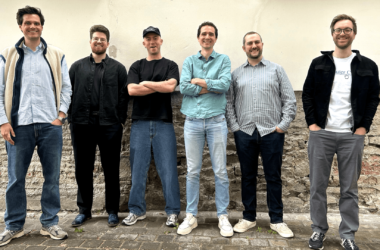
Founded by Hannu Valtonen and Juha Valvanne, Avrea focuses on modernising Continuous Integration infrastructure for a software industry increasingly shaped by AI generated code.
The company argues that while AI tools can dramatically increase developer output, software delivery infrastructure still scales proportionally with the growing amount of code being produced.
As development teams generate larger volumes of software, they must also execute significantly more testing, validation, and deployment operations.
According to Valtonen, if teams generate five times more code, they also need to run five times more tests, creating mounting pressure on existing CI and CD systems.
Avrea aims to remove that operational friction without requiring companies to overhaul their existing workflows.
Building CI Infrastructure for AI Agents
Avrea’s platform is designed to work directly with existing CI and CD workflows while remaining compatible with current engineering environments.
The company says adoption requires only a single line of code, allowing teams to integrate the platform without disrupting established development processes.
A key part of Avrea’s approach is direct accessibility for AI agents themselves.
Rather than treating AI coding systems as external tools, the platform allows automated agents to participate natively in software delivery workflows including code building, testing, validation, and deployment operations.
According to the company, software development is increasingly evolving into a collaborative process between human engineers and AI systems, requiring delivery infrastructure capable of supporting both.
Improving Visibility Into Software Delivery
Beyond improving software delivery speed, Avrea also focuses on observability across engineering pipelines.
The platform provides teams with visibility into build performance, infrastructure bottlenecks, flaky tests, and stalled deployment processes that are often difficult to diagnose within traditional CI and CD environments.
The company believes this operational insight becomes increasingly important as software pipelines grow more complex under AI accelerated development cycles.
Juha Valvanne said AI agents are becoming increasingly active participants within software engineering workflows, making it essential for delivery systems to integrate directly with those automated systems.
According to Valvanne, Avrea is being designed specifically for that future environment where software delivery must support continuous collaboration between developers and AI systems.
Expanding Beyond Traditional CI and CD
The newly secured funding will support continued expansion of the company’s engineering organisation as Avrea develops additional capabilities beyond traditional CI and CD runners.
The company says its broader goal is to simplify software delivery infrastructure so engineering teams can spend more time building products and less time managing tooling complexity.
As AI continues reshaping software development, the infrastructure layer supporting testing, validation, deployment, and delivery is emerging as a critical area of innovation.
Companies capable of modernising these operational systems for AI native workflows are increasingly positioning themselves at the centre of the next generation of software engineering infrastructure.