


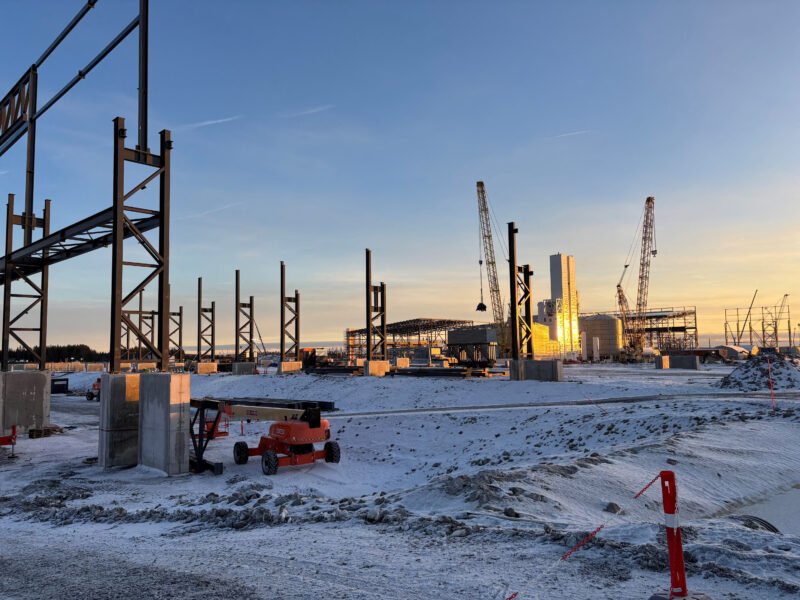
As it attempts to raise the rest of the capital needed to finish the building of its large-scale fossil-free steel plant in northern Sweden, Stegra, the country’s flagship green steel startup, has been awarded by Sweden 390 million Swedish crowns ($41 million) in state funding. The money that was given on November 26, 2025, is a landmark in the decarbonisation of heavy industry in Europe. However, it is only a fraction of the total that was requested, hence the difficulties in obtaining the financing for the green transition.
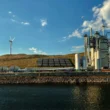
The Swedish Energy Agency described the investment as a move to enhance Stegra’s position when it is seeking a new capital injection of up to $1.1 billion, in addition to the €6.5 billion ($7.5 billion) that has already been obtained in the form of loans and equity. Stegra is setting up the first greenfield steel mill in Europe in the past 50 years, which will be outside Boden in northern Sweden. The company will produce steel using hydrogen powered by renewables instead of coal or coke, which are fossil-fuel-based.
“The project has good potential to accelerate the transition in the iron and steel industry,” the Energy Agency said in a statement. The agency believes that the public money will open the doors wider to private investors and make it more likely that the company can meet its financial requirements.
Nevertheless, the help is clearly accompanied by some stipulations: Stegra is required to demonstrate that it has obtained enough extra funds to finish the project by the next spring of 2026, or else it will have to forego the grant. That condition mirrors not only the magnitude of the challenge but also the demand for policymakers to verify that publicly funded projects are supported by solid financial contributions.
A Critical Decarbonisation Project at a Pivotal Moment
The steel sector has been one of the main contributors to industrial emissions worldwide and thus, in effect, it is accountable for around 7-8% of the total global carbon dioxide emissions. Therefore, innovations such as universal use of hydrogen-reduced steel become key to achieving climate objectives. Sweden, equipped with abundant renewable electricity and an ambitious national climate agenda, is striving to be the European leader in this transition.
Stegra plans to make the steel totally eco-friendly by using hydrogen generated by an electrolyzer that takes its energy from a renewable source. The electrolyzed hydrogen as a reductant will therefore replace carbon monoxide in the blast furnace process. If so, the plant’s emissions will be drastically lowered as the made steel could then be used in zero-carbon automotive, construction, and infrastructure industries meanwhile satisfying growing demands in the sectors.
On the other hand, conversion to green steel production is still quite expensive and the whole continent has witnessed the series of incidents that have caused a lot of questioning about the strengths of Europe’s cleantech industrial strategy. Early this year Sweden experienced a bumpy ride after Northvolt, the battery manufacturer that was once considered the green industrial strategy’s cornerstone, faced financial issues and caused operational delays.
Under these circumstances, Henrik Henriksson, CEO of Stegra, has been stressing out the need of government support as the major factor in gaining trust from financial institutions. He not long ago confirmed that Stegra had managed to secure about half of the total fund requirement. Afterward, he speculated that the rest of the money would come from bank loans within six months. He asserted that additional public support “communicates a strong message to banks and investors that Sweden is behind the project.”
Funding Falls Short of Earlier Expectations
Through a jointly supported package by Sweden and the European Union, Stegra got 1.2 billion crowns, but they left out 1.6 billion crowns from the package. The Swedish Energy Agency had a submission from the company for the rest of the funds and they only gave part of the amount in the latest award.
“Although there is a gap between the government request and the EU approval, we are now able to take the next step along with the financiers,” said Stegra while conversing with the news agency Reuters. The firm added that the financing “somewhat equalizes the playing field with regard to other projects in Sweden and the rest of Europe.”
The result is an example of the conflict between ambitious climate policies and hard financial facts as Europe is trying to handle clean industrial technologies in a competitive way and at high scale.
Looking Ahead
Many see the completion of the factory in Boden as an essential part of the plan for Europe to create strong, localized supply chains that would be less reliant on imports and fossil fuels. While steel demand is forecast to rise on the back of the massive infrastructure and renewable energy that will be deployed, the transition to fossil-free steel may well determine who will lead the industrial sector in the future.
The fate of Stegra over the next half-year period will be figuring out whether company executives can use the fresh capital to open the door to private investors who will provide the funding needed to finish the project on time. Moreover, the question remains whether Sweden’s green industrial transition can sustain its momentum amid the worsening economic conditions.