



NestAI, a Finnish AI startup that has been quietly developing, has raised €100 million to fast-track its plan to create what it terms the first large-scale European “physical AI” lab for the defense sector. The round of funding is mainly supported by Tesi, the investment company owned by the Finnish state, and also features a significant investment from Nokia. It is one of the largest deep-tech defence investments made in the region this year.
What the new money means for NestAI is much more than just an extension of the company’s activities. It signifies a decisive move towards a new category of AI that is not confined to the digital world. According to the firm, “physical AI” is a mix of the abilities of large language models with robots in the real world, unmanned vehicles, AI-based operations, and advanced command-and-control systems. For example, this would entail the creation of AI that is not only visually presented on the screen but is inside the machinery, which can work efficiently in military, crisis-response and sensitive-infrastructure milieus.
The company’s goal is to create a leading European research lab in the field of physical AI and be the technology partner of the continent’s defence forces. NestAI’s assertion of this, despite the fact that it was only recently that the company was in stealth, is quite unusual and raising the trust with the heavy and experienced team backing it.
One of the company’s significant members is co-founder and chairman Peter Sarlin, a well-known AI entrepreneur from the Nordic region. Sarlin is known for founding Silo AI, which he sold to AMD in 2024 for $665 million, thus making one of the biggest AI acquisitions in Europe. Now, he is working with AMD and at the same time, supporting NestAI through his family office, PostScriptum, which was the company’s seed investor.
Sarlin is well-known for her ability to connect Nordic engineering with the global AI trend and it most likely that was a major factor in the company’s strategic partnership attraction. Among these partners, Nokia’s participation is the most important. The company has been gradually redirecting its energy to secure networks, critical-infrastructure resilience and defence-grade communications, and these are exactly some of the areas where NestAI is planning to be in the long run.
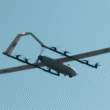
Unlike many European AI companies that are mainly focused on digital models, NestAI is solely committed to operational, hardware-integrated intelligence. While competitors such as Avalor AI, Arondite and Helsing pitch data-driven decision platforms or software-first defence applications, NestAI’s goal is to make the physical systems intelligent: drones that can self-adapt, ground vehicles that can navigate the difficult terrain of a war zone, or command interfaces that can provide instant battlefield analysis.
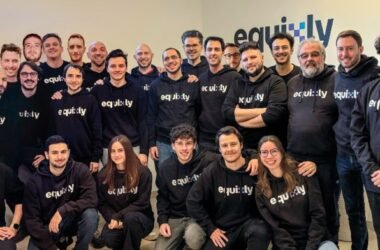
To do this, the company has brought together a team that is deeply experienced in defence engineering, semiconductor design, and large-scale software operations. They have among their ranks, ex-leaders and experts of Intel, Kongsberg, Palantir, Saab, as well as other defence and industrial giants. The company’s multi-disciplinary strategy is aimed at solving one of the most difficult problems in military technology, namely how to put the most advanced AI into machines that have to be tough against the harsh environment, adversarial threats, and interoperability requirements of NATO and European forces.
The next moves of NestAI will see them rapidly enlarging their laboratory resources to test, simulate and apply these systems at an enterprise level. They intend to broaden collaboration Europe-wide, especially with the Finnish Defence Forces, whose investments in AI-enabled and autonomous defence capabilities are rapidly growing due to the changing security situation in Northern Europe.
For Europe, NestAI is not just another AI startup that is well funded. The company is a part of the larger movement of governments and industry leaders, whose priority it is to retain strategic autonomy in defence technologies, particularly in fields where US and China are dominant. As the geopolitics are heating up and AI’s role in security is growing, European countries are turning to local innovators to provide the next generation of resilient, autonomous defence systems.
A public debut of NestAI, supported by €100 million and globally-reaching partners, is a signal that the competition to develop physical AI in Europe is heating up and the Finnish team is there to lead the way.