
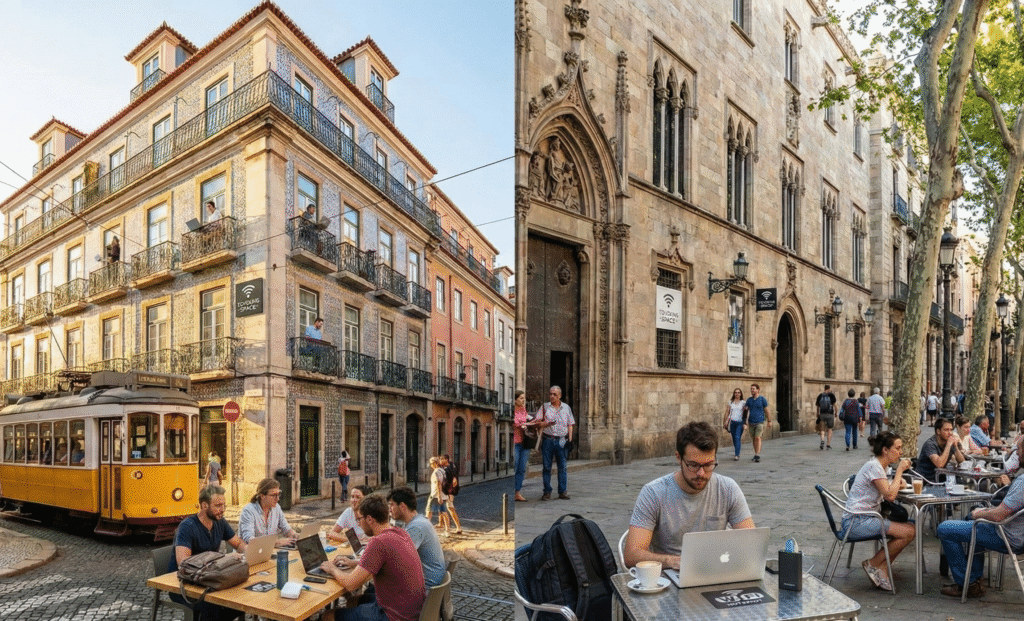
The Digital Nomad Economy has triggered the most significant structural change in European real estate since the advent of mass tourism. In cities like Lisbon and Barcelona the traditional hotel model is being rapidly dismantled by a new asset class that sits somewhere between a boutique hotel and a luxury apartment. Hospitality startups are pivoting away from the volatility of nightly tourism to capture the stability of the subscription based workforce. This transition is not just about installing faster internet but about engineering entire ecosystems that support a lifestyle of high mobility and high productivity. This deep dive analyzes how agile founders are rewriting the rules of residency in Southern Europe to serve the new elite of the remote workforce.
The Economic Logic of the Long Stay Pivot
The primary motivation for shifting to long stay models is the radical improvement in unit economics. Traditional hotels suffer from high churn rates and massive operational costs associated with cleaning rooms and checking guests in every single day. By targeting the Digital Nomad Economy brands can secure revenue for months at a time with a fraction of the overhead. This stability allows operators to weather seasonal dips that usually crush tourism businesses.
Furthermore the modern remote worker spends significantly more in the local economy than the average tourist. They are not buying fridge magnets but are instead paying for gym memberships and coworking desks and local groceries. This shift aligns with the principles we explored in our guide on Sustainable Tourism Metrics where the goal is to maximize the local economic impact while minimizing the environmental footprint of transient travel.
Outsite and the Community First Approach in Lisbon
Lisbon has established itself as the European capital of remote work and Outsite has become its unofficial headquarters. The brand recognized early on that loneliness is the biggest friction point for long term travelers. Instead of just selling a room they sell instant access to a vetted community. Their properties in Cais do Sodré act as hybrid spaces where the line between living and working is completely erased.
Outsite’s technical brilliance lies in its member management platform. Users can move between locations seamlessly with a single subscription, which mirrors the fluidity we see in our guide to Scaling Micro-Hotels. The app handles everything from door codes to networking events, removing the administrative burden from on-site staff. By focusing on the software layer of community building, Outsite has created a sticky product that retains members for years rather than days.
Aticco Living and the Barcelona Ecosystem
Barcelona faces strict regulations on tourism rentals, which force operators to be smarter about how they use space. Aticco started as a coworking operator but successfully pivoted into the living sector by leveraging its existing community. They offer flexible coliving apartments that are fully integrated with their workspaces. This creates a closed-loop ecosystem where a nomad can live and work within the same trusted network.
Their model solves the massive headache of finding legal mid-term housing in Catalonia. By bundling utilities, cleaning, and networking into a single monthly fee, they remove the friction of settling into a new city. This turnkey approach is essential for high-performance professionals who cannot afford to waste weeks setting up internet contracts. It represents the physical manifestation of the efficiency we discussed in the Best European Workation Cities guide, where infrastructure determines the success of the trip.
Selina and the Experience Economy
Selina has taken the concept of the youth hostel and upgraded it for the remote working generation. With massive properties in both Lisbon and other Portuguese hubs, they focus on the experience economy. Their locations feature surf lessons, a yoga deck, and wellness centres, alongside enterprise-grade coworking facilities.
This strategy targets the nomadic worker who prioritises lifestyle design over pure efficiency. However, behind the bohemian aesthetic lies a rigorous data operation. Selina uses predictive analytics to optimise room pricing and event scheduling. They understand that the value of the stay is driven by the unique experiences they can upsell to the guest once they are on the property.
Engineering the Infrastructure of Belonging
The success of these startups depends on their ability to manufacture a sense of belonging on demand. This requires a sophisticated interplay of physical design and digital connection. The best operators use apps to connect guests before they even arrive, ensuring the building’s social graph is active from day one.
This digital layer is critical for retention. If a guest feels connected to the people around them, they are far more likely to extend their stay. By automating the boring parts of property management, these startups free up their community managers to facilitate genuine human connections.
Conclusion
The Digital Nomad Economy has forced the hospitality industry to evolve from a provider of beds into a provider of lifestyles, by understanding the how and why behind these shifts from community engineering to regulatory navigation, founders and investors can see the immense potential of the long stay asset class. The work of companies like Outsite and Aticco proves that the future of housing is flexible and community-driven. As the workforce becomes increasingly mobile, the brands that can offer a seamless, connected living experience will dominate the market in Lisbon, Barcelona, and beyond.