
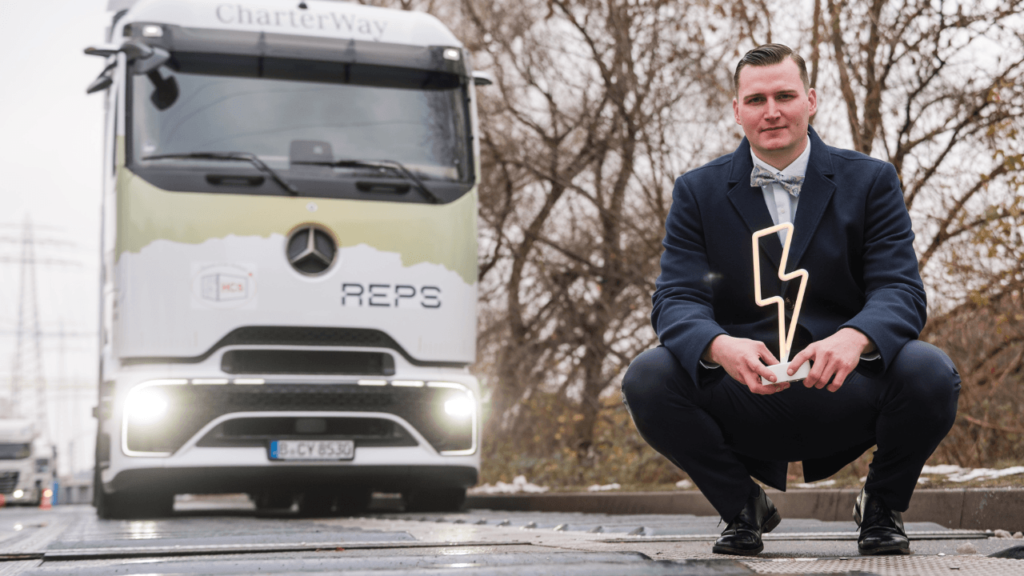
Every day, billions of vehicles move across roads worldwide, generating enormous amounts of wasted mechanical energy through braking, pressure, vibration, and motion. Most of that energy simply disappears into the environment unused. While renewable energy technologies such as solar and wind have focused on generating new power, Tyrol based startup REPS is taking a different approach by recovering energy already being lost through traffic itself. The company has now secured major funding to scale its patented road energy technology globally.
REPS announced a $23.6 million equity financing round to accelerate deployment of its Road Energy Production System, a technology platform designed to convert vehicle traffic directly into electrical energy using existing road infrastructure.
The company says its systems can generate electricity continuously from real traffic flows without disrupting logistics operations or requiring additional land use.
Turning Roads Into Energy Infrastructure
REPS has developed a patented road power plant that installs directly into roads and harvests energy from vehicles driving across the system.
The technology works particularly well in locations where heavy vehicles naturally slow down, brake, or generate additional force through slopes and traffic conditions. These include port entrances, logistics hubs, industrial zones, loading areas, speed limited sections, and urban traffic bottlenecks.
According to the company, these high traffic locations create highly predictable and concentrated mechanical energy patterns that can be converted into usable electricity.
REPS says the system operates independently of weather conditions and time of day, unlike traditional renewable energy technologies dependent on sunlight or wind conditions.
Reinventing Energy Harvesting
The broader category behind REPS’ technology is known as energy harvesting, where lost mechanical energy is converted into electricity.
While the concept has existed for years, the company argues that earlier mechanical converters struggled with low efficiency and durability, making large scale deployment economically impractical.
REPS says it redesigned the converter technology itself to operate under heavy traffic conditions for more than 20 years while maintaining commercial efficiency.
According to the company, its converter system delivers 254 times higher efficiency than competing alternatives currently available on the market.
The startup believes this breakthrough finally makes large scale road based energy harvesting commercially viable.
Early Deployment at the Port of Hamburg
REPS launched its first commercial system at the Port of Hamburg in November 2025.
Since deployment, more than 115,000 trucks have crossed the system, generating over 6,700 kilowatt hours of electricity under real operational traffic conditions.
The Hamburg project has already generated significant international interest from ports, logistics operators, and infrastructure owners.
According to the company, it is currently engaged with more than 90 organisations from the port industry across Europe, the Middle East, Asia, and North America.
Interest has also expanded into cities, logistics centres, and industrial infrastructure operators looking to reduce energy costs while improving sustainability targets.
Scaling the Energy Potential
REPS believes the long term energy opportunity could become substantial at scale.
The company estimates that deploying approximately 230 systems across the public roads of the Port of Hamburg alone could generate roughly 10 gigawatt hours of electricity annually. That output would be sufficient to power approximately 2,800 households while offsetting nearly 10 percent of port traffic related carbon emissions.
The estimated return on investment for such a deployment would fall below four years.
On an urban scale, REPS estimates that deploying around 64,000 systems across a city the size of Dubai could potentially recover approximately 3.2 terawatt hours of electricity annually, equivalent to more than 10 percent of the city’s current electricity consumption.
Expanding Beyond Roads
Alfons Huber said the company spent six years developing the technology and is now entering its scaling phase as global demand accelerates.
Huber explained that roads represent only the first proof point for a broader energy harvesting platform capable of transforming high traffic infrastructure into decentralised power assets.
The company ultimately aims to capture wasted mechanical energy wherever large masses move frequently and convert that lost energy into commercially meaningful electricity generation.
As industries and cities increasingly seek new forms of distributed clean energy infrastructure, REPS is positioning itself within a growing category of climate technology companies focused on recovering wasted energy already embedded within existing industrial and transportation systems.