
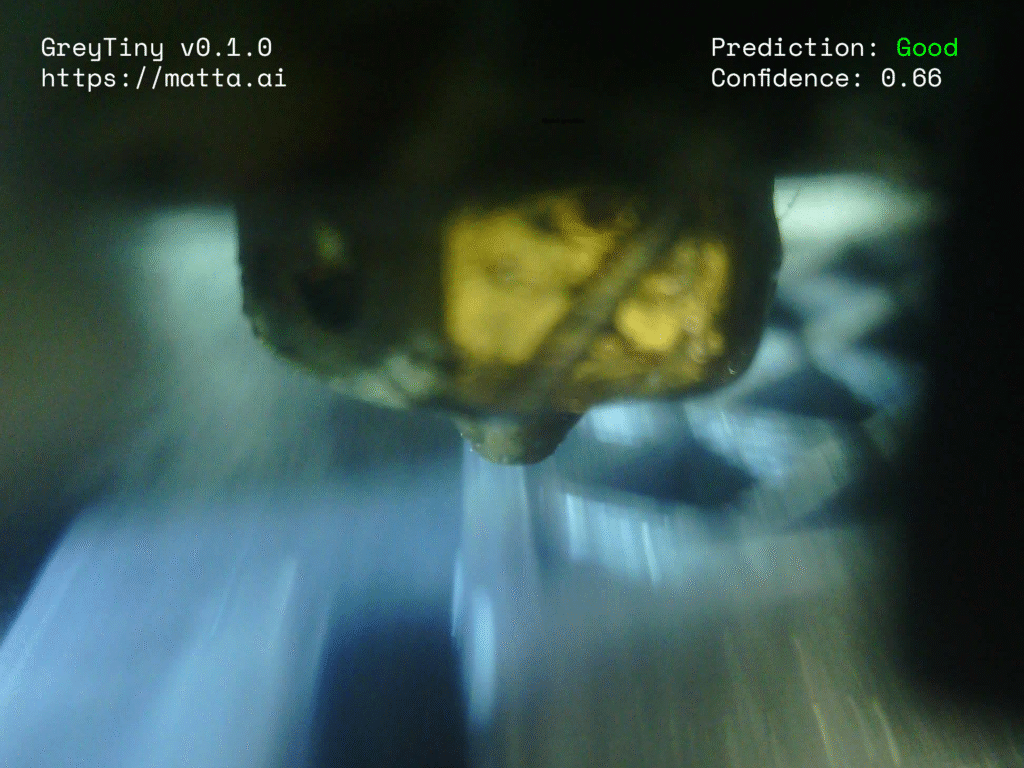
Matta, a London-based industrial AI startup spun out from the University of Cambridge, has raised $14 million in seed funding to accelerate the transformation of how products are designed, manufactured, and inspected. The round was led by Lakestar, with participation from Giant Ventures, RedSeed VC, InMotion Ventures, 1st Kind (backed by the Peugeot family), Unruly Capital, and Boost VC, alongside grant funding from Innovate UK and the Royal Academy of Engineering. The raise stands out as one of Europe’s largest early-stage investments in industrial AI this year, reflecting growing investor confidence in AI-driven manufacturing solutions.
Manufacturing Under Growing Pressure
The funding comes at a challenging time for the global manufacturing sector. Decades of deindustrialisation across the UK, Europe, and parts of the United States have left factories more exposed to geopolitical instability and fragile supply chains. At the same time, energy prices remain volatile, while manufacturers face mounting pressure to reshore production, decarbonise operations, and sustain output with smaller, ageing workforces.
Shortages of skilled labour, shrinking recruitment pipelines, and rising operating costs have created persistent efficiency gaps across industries. In this environment, manufacturers are being pushed to produce more with fewer resources, making resilience, flexibility, and intelligence on the factory floor essential rather than optional.
AI That Learns the Rules of Production
Matta aims to address these structural challenges by improving productivity, quality, and operational resilience. Unlike traditional AI systems that depend on vast labelled datasets, Matta develops AI models that learn the physical rules of production directly from the factory environment.
Its technology automates quality control, reduces downtime, and enables rapid responses to defects or deviations in manufacturing processes. This allows factories to move away from reactive problem-solving toward predictive and preventative operations.
First Product Focused on Quality and Insight
Matta’s first commercial product uses unsupervised and self-supervised computer vision to deliver real-time production insights. Core capabilities include rapid defect detection, automated measurements, root-cause diagnosis, and predictive recommendations for corrective actions.
By identifying failures early, factories can reduce scrap rates, better understand bottlenecks, and maintain consistent output—even in settings with limited human supervision. This marks a shift from manual inspection toward intelligent, continuous monitoring.
Designed for Rapid Factory Deployment
A defining feature of Matta’s solution is its speed of deployment. The system is delivered as an integrated package combining hardware, AI software, and factory systems integration. Most installations are completed within hours, with cameras learning production lines after a short induction period.
Once live, the system automatically inspects components, flags anomalies, and provides engineers with actionable insights before issues escalate into expensive delays or rework.
Single View of Factory Operations
Matta also provides a centralised management platform that allows teams to monitor every camera on the shop floor, analyse system outputs, and trace individual parts in real time. This creates a single source of truth for production health, improving visibility across complex factory environments and enabling faster decision-making.
Scaling Human Expertise, Not Replacing It
Co-founder and CEO Doug Brion emphasises that Matta’s mission is to amplify human expertise rather than replace workers. He explains that manufacturing still depends heavily on tacit human knowledge, skills developed through years of hands-on experience.
By using AI to capture and scale this embedded know-how, Matta aims to help engineers design products that perform reliably in real-world conditions. This philosophy underpins the company’s approach to industrial automation.
Applicable Across Multiple Industries
Matta’s technology is general-purpose and adaptable across a wide range of sectors, including electronics, automotive and electric vehicle components, defence and aerospace, and apparel and textiles. The company is also working with original equipment manufacturers (OEMs) to develop machines that can automatically adjust their own parameters, supporting the gradual transition toward semi-autonomous and fully autonomous factories.
Funding to Support Global Expansion
The $14 million seed round will enable Matta to expand its AI research, accelerate factory deployments, enhance its self-serve deployment model, and enter major manufacturing regions in Europe and the United States.
As Matta moves toward increasingly autonomous, end-to-end production systems, the company aims to become a foundational technology provider for next generation factories built to operate in a fast changing, resource constrained global economy.