
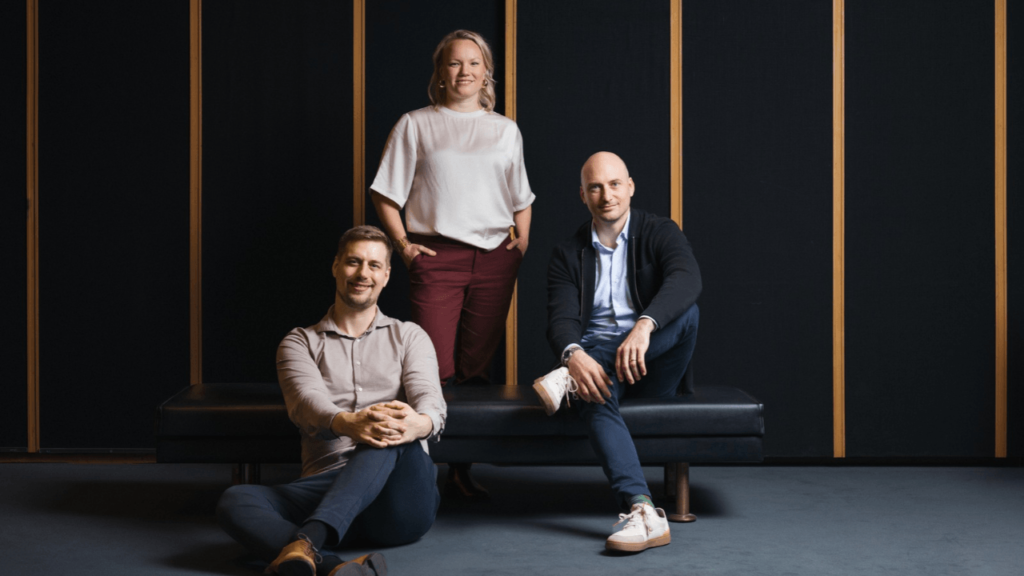
Understanding how human tissue responds to medicines requires more than observing cells at a single moment. Biological processes change continuously, influenced by blood flow, oxygen levels, temperature and other environmental conditions. However, many laboratory experiments still rely on static systems that cannot fully reproduce these conditions. Norwegian biotech company Vitroscope is working to change this through automated technology that allows researchers to study living human tissue over extended periods. The company has raised $7 million to expand its platform and generate richer biological data for drug discovery and medical research.
Cerberus Ventures and YZR Capital Lead Investment
Vitroscope has secured $7 million in new funding, comprising a $5 million seed round and $2 million in non dilutive financing from the Research Council of Norway.
The seed round was co led by Cerberus Ventures and YZR Capital, with participation from Arcas Ventures, Golden Egg Check, Devico Invest and angel investors including Carles Reina, Fàtima Godall and Oskari Pétas.
The latest financing brings Vitroscope’s total funding to $8.8 million. The capital will support the commercial rollout of its existing vitro.alive platform and the development and validation of vitro.scale, a higher capacity system designed to conduct more experiments simultaneously.
Addressing a Major Challenge in Laboratory Research
Researchers increasingly use advanced biological models, including organoids and freshly collected human tissue, to understand diseases and evaluate potential treatments. These models can provide valuable insights into human biology, but maintaining them under appropriate conditions remains challenging.
Traditional laboratory well plates provide a relatively static environment. They cannot adequately reproduce the continuous fluid movement and oxygen conditions that living tissues often require. Consequently, tissue viability can decline, experiments may need to be stopped earlier and researchers may collect less information about how biological systems respond over time.
Vitroscope addresses this limitation through perfusion technology, which maintains controlled fluid flow through living tissue. This allows researchers to recreate important physiological conditions and observe biological responses over several days.
Inside the vitro.alive Technology
Vitroscope’s vitro.alive is a benchtop platform combining programmable perfusion, real time environmental monitoring and live cell imaging.
Researchers can control oxygen levels, pH and temperature while observing how living cells and tissue models respond to changing conditions.
The system supports six independent experiments running in parallel and is compatible with standard inverted microscopes. It also allows laboratories to continue using their existing tissue models rather than requiring them to rebuild their experimental workflows around an entirely different biological system.
The platform is designed to help researchers study immune activity, treatment responses and disease mechanisms while generating detailed information that can support drug discovery.
Early Research Demonstrates Its Potential
Vitroscope has reported several research outcomes demonstrating applications of its technology.
Working with Instant Bio, the company maintained vascularised human brain organoids under controlled perfusion conditions for seven days using vitro.alive.
In separate experiments, primary human liver cells developed organised tissue structures on the platform, while similar results were not observed in conventional well plates.
Another study examined kidney cells lacking AdipoR1, a receptor associated with diabetic kidney disease. Researchers found that these cells displayed impaired responses to physiological fluid flow.
These findings illustrate how maintaining realistic environmental conditions can reveal biological behaviour that conventional static experiments may fail to capture.
vitro.scale Targets 96 Parallel Experiments
The company is also developing vitro.scale, a higher throughput platform designed to support 96 independent experiments simultaneously, compared with six on vitro.alive.
Customer testing is expected to begin in 2027, ahead of a planned commercial launch in 2028.
Carlo Kriesi, co founder and CEO of Vitroscope, said living tissue cannot be understood through a single snapshot because its behaviour depends on changing conditions over time. He explained that the new funding would help bring this technology to more laboratories and extend it to larger experimental programmes.
Building a New Foundation for Drug Discovery
Vitroscope’s broader ambition is to generate more human relevant biological evidence before potential medicines reach clinical trials.
By combining living tissue experiments with continuous monitoring and imaging, the company aims to produce richer datasets that could also become valuable for artificial intelligence driven research.
With its latest investment, Vitroscope plans to expand commercial availability, validate its next generation platform and strengthen its position in the growing market for advanced biological research technologies.