
Medical breakthroughs often depend on access to reliable clinical information, but vast amounts of valuable hospital data remain difficult to use because of privacy restrictions and disconnected digital systems. Italian deeptech startup Agora Labs is working to change that by enabling healthcare institutions to collaborate on medical research without transferring patient records outside their own systems. The Rome based company has raised €4.3 million in fresh funding to expand its international network and accelerate research projects powered by artificial intelligence.
P101 Leads €4.3 Million Funding Round
The investment round was led by Italian venture capital firm P101 SGR, with participation from the Mussetto family, owners of Infinite Five, a holding company focused on marketing technology, data analysis and robotics.
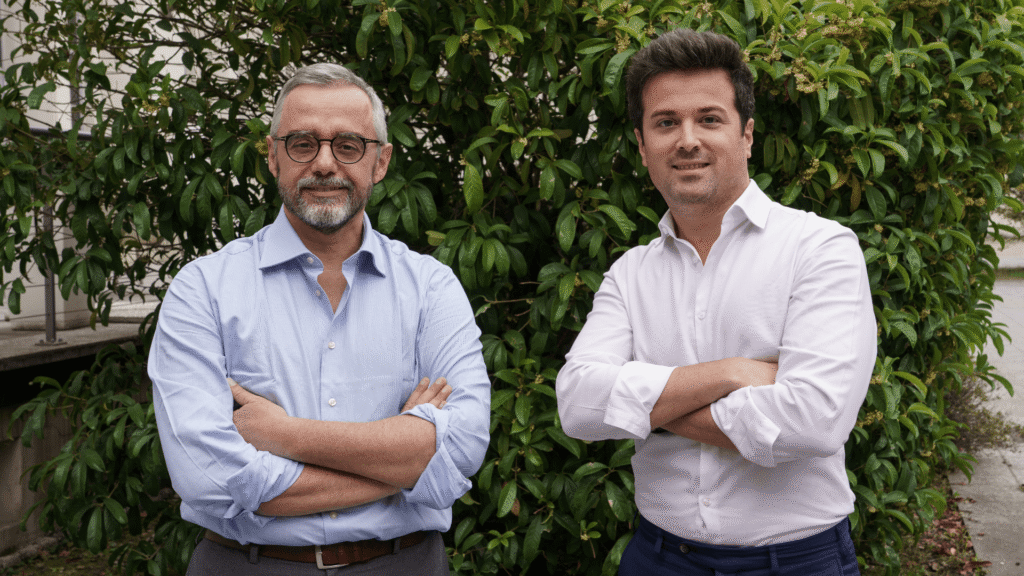
Founded in Rome, Agora Labs was established by Davide Zaccagnini, a vascular surgeon and biomedical informatician who serves as chief executive officer, alongside engineer Fabio Giulietto. The company combines medical expertise with advanced computing technology to help hospitals transform clinical information into useful evidence for researchers, pharmaceutical companies and healthcare innovators.
The newly raised capital will support the company’s international expansion, strengthen its technology infrastructure and help it establish relationships with additional healthcare institutions.
Solving Healthcare’s Data Accessibility Problem
Hospitals collect enormous quantities of medical information through consultations, diagnostic tests, prescriptions, treatments and patient follow ups. This information can help researchers understand diseases, evaluate treatment outcomes and develop improved diagnostic tools.
However, clinical records are frequently distributed across different hospital information systems and stored in formats that are difficult to analyse collectively. Transferring records between institutions also raises significant privacy, security and regulatory concerns.
Agora Labs addresses these challenges by creating infrastructure that allows participating hospitals to organise and standardise their information locally. Its technology uses specialised large language models to process clinical data, while anonymisation techniques are designed to protect patient identities.
AI That Works Without Moving Patient Records
A central feature of Agora Labs’ approach is its use of dedicated computing infrastructure installed within participating healthcare facilities. The systems use graphics processing units supplied by technology company NVIDIA to process information inside hospital environments.
Rather than moving raw clinical records into a central database, the platform uses federated artificial intelligence to connect participating institutions. Researchers and pharmaceutical companies can conduct approved studies across multiple facilities while hospitals retain control over their underlying information.
The system can also support the local training and validation of AI models. Only permitted outputs and inferences are shared across the network, reducing the need to transfer sensitive patient information between institutions.
This approach could help researchers study larger and more diverse patient populations while allowing healthcare providers to maintain greater control over their data.
Expanding Its International Healthcare Network
Agora Labs currently reports an international network of 50 healthcare facilities and plans to double that figure to 100 over the coming months.
The company’s infrastructure is designed to support real world evidence research, which uses information generated during routine medical care to evaluate treatments, understand patient outcomes and guide healthcare decisions.
Potential applications include comparing treatment pathways, assessing healthcare delivery models and developing predictive systems that help identify patients at greater risk of complications.
The company has also highlighted research involving genetic, clinical and radiological information to develop predictive models for complications associated with type 1 and type 2 diabetes.
Hiring and Entering New Markets
The funding will help Agora Labs strengthen its presence in Europe and the United States while expanding into additional markets, including the Middle East and India.
To support these ambitions, the company plans to recruit approximately 20 professionals across technical and commercial roles in the coming months. The additional talent is expected to help develop its platform, expand its healthcare partnerships and support larger international research projects.
For Agora Labs, the next stage of growth will depend on connecting more institutions and making cross border medical research easier to conduct.
By combining federated AI, local data processing and privacy focused infrastructure, the company aims to help hospitals unlock the research potential of their clinical information while protecting patient privacy.