
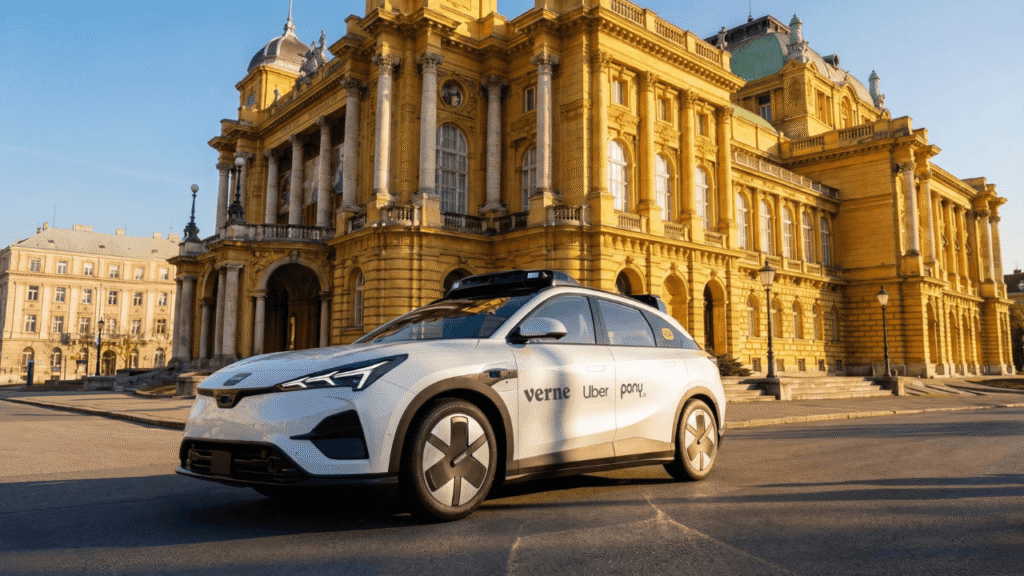
In a milestone moment for autonomous transportation in Europe, Verne has officially launched the continent’s first commercial robotaxi service, allowing everyday users to book fully autonomous rides in the city of Zagreb. The launch signals a shift from pilot projects to real world deployment of self driving technology in urban environments.
A Historic Launch for Autonomous Mobility
The service is now live and accessible to the public through the Verne app, enabling passengers to book and pay for rides powered by autonomous driving technology developed by Pony.ai. In the near future, the service will also be integrated into the Uber platform, following a strategic partnership between the companies.
According to Verne’s leadership, this marks the first time in Europe that a commercial robotaxi service is not just being tested but actively used by the public.
How the Service Works
The initial fleet consists of electric vehicles equipped with Pony.ai’s seventh generation autonomous driving system. These vehicles are capable of navigating city streets independently, although trained operators remain onboard during the early rollout phase to ensure safety and compliance.
The service currently operates across key districts in Zagreb, with plans to gradually expand coverage throughout the city. As the system demonstrates reliability and meets regulatory requirements, the companies aim to transition to fully driverless operations.
Years of Development Behind the Launch
The rollout follows several years of development and collaboration with regulators to meet safety standards and operational requirements. Verne’s entry into commercial deployment reflects growing confidence in the maturity of autonomous driving technologies.
The company has indicated that this launch is only the beginning of a broader strategy to scale robotaxi services across multiple regions.
Expansion Plans Across Regions
Beyond Zagreb, Verne has already initiated permitting discussions with 11 cities across Europe, the United Kingdom, and the Middle East. Additionally, more than 30 cities are currently under evaluation for future expansion.
The company also plans to introduce its own purpose built autonomous vehicle, designed specifically for ride hailing. This two seat robotaxi is expected to further optimise efficiency and user experience in fully driverless environments.
Europe’s Evolving Autonomous Ecosystem
Verne’s launch comes amid a broader evolution in Europe’s autonomous mobility landscape. Companies like EasyMile have focused on driverless shuttles operating in controlled environments such as campuses and industrial zones. Meanwhile, firms such as Einride are advancing autonomous freight solutions using electric and remotely operated vehicles.
Other approaches include tele driving models developed by startups like Vay, where vehicles are remotely delivered to users before manual operation begins.
These varied strategies highlight how Europe’s autonomy ecosystem is developing across different use cases, from logistics and industrial transport to urban mobility.
Rising Global Competition
The race toward autonomous ride hailing is not limited to Europe. US based Waymo has announced plans to launch a fully driverless service in London by 2026, indicating increasing competition in the sector.
However, Verne’s early commercial deployment gives it a first mover advantage within the European market, particularly in navigating complex regulatory environments.
A Step Toward Driverless Cities
The launch of a commercial robotaxi service represents a significant step toward integrating autonomous vehicles into everyday life. By moving beyond pilot programs and into real world usage, Verne is helping to demonstrate the viability of driverless transport in busy urban settings.
As the service expands and evolves, it could play a key role in shaping the future of city mobility, reducing reliance on human drivers, improving efficiency, and paving the way for smarter, more connected transportation systems across Europe.