
The race to develop faster, more affordable and more adaptable defence technology is accelerating as governments face increasingly sophisticated threats from drones, missiles and other airborne systems. UK defence technology startup Cambridge Aerospace is emerging as one of the most closely watched companies in this space, combining advanced aerospace engineering with a growing portfolio of interception and radar technologies. Less than two years after its founding, the Cambridge based company has now secured another major funding round, giving it substantially more capital to expand manufacturing and deliver systems to allied defence forces.
Cambridge Aerospace has raised $300 million in a Series C funding round at a valuation of $3.4 billion, marking a significant increase from the company’s previous valuation earlier this year.
The financing was led by US investment firm DFJ Growth, with participation from Lux Capital, Accel, Lakestar, Never Lift, Ora Global and Elad Gil.
The latest investment follows Cambridge Aerospace’s $200 million Series B round in April, which valued the company at approximately $1.3 billion. The rapid increase in valuation highlights growing investor interest in defence technology and the rising demand for systems capable of countering modern aerial threats.
Building Technology for Allied Defence
Founded in Cambridge in 2024, Cambridge Aerospace develops defence systems designed to detect and respond to airborne threats.
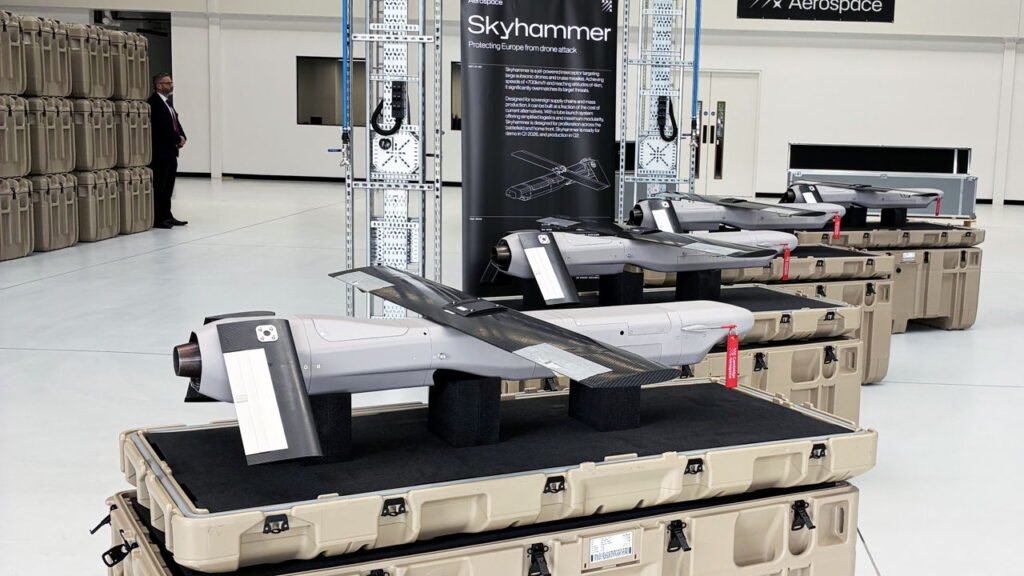
Its product portfolio includes Skyhammer, a drone interceptor designed to counter unmanned aerial systems, alongside Starhammer, a missile interceptor scheduled to reach the market next year.
The company is also developing Looking Glass, a radar system designed to provide detection and tracking capabilities for defence applications.
Together, these systems form part of the company’s broader strategy to provide integrated technologies for protecting airspace and critical infrastructure.
Growing Demand for Counter Drone Systems
The rapid proliferation of inexpensive drones has created a major challenge for defence organisations around the world.
Small unmanned aircraft can be deployed relatively cheaply while potentially posing significant risks to military installations, infrastructure and personnel. Traditional defensive systems can be expensive to deploy against low cost threats, creating demand for more affordable interceptor technologies.
Cambridge Aerospace’s Skyhammer is being developed to address this challenge by providing a dedicated counter drone capability.
The company has already secured multiple contracts with the UK Ministry of Defence, including a multimillion pound agreement to supply Skyhammer to the British Armed Forces.
Scaling Manufacturing Capacity
The new funding will allow Cambridge Aerospace to significantly increase its manufacturing capabilities as it prepares to fulfil existing contracts and compete for additional international programmes.
The company also plans to continue investing in research and development, improve its existing technologies and bring additional defence products to market.
Scaling production has become increasingly important as governments seek to replenish defence inventories and strengthen domestic supply chains.
Cambridge Aerospace intends to use its expanded manufacturing capabilities to respond more quickly to demand from the UK and other allied countries.
Expanding Internationally
Although headquartered in the UK, Cambridge Aerospace has established a growing international presence.
The company currently operates across Germany, Poland, Norway, Ukraine and Australia in addition to its UK base.
Its international expansion reflects the wider demand among allied nations for advanced defence technologies, particularly systems designed to address the growing threat from drones and other low cost airborne platforms.
The company is led by CEO Steven Barrett, a former MIT researcher who is now based at the University of Cambridge.
Strengthening Britain’s Defence Technology Sector
The latest funding round also highlights the UK’s growing ambition to develop globally competitive defence technology companies.
The British government has increasingly sought to support domestic startups capable of scaling rapidly and supplying advanced technologies to the country’s armed forces and allied nations.
Cambridge Aerospace’s rapid growth from a newly founded startup to a multibillion dollar defence technology company demonstrates the scale of opportunity emerging within the sector.
With $300 million in fresh capital, a rapidly expanding international footprint, existing government contracts and a growing product portfolio, Cambridge Aerospace is now focused on turning its fundraising momentum into manufacturing scale.
The company aims to accelerate delivery of its current systems while continuing to develop new technologies designed to protect allied airspace against an evolving generation of airborne threats.