
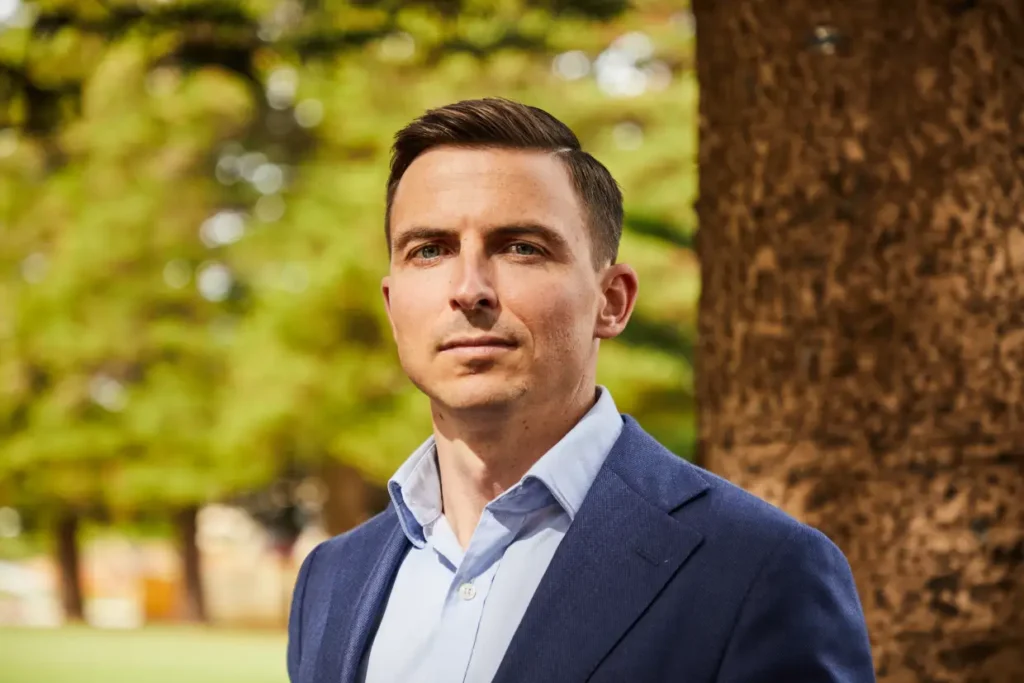
The lithium developer Vulcan Energy Resources, supported by Gina Rinehart, has secured the final tranche of funding needed for the construction of its $3.9 billion Lionheart lithium and renewable energy project in Germany, a significant milestone for Europe in its efforts to localise critical mineral supply chains.
The European Investment Bank (EIB) has contributed a significant part of the loan package to the Perth-headquartered company by joining a syndicate of export credit agencies and commercial lenders. The package amounts to a €1.185 billion (A$2.1 billion) loan. The investment signals a turning point in the attitude of Western governments towards their dependence on China for the vital raw materials needed for electric vehicles, renewable energy infrastructure and advanced manufacturing.
The loan is only a part of a larger funding package of €1.4 billion that is backed by a number of European governments. Francis Wedin, founder, and executive chairman of Vulcan and the company’s second-largest shareholder, said that the strong support from the government indicated that Europe was not just talking, but actually doing when it came to supply chain resilience.
Wedin said: “There have been a lot of statements about needing more Western and European critical material supply chain resilience, but this is really the start. We really hope that we are a lighthouse project for Europe. The rubber is finally hitting the road.” The board of directors of the firm gave their green light to the final investment decision (FID) on Wednesday, thus allowing the start of construction. A groundbreaking ceremony has been scheduled for Friday.
Vulcan wants to be the first European supplier of battery-grade lithium hydroxide, with a goal of 24,000 tonnes yearly—this quantity would be sufficient to make the lithium-ion batteries for 500,000 electric vehicles annually. Before the shipment to the EV and battery producers in Europe, the lithium will be processed at a plant close to Frankfurt.
What makes the project especially appealing is the plan to use geothermal energy generation machinery. Vulcan intends to recover lithium from the hot, mineral-rich brines that lie deep in the Upper Rhine Valley of Germany (a region known by its vineyards) by an absorption method. The allowed simultaneous generation of renewable heat and electricity is an important feature of the process.
The three-decade project is expected to deliver as much as 560 GWh of renewable heat and 275 GWh of electricity each year, which could go to the local grid or be used for Vulcan’s own works. The heating facilities have already been introduced, with the first lithium sales scheduled for 2028.
European Governments Step Up Their Support
Germany has taken a particularly firm stance in facilitating the implementation of the project by providing €354 million through both the debt and a €150 million equity investment in a Vulcan subsidiary. It represents the first time Germany has invested directly in a critical minerals company—a sign of how much it values supply security in a time of geopolitical competition.
Vulcan is going to raise another €528 million through a share placement with a €130 million cornerstone investment from Hochtief, one of the largest infrastructure companies in Germany, as the main attraction. The share placing may increase Hochtief’s stake in the ASX-listed company up to 15.7 per cent.
Mining magnate Gina Rinehart, whose company Hancock Prospecting has a 6 per cent stake in Vulcan, is likely to join the capital raising, but the extent of her commitment remains a mystery. Rinehart invested in Vulcan for the first time in 2021, which was her very first investment in the lithium sector, and later in 2023 she decided to increase her exposure across various Australian lithium developers including Liontown Resources and Azure Minerals by a spending spree.
Wedin is Vulcan’s second-largest shareholder with a 7 per cent stake.
Shares Rise as Sector Gains Momentum
Vulcan offers its geothermal-lithium extraction method as a less polluting, less energy-consuming option to the conventional hard-rock mining method which is the main source of the battery metal in Australia. The company’s technology has attracted the interest of policymakers who want to lower carbon emissions in supply chains while increasing local production.
Vulcan’s stock price has risen by approximately 11 per cent thus far in 2024 as investor faith in the lithium’s long-term demand and Europe’s willingness to secure its own strategic resources grow.