
A protein commonly associated with hair and wool could become an unexpected tool in the fight against tooth decay. UK startup Eterna Regeneratives is developing a biomaterials platform that uses keratin to help repair damaged tooth enamel, with the company now reportedly raising $4 million in seed funding to advance its research and explore consumer dental applications.
The London based startup is a spinout from King’s College London and was founded in 2024. The funding round is being co led by Hoxton Ventures and The Venture Collective, according to reports. Hoxton Ventures has previously backed technology companies including Darktrace and GoCardless.
Eterna is developing regenerative materials with an initial focus on repairing enamel and bone. Its approach is based on using keratin, a structural protein that can be sourced from human hair or sheep’s wool, as a building material for damaged biological tissue.
Turning Keratin Into Enamel Protection
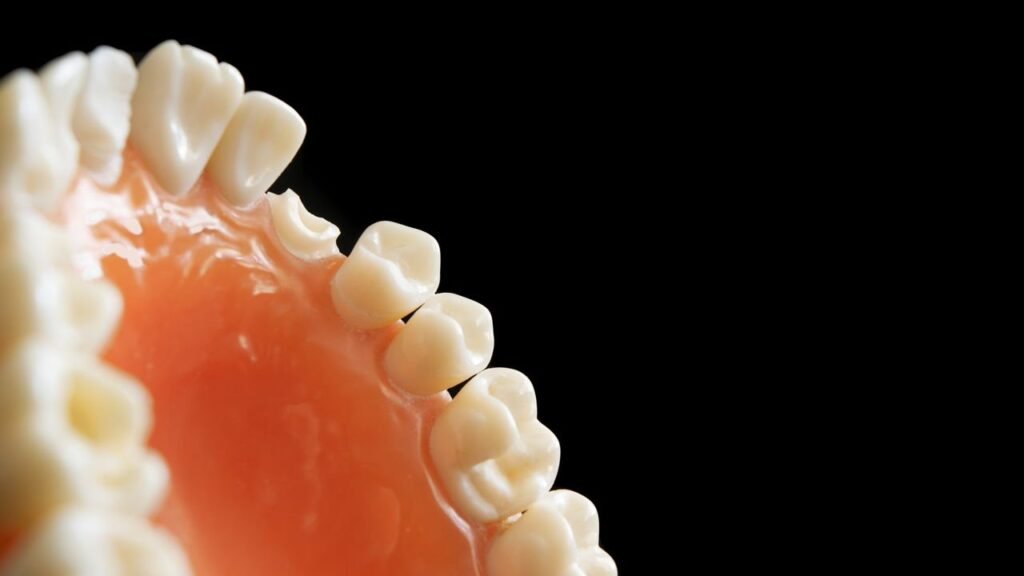
Tooth enamel is the hard outer layer of a tooth and provides protection against the acids and bacteria associated with decay. Unlike many tissues in the human body, mature enamel has limited natural ability to regenerate once it is significantly damaged.
Eterna’s research explores whether keratin can help create a new mineral layer on the surface of a tooth. According to the company’s research, when keratin is applied to damaged enamel and interacts with minerals present in saliva, it can form a thick mineral coating that resembles the structure of natural enamel.
The proposed process is designed to support the rebuilding of the tooth’s protective surface rather than simply treating the symptoms of decay. The company believes the technology could eventually be incorporated into a toothpaste or delivered through a gel applied directly to the tooth.
A Different Approach to Dental Care
Most mainstream cavity prevention products focus on protecting enamel and supporting remineralisation. Eterna is pursuing a biomaterials based approach that seeks to provide a structural coating over damaged areas.
The startup’s founders believe keratin based formulations could offer stronger protection against decay than conventional fluoride based products. However, these claims will need to be evaluated through further laboratory research, safety testing and clinical studies before any product could be widely adopted.
The company’s work comes as dental disease remains a significant public health issue. Tooth decay affects a large proportion of both adults and children, creating demand for preventive technologies that can protect enamel and potentially repair early damage before more invasive treatment becomes necessary.
From Research to Commercial Products
Eterna’s technology is still at an early stage. Its immediate challenge is to translate laboratory findings into a stable, safe and practical formulation that can be used in everyday dental care.
A toothpaste based on the technology would need to remain effective during storage and brushing, while an applied gel could require a different delivery method and treatment schedule. Both approaches would also need to demonstrate that the resulting mineral layer remains attached to enamel under normal conditions such as eating, drinking and brushing.
The company’s wider biomaterials platform could eventually extend beyond dental applications. Alongside enamel repair, Eterna is investigating regeneration related to bone, potentially creating additional opportunities for its keratin based materials.
Backing UK Deep Tech
The reported seed investment is expected to support Eterna’s research, product development and commercialisation efforts. It also highlights growing investor interest in university spinouts that combine biological research with practical applications.
Hoxton Ventures co founder Hussein Kanji welcomed the company’s work, describing its ambition around regenerating teeth and bones as another example of innovation emerging from the UK.
Eterna’s next phase will centre on validating its material science, refining delivery formats and determining how its technology could progress from a laboratory concept to a regulated dental product.