
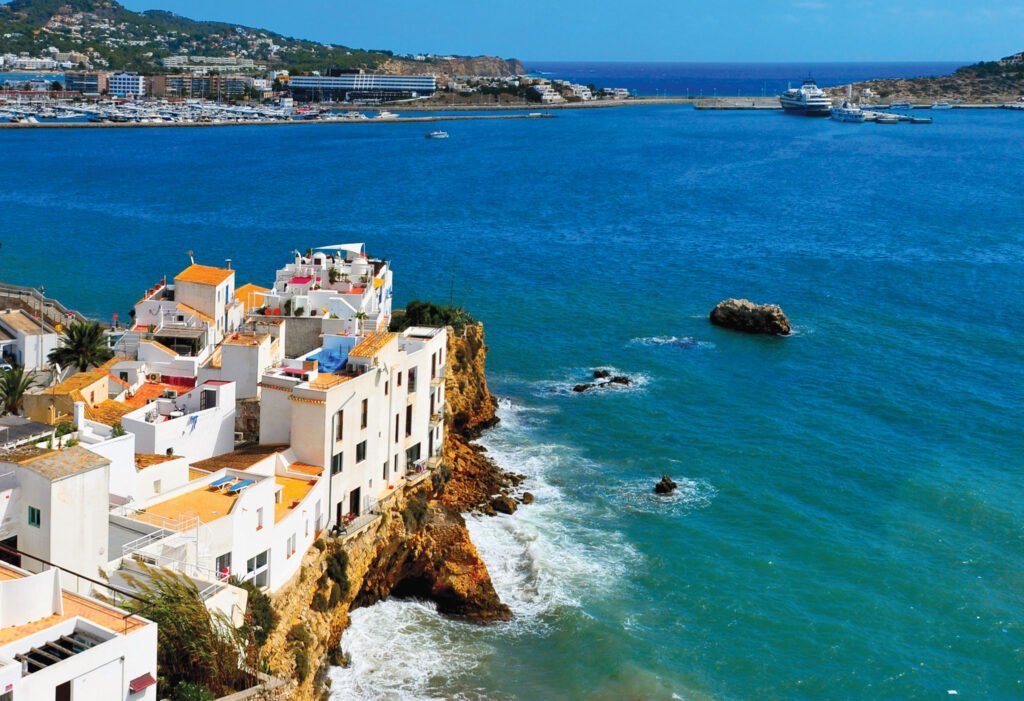
The Balearic Islands – known as one of the most attractive beach vacation spots in Europe – are on their way to a major reconstruction, which will be financed by more than 260 million Euros of the European Union funds. The money, which is part of the EU’s post-pandemic recovery program Next Generation EU, is intended to create a tourism industry that is sustainable, resilient, and of high quality while still maintaining and protecting the local heritage and enhancing the visitor experience.
Throughout the last several years the Balearic Islands consisting of Mallorca, Menorca, Ibiza, and Formentera, have attracted millions of holidaymakers annually and generated a lot of profit, but at the same time, they have been confronted with various challenges such as overcrowding, depletion of resources, environmental pollution, and people being worried about the sustainability of mass tourism. The local governments now state that it is time to adopt a new approach, use innovation and strategic regulation, and thus create a more balanced model that would be both the visitors and the residents’ benefit.
EU Funds Supporting Transformation
The 260 million Euros that have been earmarked for the Balearic Islands are meant to revive the tourism sector that has been shut down due to a pandemic in which the number of visitors dropped dramatically. Nonetheless, instead of merely bringing back the old system, the decision-makers are modernizing it with the help of this opportunity. The money will be used to fund digital innovation, more efficient resource management, and environmental protection measures, which is an example of what the officials hope will be a standardized model that other tourist-intensive regions in Europe can adopt.
One of the main goals of the investment is to wean the economy from the heavily volume dependent seasonal tourism. The authorities are working out plans to keep the tourists coming all year round so the money can be distributed more fairly among the different periods and the summer overcrowding can be avoided. Local business will be offered the means to go green, whereas the tourism sector will be enriched with the integration of creative, sports, and nature-based activities along with the usual beach tourism.
Smart Tourism Tools and Environmental Protection
The introduction of visitor management tools for handling smart tourism will be the most revolutionary move among many others, as it will allow the monitoring and control of tourism flows on a real-time basis. The digital systems will be able to keep track of the number of people in the most attractive locations, allow the reservation of the highly visited sites in advance, and set the temporary capacity limitations for the natural areas that are more vulnerable to give them a rest.
Dynamic pricing strategies, which have already been implemented in large cities and cultural venues worldwide, are going to be used as a means to handle the demand that brings about the overcrowding of beaches and natural parks, which consequently, becomes the main cause of the exceeding number of the visitors. Through the process of diverting tourists from the overcrowded areas to the less busy ones and providing them with the option of traveling during the quiet times, the officials are confident that they will be able to eliminate the heavy traffic not only in Palma, Ibiza Town but also at the beaches of Formentera.
Hotels, resorts, and rental accommodations will also have to raise their standards in energy efficiency and waste reduction. The accommodation sector is the main focus of the regional strategy for climate action and service improvements through sustainability upgrades.
Boosting Local Economy and Fair Tourism
The money will be used as a means to speed up the implementation of stricter short-term rental regulations, especially for those that are illegally operating on platforms such as Airbnb. The authorities believe that the rapid expansion of the unregulated rental market has caused the distortion of the housing market and thus led to the displacement of the local people in the areas mostly visited by tourists. By making the renting activities more transparent and allowing the enforcement to become more efficient, the local government of the Balearic Islands is aiming at establishing a better system, which, in turn, will safeguard the community’s interests, albeit providing the different lodging options.
Moreover, there will be a lot more such offers presented to the visitors in order to attract them outside the high season, thus creating jobs that will be available throughout the year and making the local businesses more stable, which are now subjected to extreme fluctuations of the situation.
Push for Additional Funding and Continued Support
Although a sizable investment has been achieved, Balearic officials still believe that additional money is necessary to accomplish the complete long-term transformation plan. The delays in some projects due to incomplete planning and administrative obstacles have raised the issue of stronger coordination with the EU institutions.
The regional leader Marga Prohens is likely to be in Brussels next month to ask for more assistance and a clearer European action framework to facilitate the transformation quicker. The local government emphasizes that if the investment is not continued, they may lose the chance to become the best example of sustainable tourism in Europe.
A New Visitor Experience
Along the changes, tourists and locals will be able to share the benefits. Travelers will have the advantage of getting better services, less overcrowding, improved natural environments, and more straightforward travel experiences through the use of digital information tools. The local people will be provided with the help in solving the problems of infrastructure and tourism saturation.
At present, the Balearic Islands are taking the lead in the reform of the responsible tourism sector. Through EU investments and innovation commitment, the region wants to be the proof that tourism growth and environmental protection are not mutually exclusive but rather environmentally friendly tourism is the way for the future, thus guaranteeing the survival of both its stunning landscapes and culture for the coming generations.