
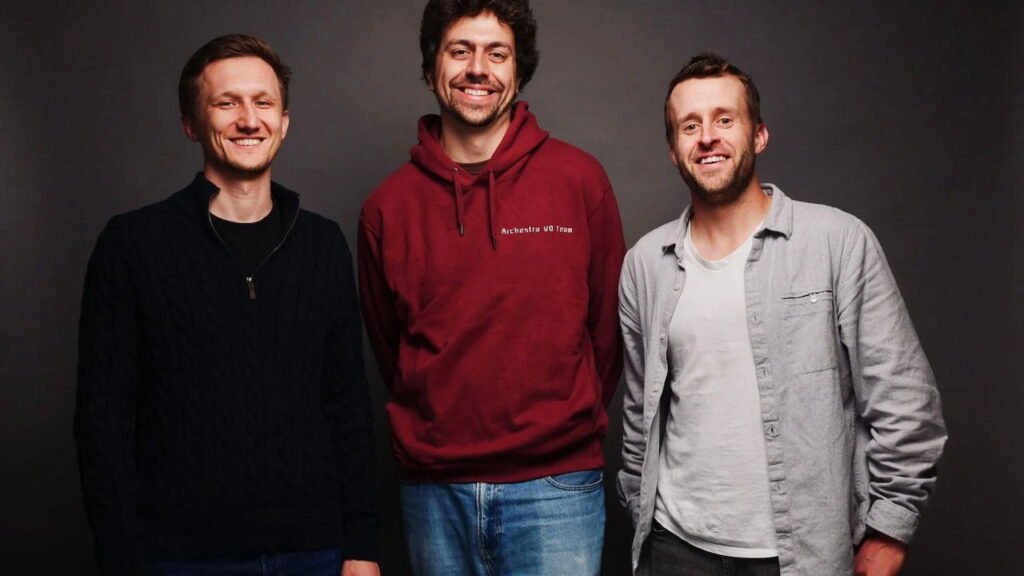
As artificial intelligence rapidly moves from experimentation to enterprise adoption, organisations are facing a critical challenge: how to give AI agents access to valuable internal data without creating new security and governance risks. While AI agents have shown promise in automating workflows, analysing information, and supporting decision making, many businesses remain cautious about allowing them to interact with sensitive corporate systems. Concerns over data leakage, hallucinations, compliance obligations, and vendor dependence have slowed broader adoption. London based startup Archestra.AI is aiming to solve these challenges by providing infrastructure that allows enterprises to deploy AI agents securely while maintaining full control over their data.
The company has raised $10 million in seed funding in a round led by 20VC, founded by investor and entrepreneur Harry Stebbings.
The round also included participation from Visible Ventures and Tenacity Capital, alongside angel investors including Olivier Pomel and Kieran Flanagan.
The latest financing brings Archestra.AI’s total funding raised to $13.5 million.
Building Trust in Enterprise AI
Founded in 2025 by former team members from Grafana Labs, Archestra.AI is focused on helping enterprises unlock the full potential of AI agents while addressing security and governance concerns.
Although many organisations have begun experimenting with AI powered workflows, deployments often remain limited to relatively low risk use cases.
Businesses are hesitant to allow AI systems access to highly sensitive information such as legal documents, human resources records, financial data, and confidential operational systems.
Archestra.AI believes this challenge is one of the biggest barriers preventing enterprise AI from reaching its full potential.
Connecting AI Agents to Sensitive Data Safely
The company has developed an open source platform that enables organisations to securely connect AI agents to internal systems and proprietary data sources.
Its technology provides guardrails designed to control how agents access, process, and share information.
This allows employees to build and deploy AI agents while ensuring sensitive corporate data remains protected.
According to founder and CEO Matvey Kukuy, the platform enables AI agents to work with highly sensitive information across departments such as legal, human resources, and other critical business functions without exposing confidential data.
The company aims to make AI deployment safer while expanding the range of tasks agents can perform inside enterprise environments.
Addressing Vendor Lock In Concerns
Beyond security, Archestra.AI is also responding to growing concerns around vendor dependence.
Many large enterprises are increasingly wary of relying exclusively on foundation model providers to manage AI governance and operational controls.
As AI becomes more deeply embedded within business operations, organisations are seeking independent infrastructure that allows them to maintain flexibility and control over their technology stack.
Archestra.AI positions itself as an open and vendor neutral solution that gives enterprises greater autonomy over how AI agents interact with internal systems and data.
Early Enterprise Adoption
Despite being a young company, Archestra.AI has already secured four Fortune 500 customers, according to the company.
This early traction reflects growing demand for infrastructure that can support enterprise AI adoption while meeting strict security, compliance, and governance requirements.
As organisations move from AI experimentation to production deployments, the need for trusted operational frameworks is becoming increasingly important.
Scaling for Growth
The seven person team plans to use the new funding to expand both its engineering and go to market functions.
The company will focus on accelerating enterprise deployments, enhancing platform capabilities, and supporting a growing customer base.
As businesses seek ways to safely integrate AI agents into core operations, Archestra.AI is positioning itself as a critical infrastructure provider helping enterprises balance innovation with control. By creating secure pathways between AI systems and sensitive corporate data, the company aims to unlock broader adoption of autonomous AI across the enterprise world.